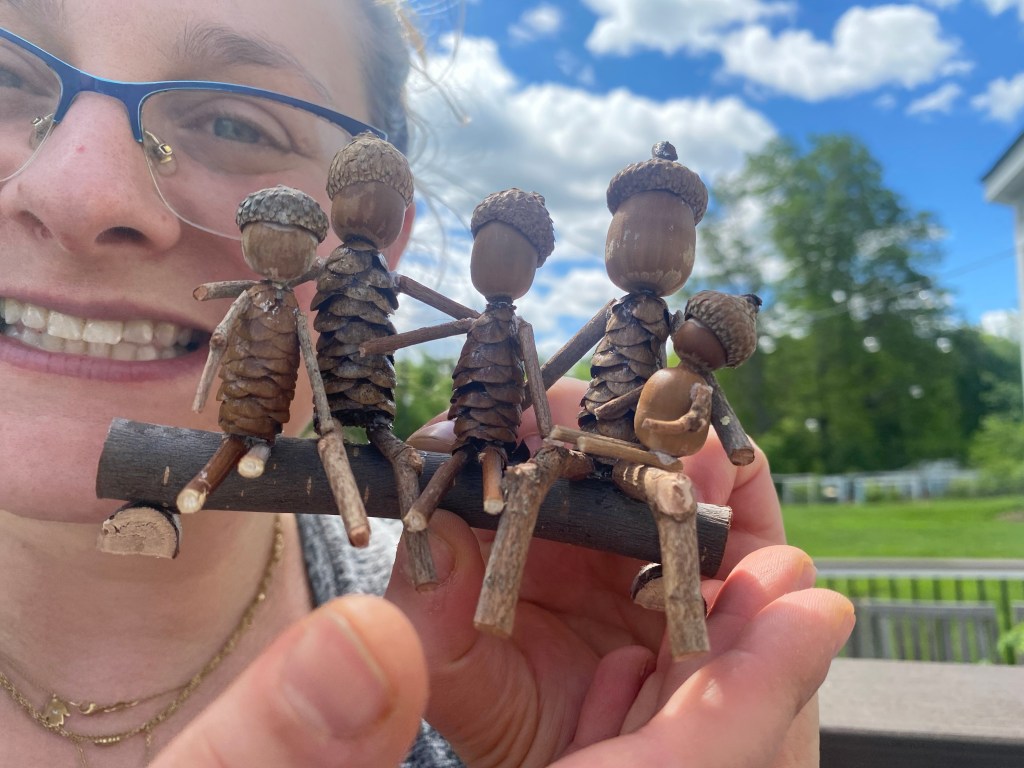
Hi Amy! Thank you for joining us. Your work has a gentle yet powerful way of capturing life’s smallest moments through natural materials, inviting us into entire worlds no bigger than a twig or pinecone. We’re excited to dive into your creative universe.
To begin, tell us about your journey as an artist. How did your background in graphic design, architecture, and education shape your artistic evolution, and what led you to begin creating miniature sculptures using organic materials?
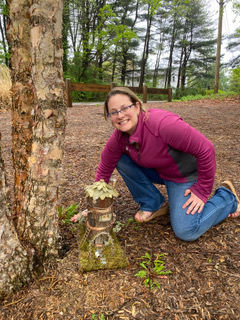
I originally went to college for architecture and then switched to graphic design because I was drawn to the creativity it allowed. However, after working as the art director at a summer camp, I quickly realized I wanted a career in teaching children. I loved the natural wonder and excitement the children showed. They were not afraid to try the “what if’s.” My campers, students, and my own children have given me the inspiration to also try the “what if’s” and use my imagination to create artwork with the nature surrounding me. In creating miniature sculptures with nature, I was finally able to incorporate an array of interests and skills into one cohesive collection of work. I am now able to explore many of the media and techniques I’ve learned over the years rather than limiting myself to one.
That’s such a wonderful and inspiring journey, especially how your students and children sparked your creative curiosity. You also mentioned that your art is often inspired by your walks in the woods. Can you walk us through one of those magical moments—where you stumbled upon a material that sparked an idea or changed the course of a piece?
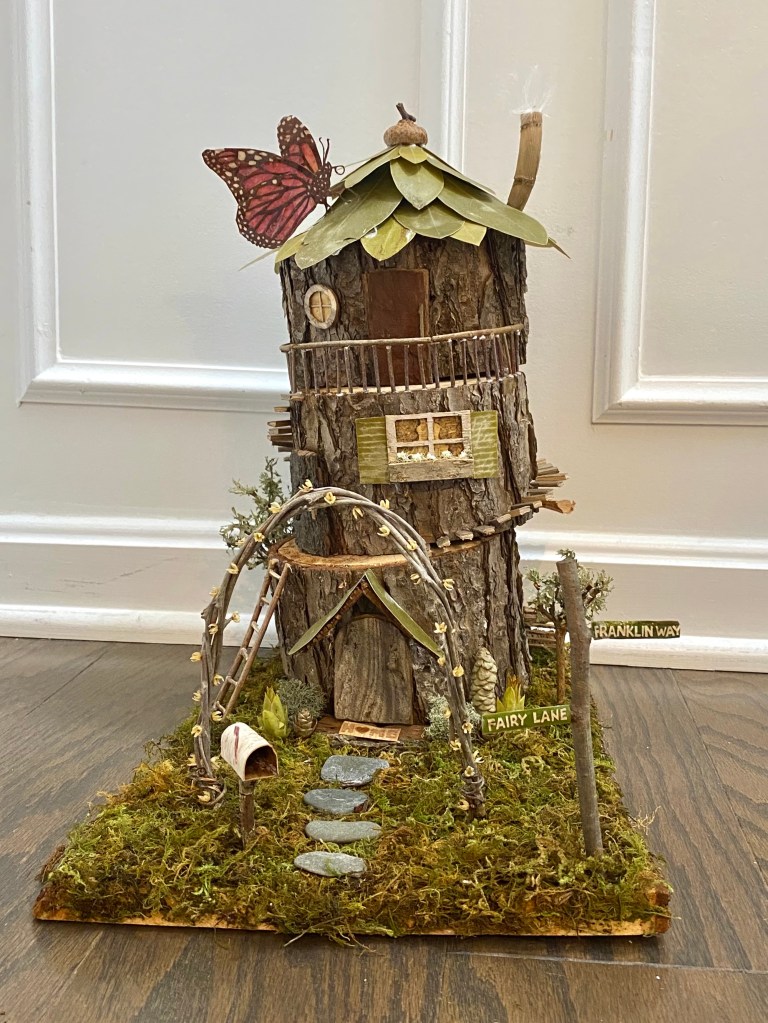
I have always been inspired by nature, even before I was creating sculptures with it. I found myself drawn to the textures, patterns and color variations growing around me. It wasn’t until my mid 30’s that I realized I could actually use the items I pick up to create art. While pushing my daughter on a swing in the park, I saw a stick that reminded me of the structure’s side. I had an “aha” moment and once she got off the swing, immediately set out to find another. It was the first time I started looking for nature items to use as parts of a sculpture rather than to keep for its beauty. That swing structure led me to build an entire playground, basketball court, dining area, well, oven, fenced in front yard, mini trees, porch, doorway and flower box window in a single summer. I was hooked and ready to create even more.
That moment at the swing sounds like a true turning point—where curiosity met creativity in such an organic way. And it’s clear your role as a parent was right there with you in that discovery. As a mom, educator, and artist, your life is beautifully full. How do those roles influence your art? Do you find that your experiences as a parent and teacher seep into the narratives of your sculptures?
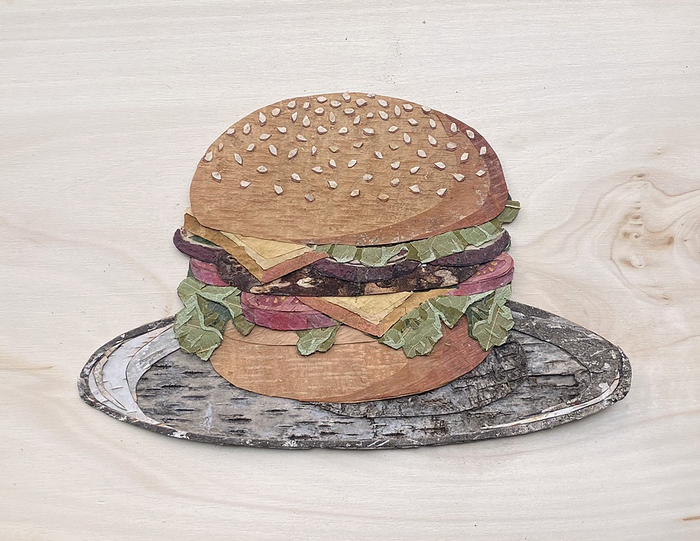
I absolutely believe my experience as a teacher and parent has influenced my work. I am inspired by the nature I find, but even more so by the things going on in my life. For example, my daughters’ love of unicorns led me to try using fall leaves to create a rainbow mane and tail in my collage work. After experimenting with leaf color, I was able to create my own colorful collage “plant based burger.” I believe the amazing imagination and creativity of my students has also had an influence on my work. I am so impressed and encouraged by their ability to learn a new medium, technique or style and just jump right in to create with it. Peter H. Reynolds says in his children’s book, The Dot, “just make a mark and see where it takes you.” I’ve taught this important idea for many years and I am finally following this advice.
It’s lovely how your students and children inspire your creativity—and how you carry that playful spirit into your own work. Speaking of that imagination, your miniatures feel alive, with so much expression and storytelling packed into tiny forms. When you begin a new piece like “Happy Birthday To Me” or “Fairy Dining Room,” do you start with a scene in mind, or does the story emerge from the materials?

I am inspired by what is around me. When I found a piece of seaweed at the beach that looked like a balloon, I knew I wanted to make a birthday scene. I then spent a few weeks searching for materials to help fit that vision. In “Fairy Dining Room,” the process was the opposite. I knew I wanted to make some sort of table with food and a shelving unit with a collection of items but the materials I found outside dictated what was created. My newest scene, “Chinese Takeout,” follows an even different path. I knew I wanted to create some sort of industrial style room with a brick wall made from red leaves, but I was stuck on what I would actually put in the scene. I finally found inspiration when I was showing my daughters how a Chinese takeout box could unfold. I realized that I could create a miniature version with birch bark.
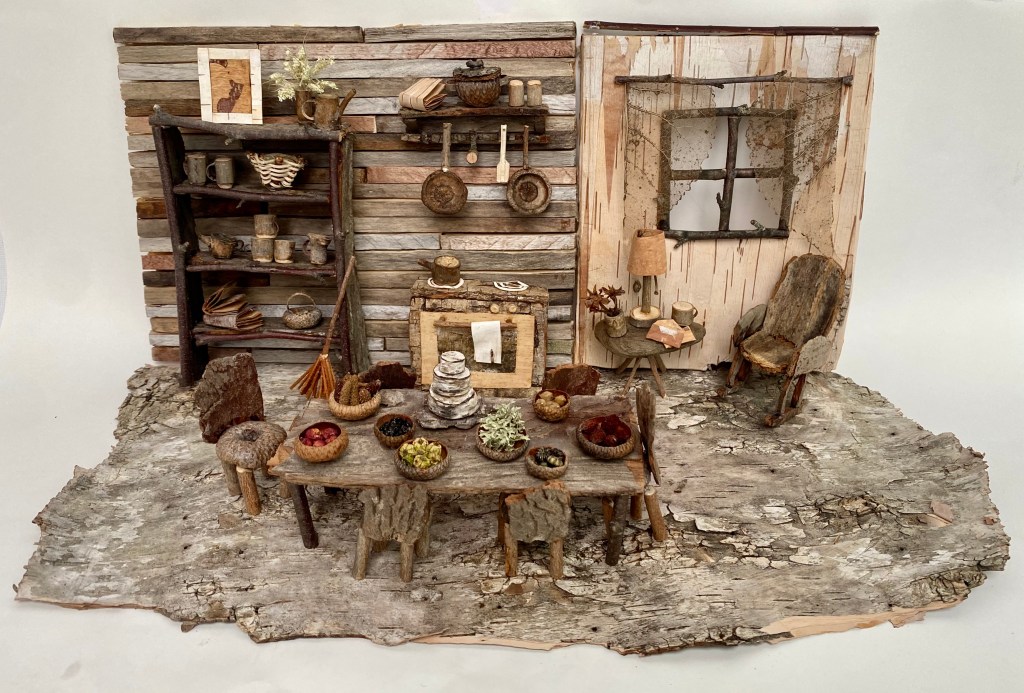
The scene continued to evolve based on extra materials I had previously collected. Some examples included a uniquely shaped acorn cap that reminded me of the base of a globe, two mini acorns that reminded me of a retro alarm clock, the yellow skins of the oriental bittersweet berry reminded me of fortune cookies and the seeds inside of the berry reminded me of tiny chunks of chicken to be used for the meal. When creating this scene I thought about the “who, what, when, where and why.” When looking at the details one may notice that there is a picture of a married couple, but no children. This shows that the people who live in this small apartment may be a young newly married couple. The food is only partially eaten with the figures missing. One can use their imagination to decide what else could be happening in this scene.

It’s intriguing how your process flows between idea and material. In works like “Nature vs. Nurture” and “Circle of Life”, there’s a deeper emotional weight and a lean toward mixed media. What inspired these pieces, and how do you choose which stories to tell through your art?
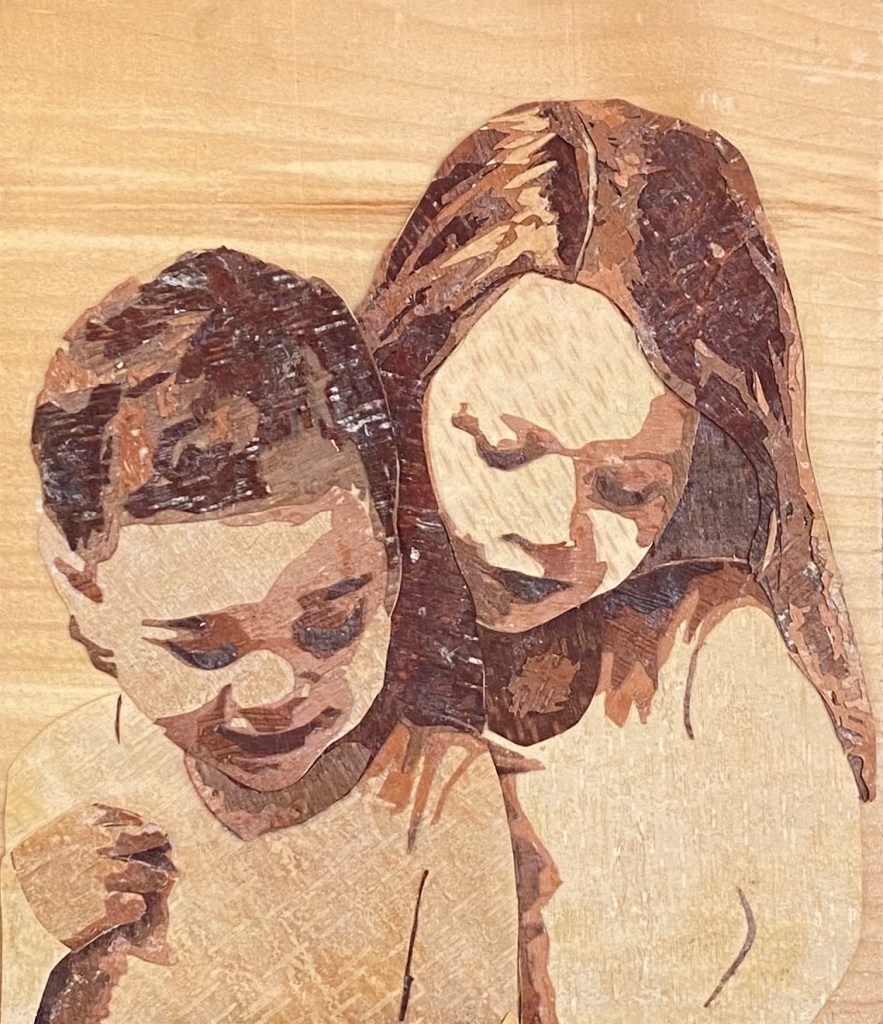
In “Nature vs. Nurture” and “Circle of Life” I created collages based on special photographs of my family. Like you have mentioned, even though these images are deeply personal, the ideas of sisters embracing and a father sleeping with his infant son are universal moments that many can relate to and enjoy.

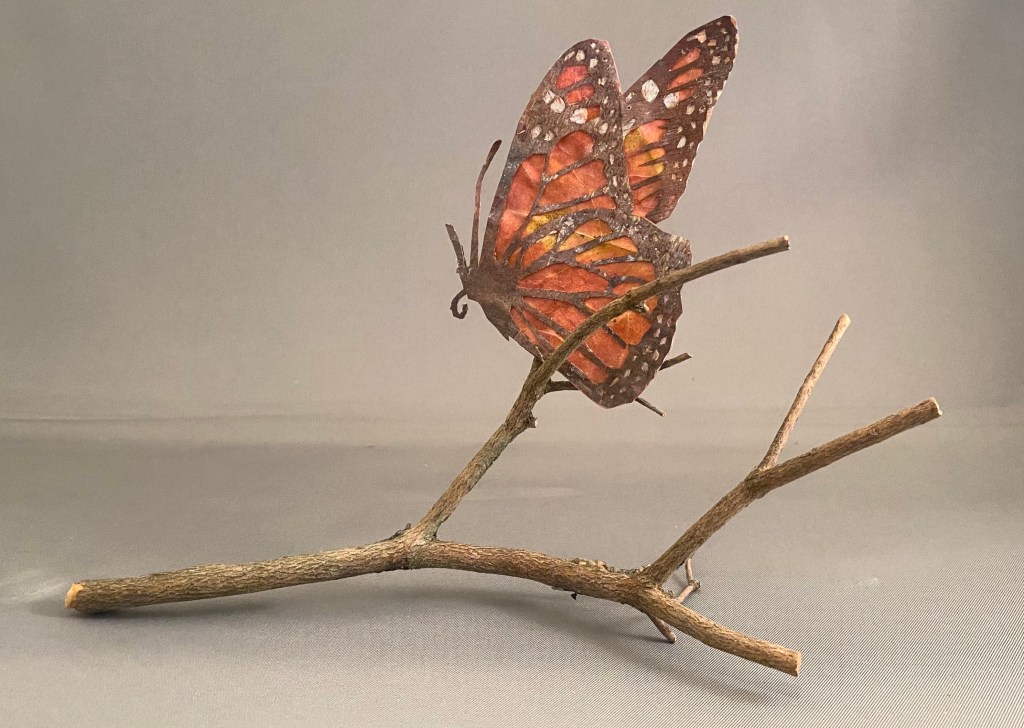
These two artworks were created with the papery bark from a river birch tree. I had discovered that this bark was similar to paper and could be cut and glued together. I was eager to try to create detailed collages in this medium. With the help of photoshop, I altered the photographs so that they only had four values, but each detail was still recognizable. I then chose four varying shades of the bark to use for each value.
It’s impressive how you turn simple birch bark into such meaningful visual stories. Your attention to detail really stands out. In pieces like “Fairy Dining Room” and “Fairy Fireplace”, every element feels so intentional. How do you approach working with such delicate natural materials, and are there any you find yourself returning to again and again?
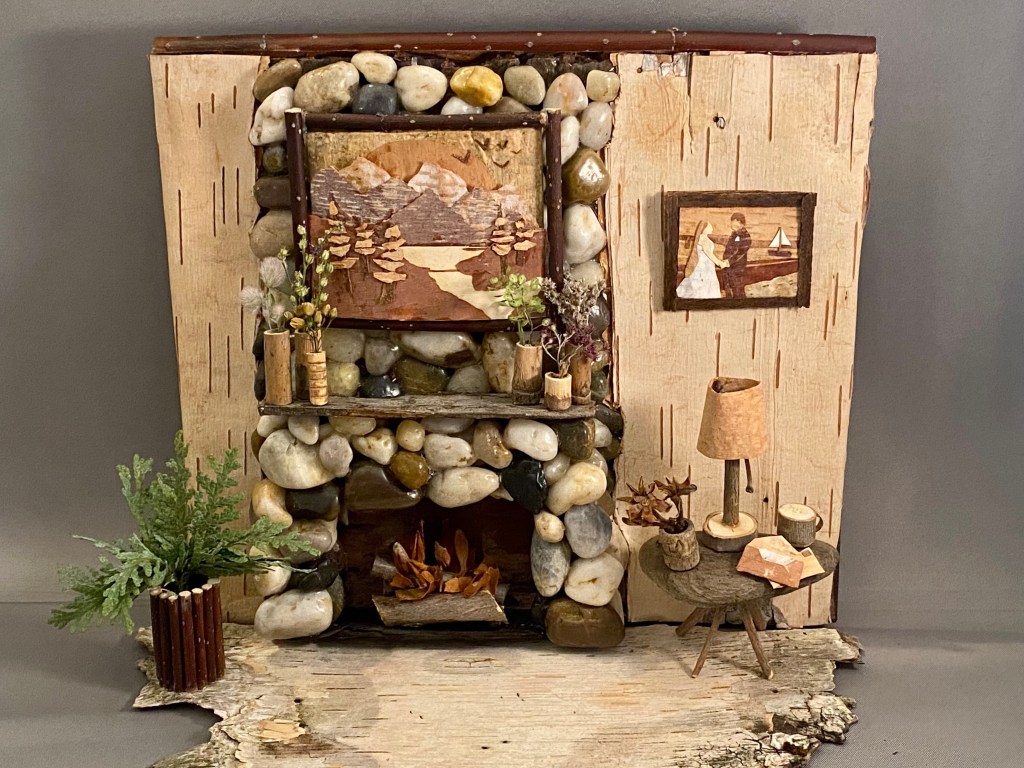
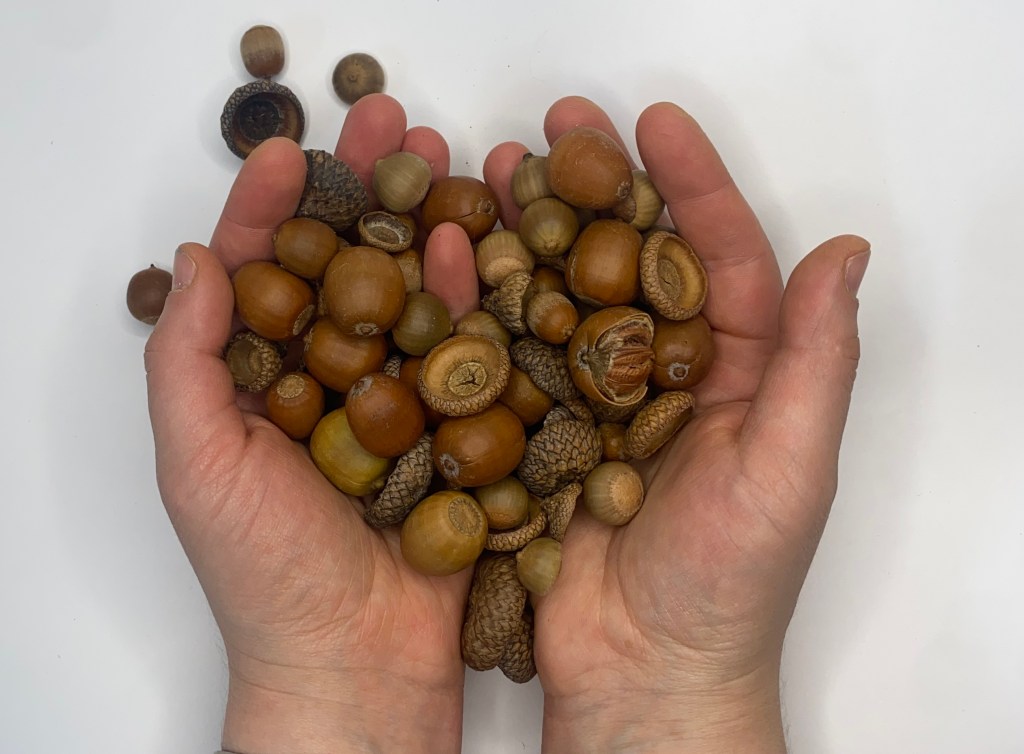
Thank you for noticing the attention to detail I put into each work. I spend a lot of time thinking about where to put each element so the scene or sculpture appears finished without looking overcrowded. It has taken a lot of trial and error to figure out how to use the different natural elements. I’ve learned to stick with materials like pinecones, twigs, acorns and bark rather than leaves, stems and flowers because they do not wilt or rot. I found that it’s important to hold onto the objects for at least a week so that I can see how it will hold up long term. I love using river birch bark because it is thin like paper, non fading, water resistant and fairly sturdy. I also find that branches are the most versatile in my sculptures. I have used them for creating people, animals, furniture, decorations, mugs and cooking tools, supports and even more. I always have my Fiskars hedge clippers handy to cut up what I need. The other tools I tend to use are an exacto knife, a magnetic cutting board and various types of glue such as Mod Podge, Aleene’s Tacky Glue, Gorilla Super Glue Gel and Scotch Wrinkle Free Glue Sticks.
Your attention to each material’s potential is inspiring. That brings me to another layer of your work: We see elements of bookbinding, collage, wire sculpture, and even architecture in your assemblages. How do these creative passions come together, and does one ever take the lead, or are they always in conversation?
I would say the techniques that I use in my sculptures are always in conversation. Because I have a little knowledge in almost all areas from teaching elementary school art, I can choose from a variety of materials and techniques that would produce the best look for each item I want to create. I love not being limited to one or two skills. I recently learned that the saying “Jack of all trades, master of none,” has another sentence at the end that fits me to a tee. It goes “Jack of all trades, master of none, but often better than a master of one.”
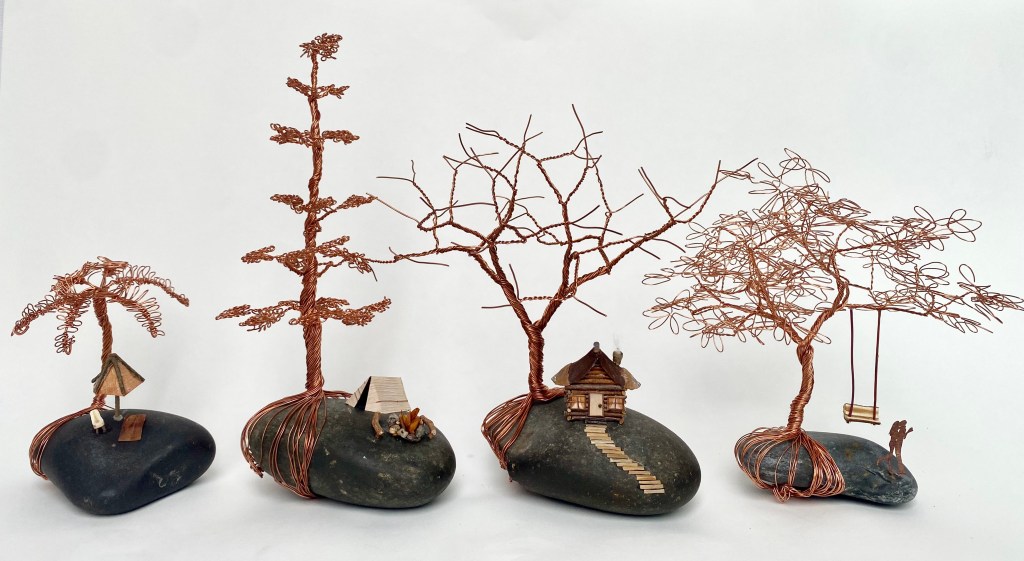
That versatility really shines in how you bring diverse techniques together so seamlessly. In a piece like Four Seasons, you turn copper and stone into a whole world in miniature. How does working small help you capture the feeling of shifting seasons and their stories, and what does this intimate scale let you express that larger work might not?
When working at such a small scale, I find that less is more. In these four miniature sculptures, I am able to create only a few simple elements to give the idea of a season. My hope is that the size and simplicity brings the viewer in to take a closer look and use their imagination and memory to complete the story each artwork will tell. If these were made at a larger scale, many more elements would need to be included for the artwork to feel complete, taking away from the interaction I’m hoping to create between the artwork and viewer.
I think, that gentle pull for viewers to imagine is part of your work’s charm. “Fairy Artist” is no different. It feels delightfully meta, a tiny figure painting a tiny landscape. Was this a playful reflection of yourself? How do humor and storytelling shape your creative process?

“Fairy Artist” is very important to me because it was the paramount piece in my journey with using nature as my medium of choice. It inspired me to develop three pathways in my artwork, acorn figures, river birch bark collages and miniature scenes. I originally started this fairy because I wanted to include a figure in my fairy garden. While working outside, I noticed a small twig with a bud on the very end. It reminded me of a paint brush and I realized I wanted to turn this fairy into an artist. I thought it could be fun to expand the idea even further and create a mini easel with a “painting” on it. I was so excited with what I created that I set out to create even more sculptures. Instead of using straight twigs for arms and legs, I realized I could use bent twigs to create more realistic poses. I thought if I could make a landscape scene with river birch bark, I could try to make more realistic looking portraits. I also wanted to try to create even more detailed scenes.
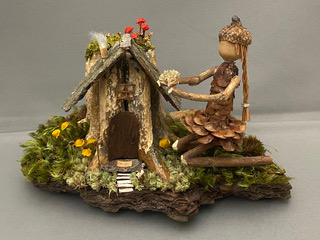
I recently set out to make another figure that acted as a nod to my creative journey. I got the idea to create a figure building a mini fairy house when I noticed that a pumpkin stem looked like a tree stump. When comparing “Making of a Fairy House” with “Fairy Artist,” I feel very proud of the progress I’ve made in my ability to create sculptures out of nature. I am more confident in my techniques and put more thought into the story I want to tell.
WoW. It’s inspiring to see how your early “Fairy Artist” sparked such growth in both technique and storytelling. How has creating with nature shaped your relationship with it? And when others view your work, what feelings or memories do you hope it stirs, especially when they recognize everyday natural materials used in surprising ways?
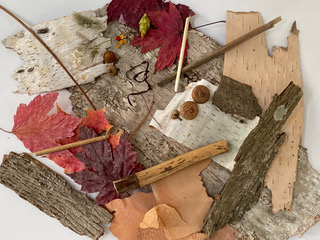
When walking around, I no longer think of nature as something pretty to look at, but more of a source of inspiration and supplies. When I see a branch on the ground, I stop to look at how straight the different sections are, if it has any good angles for arms or legs and if a certain section reminds me of something. It’s an exciting feeling when I find the “perfect” natural element because my artwork is limited to what I can find. I don’t think I can go for a walk outside without returning with at least one thing tucked in my pocket. My hope is that when people look at my work, they have a feeling of surprise, joy and inspiration. I want to encourage people to think outside the box, view objects in a new light and appreciate the beauty nature has to offer.
Looking into your miniatures, I can see how that sense of wonder shines through your work. Tell us please, what’s next on your creative path? Are there any new themes or dream projects you’re excited to explore?
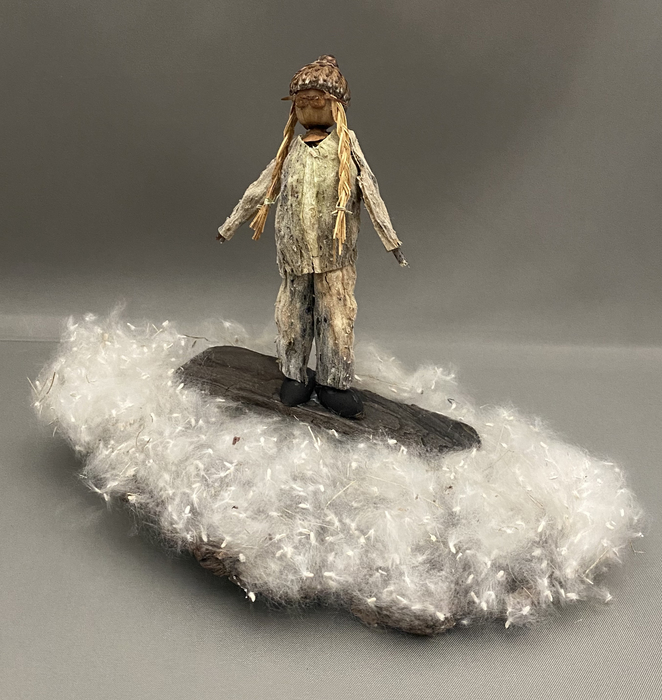
Every time I am outside and find an interesting twig or other piece of nature my brain comes up with a new idea. I am excited to continue pursuing nature as my source of inspiration and medium. I am currently working on an underwater scene after seeing lichen on a tree that reminded me of seaweed. I am still looking for potential materials and thinking of ways to use what I already have collected to complete my scene. I can’t wait to see where the nature takes me.
It’s interesting to see how your creative journey continues to evolve. As we wrap up, I would like to know how platforms like Biafarin, Exhibizone, and Gallerium have supported your art and helped you reach a wider audience?
Platforms like Biafarin, Exhibizone and Gallerium have given me confidence to share my work with a wider audience. When I first started creating with nature, I felt embarrassed to show my sculptures because it was not something I had seen before and wasn’t sure what people would think of it. Being accepted into multiple competitions and even winning awards from a few have shown me that what I am making is in fact considered art and just as valued as other artworks I see online. I am now able to share my joy of creating with nature and hopefully inspire others to see the world around them in a new way.
That’s truly wonderful to hear, thank you for sharing that. It’s clear your work has touched many, and your story is both inspiring and affirming for others exploring unconventional paths. And finally, is there anything you’d like to add? A message to fellow artists, a reflection on your journey, or something you’ve learned from bringing these tiny yet meaningful moments to life?
I have learned that inspiration can come from unusual places and even if something has not been done before it is okay to create your own path.
To discover more of Amy Vulfovich’s enchanting miniature worlds, follow her creative journey on Instagram or explore her artist profile on Biafarin, where each piece invites you to see nature’s smallest wonders transformed into stories full of imagination, emotion, and charm.

 Review Me
Leave a reply to Mikhail Wolf Cancel reply