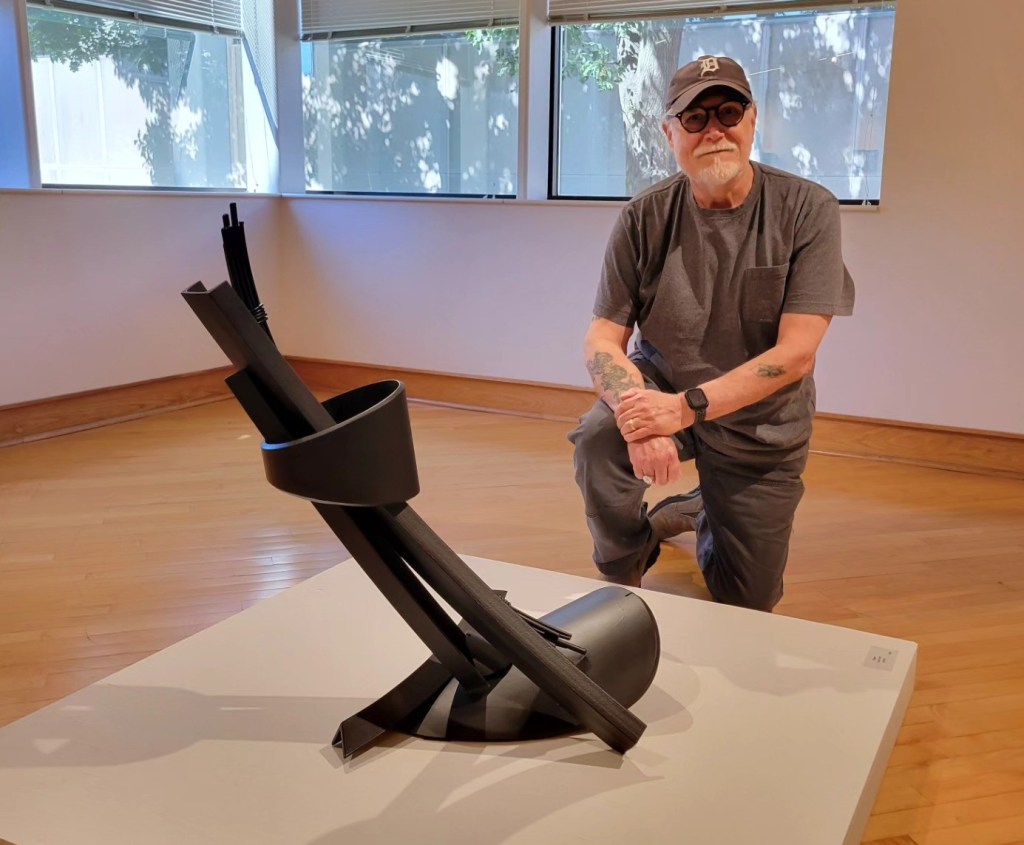
Thank you for joining us for this interview, Gregory. Your work captivates with its meditative presence, sculptural strength, and philosophical undercurrents, and we are excited to learn more about your artistic journey, inspirations, and the contemplative forces that shape your creations.
Let’s begin at the beginning. Growing up in Detroit, were there early moments that shaped your path as an artist?
I was raised by my maternal grandmother. She was a homemaker and a very creative person. She was the one that saw my potential and encouraged me to make things, draw, make objects and generally use my imagination.
Your academic path bridges art and philosophy, culminating in both an MFA and a Ph.D. in aesthetics and critical theory. How did that intellectual journey shape your artistic voice?
I have always been a philosopher. Even as a young person I was questioning things that even adults did not. This caused me many problems but became essential parts of my being an artist and thinker. As I progressed through my education and continued making art, the ideas and the art came together in ways that I couldn’t have predicted. Postmodernism and its everything goes attitude worried me because there seemed no way to evaluate or judge art anymore. As an artist and a maker I need to have a reason for my making otherwise my purposes were tirite and superficial.
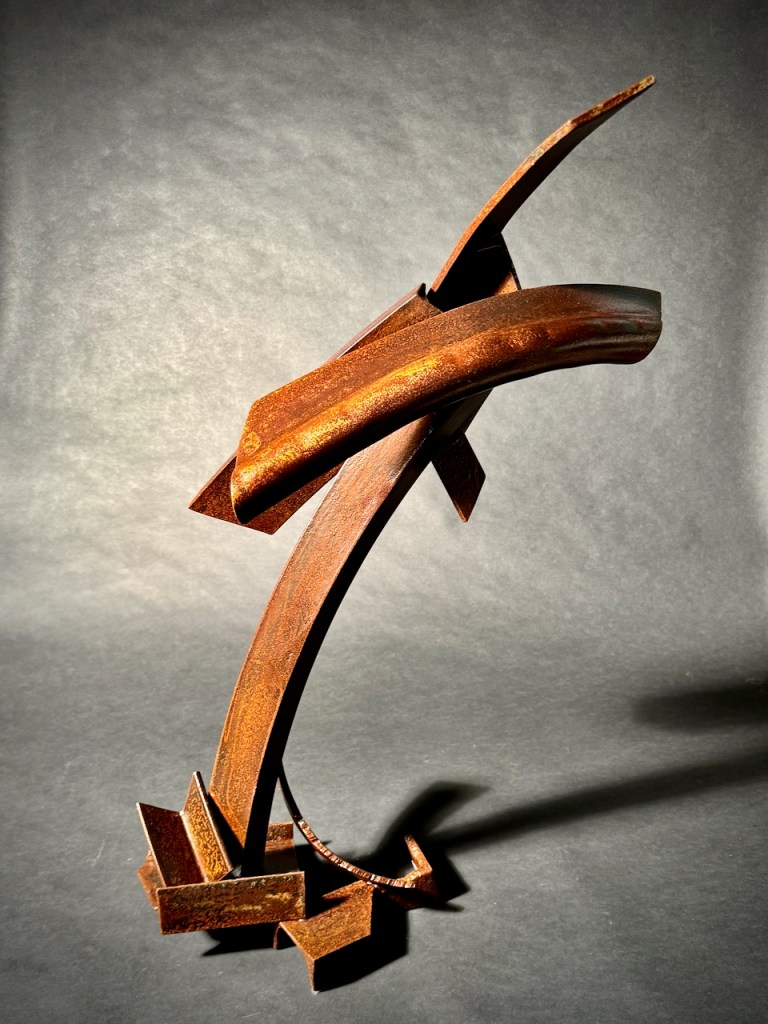
Aesthetics brought back a reasoned path for making art and a direction in which I could work and felt that I found a purpose. Art needs to reflect humanity, it should show a path to raise our being up to higher and higher levels and reconnect us to a spiritual sense of existence. The postmodern world has systematically tried to remove spiritual life from having any influence in our lives. Humans need beauty and the sublime to understand our place in the universe and what our purposes may be. Without these things life and existence is hollow and purposeless. The work I am making now is about this quiet contemplation, away from the world’s demands and all of the social, political, and intellectual noise designed to distract us from any true purpose.
You describe yourself as an “artist-philosopher,” and your practice resonates with Zen traditions. How did Eastern philosophy enter your life and your art?
I have been practicing meditation and studying the philosophy of the east since reading Zen and the Art of Motorcycle Maintenance in 1974. The ideas and the challenges presented by the book continue to drive my search for answers and better questions. The mixture of practice and spirit in old Japan, primarily the Zen Buddhists and Samurai have served as models for me as an artist. The work becomes prayer, my studio becomes a church or a temple where I remove all outside influence and focus on as pure an approach as I can muster.
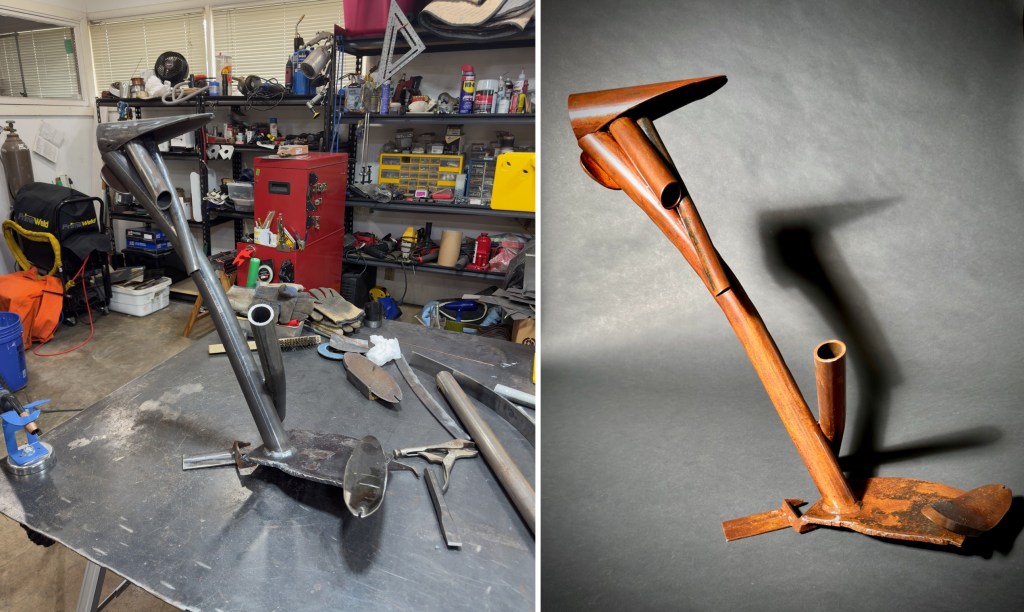
Your sculptures seem to create spaces of stillness and reflection, offering viewers an escape from the noise of modern life. When someone encounters your work, what kind of emotional or philosophical space are you hoping to open up for them?
The objects and the hope in the encounter is one of peace and respite from the overtly busy distracted lives promoted by the culture.
You’ve exhibited in cities across the globe — from Venice and Basel to China, Japan and the United States. Do you find that different cultural settings bring new layers to how your work is perceived or even how you see your own creations?
Different cultures and people often come to work in ways that reflect who they are, what they wish for and how they hope their lives will be. It is really unpredictable as to how someone or a culture will react to or interpret any art work. This is why my work does not try to express or represent anything other than a deep human spiritual connectedness. Too much of contemporary art is direct and challenging in ways I think tiring and didactic. In other words, I don’t think saving the whales will happen if you purchase a ‘save the whales’ t-shirt. If we want to change things we need to return to the source of our humanity; that’s where we can begin.
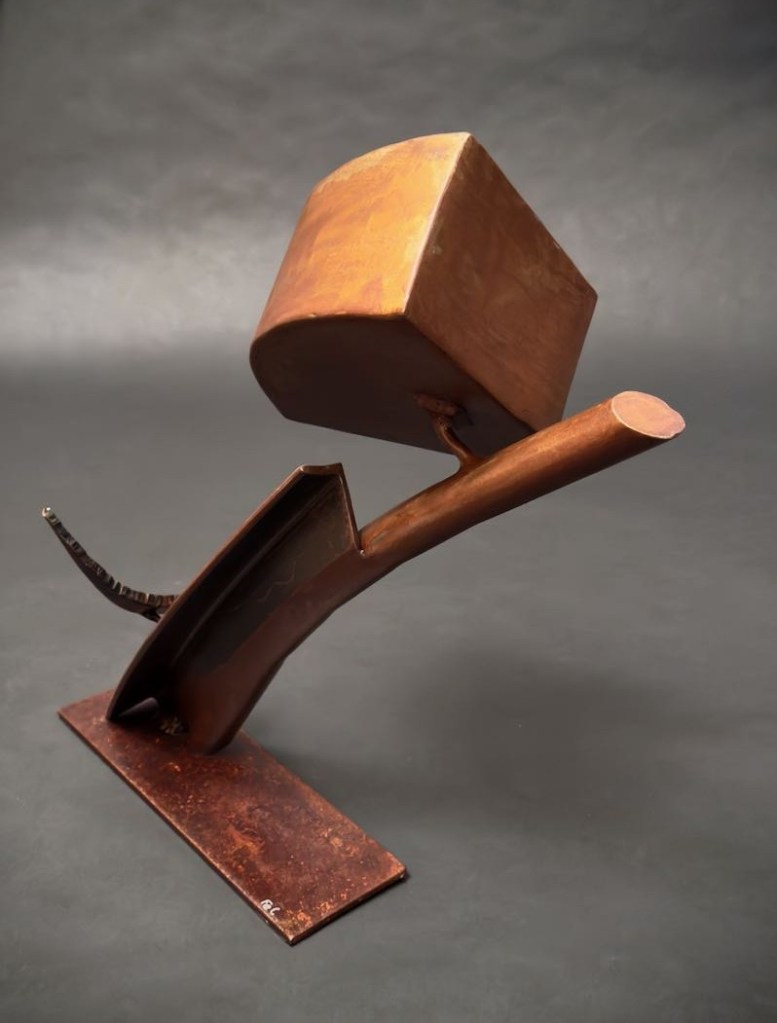
You primarily work with metal and stone. What draws you to these materials? And how do they help you convey themes like impermanence, strength, or inner balance?
Everything is temporary. My materials attract me because of the physicality necessary for shape and for the objects. I want the imperfections and marks to be shown because they reveal that a human made the objects. That does not mean I don’t intend to create or show a kind of beauty or craftsmanship but that it was not created by a machine, a heartless soulless profit making part of the system. The objects try to display a kind of tentative balance which I believe is necessary to understand in life. The material is strong and difficult to move, parts are heavy and the frequent use of the rust patina shows age can have a beauty and dignity we should appreciate.
The concept of Wabi-Sabi — the beauty of imperfection and impermanence — is evident in many of your pieces. How do you interpret and incorporate this philosophy in your sculptures?
Ideas of what is beautiful is often bound to a cultural or social ideology. People have lost the ability to find beauty in the things they find around them; most often they need to purchase some fetish item the consumer world told them they should have. There is beauty all around us, in things we overlook because they are not fashionable or popular. Wabi-Sabi, reminds us that decay, imperfection, and age all have a place in human existence and that that existence is all part of the great existential mystery.
My work is an attempt to remove artificiality and pretense and to offer an opportunity to just be. The tentative gestures, the transitional attitudes and the rusting of the work all nod toward the principles of Wabi-Sabi and the potential for meaning in our human journey.
Let’s talk about your creative process. Do you begin with a clear concept and plan your sculptures in detail, or do they evolve more intuitively through interaction with the material?
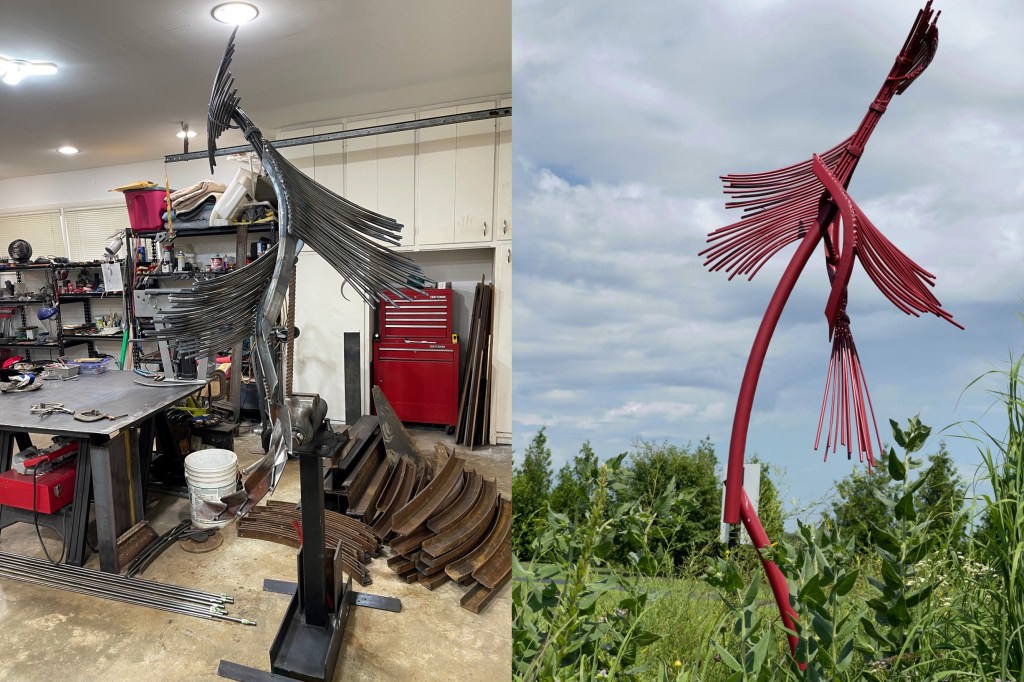
My process is guided only by my intuition and philosophic principles and my hope for humanity. The material is chosen only because it does not interfere with the intuition and principles.
Several of your works feature movement and tension — arcs, twists, and dynamic balances. Are these formal decisions, or are you expressing something deeper about internal or external conflict, perhaps the friction between chaos and order?
The gestures in the work are intended to reveal the tentative transitional nature of life. The idea of “becoming” is crucial and the objects try to reinforce this for the experiencer.
One of your sculptures is titled ‘Out of Chaos’, which feels especially timely in today’s ever-shifting world. Could you share more about the ideas behind this piece, and how it connects to your broader exploration of existence and transformation?
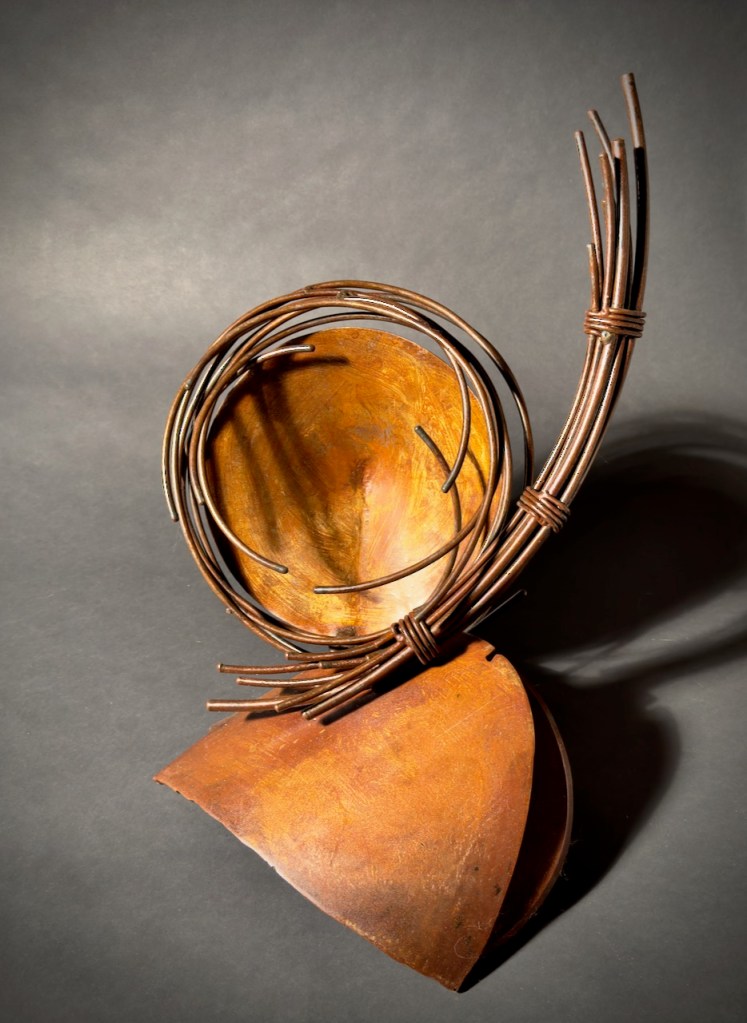
The idea of the work Out of Chaos is that the illusions of an ordered universe are just that, an illusion. We desire to have an ordered life and a predictable future but this is only a mythology and ideology promoted by some system to use as control. Someone once told me to embrace the chaos because that is real, not the construct we call reality and are encouraged to adopt. To try and live in the real rather than the reality is important because otherwise we are easily convinced that the illusions presented to us are the truth; once we believe in these fabrications we lose the desire to find any accurate truth.
Over the years, how has your relationship with art-making changed? You’ve said it’s not something separate from you, but rather a Zen practice — a way of Being. Does that connection feel even stronger today? How does it feel to look at earlier work through the lens of who you are today?
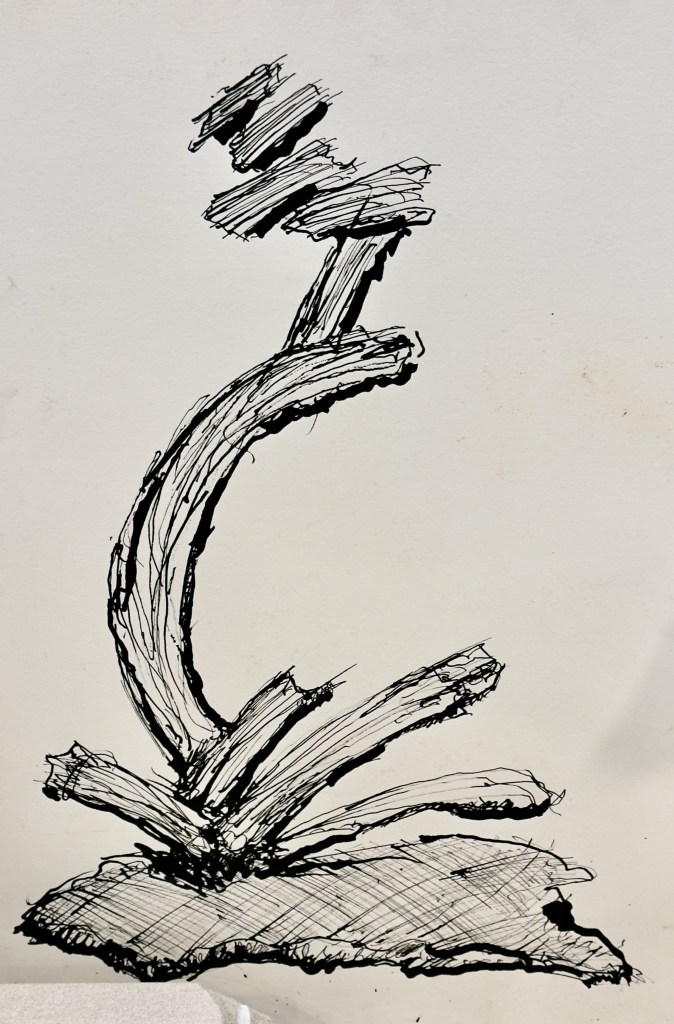
My experience has changed drastically over the years. I sold my first painting when I was only 9 years old and have been making art continually since then. Some of it good, some of it really bad. Because of the way of the world, I have always had to be employed in order to make money to support my art making. So the struggle to continue to make art over the years has influenced my process and commitment to the practice. I have done painting, printmaking, drawing, photography, experimental video, performance, conceptual art, fluxus, and sculpture both figuration and abstract. After surveying the landscape of artistic practice I have returned to sculpture as the one I feel is most applicable to my works intentions.
If you were to reflect on the most important lesson that sculpture — as both a practice and philosophy — has taught you about life, what would it be?
If I were to be asked about one thing that is most important it would be that art needs to reveal and signify our collective humanity; the thing that brings us together concerning what matters most to us as beings. If we can’t find a way back to this we as a species are not necessary.
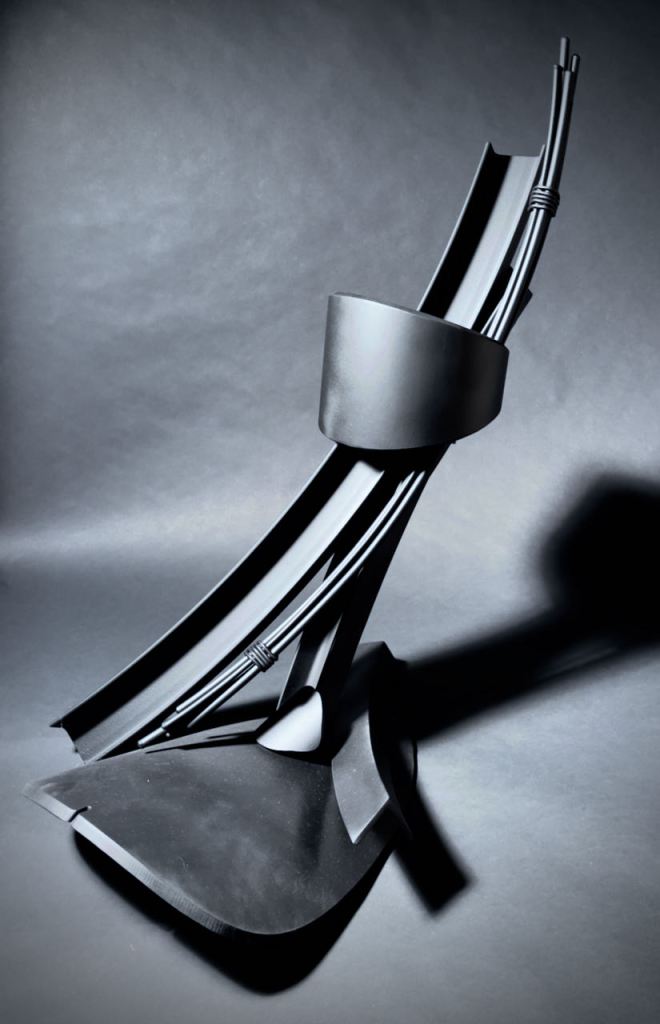
What advice would you offer to emerging artists who are seeking to make work that is meaningful, meditative, and rooted in something deeper than surface-level aesthetics? How can they remain centered in a fast-paced world?
I try to teach my students that art is not just an external product but it is a search for the self. One can’t make authentic art work if one does not know who they truly are. The search for the self is critical because unless we find our core sense of self we will always be making for a place of illusion and the adoption of some external mythology or ideology.
In connection to my previous question, we’d also love to hear your thoughts on the role of modern platforms in your journey. How have platforms like Biafarin contributed to your artistic path? What kind of impact have they had in helping you connect with new audiences and share your work on a broader scale?
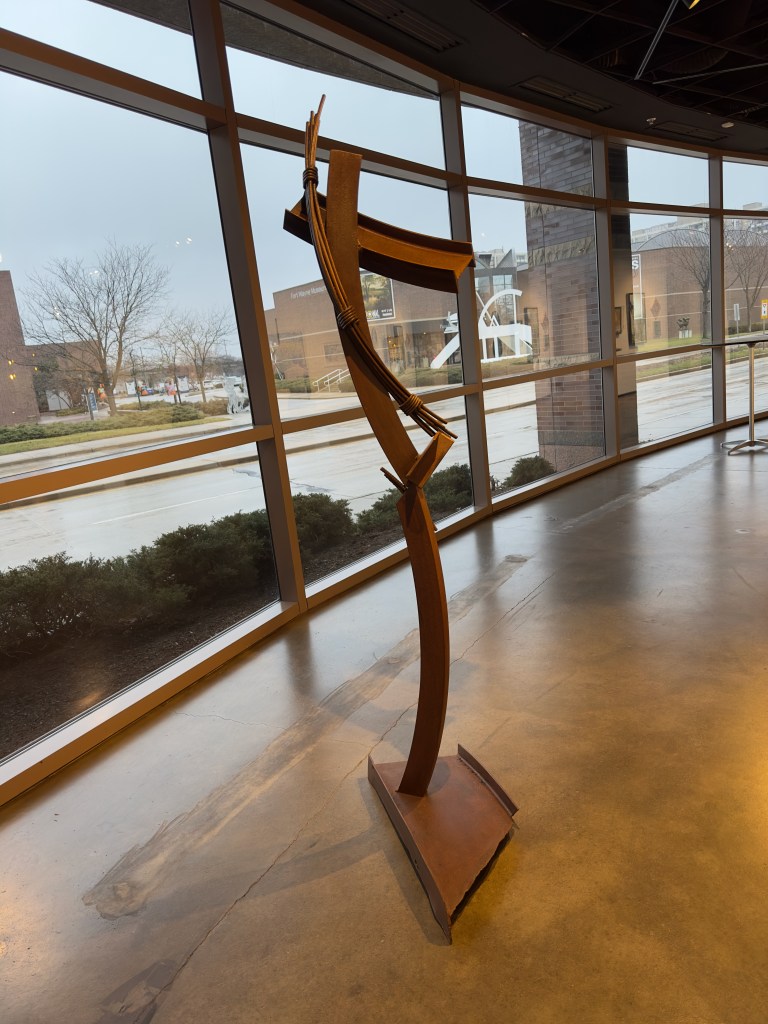
Artists make work to show it to others; to spread the feelings and ideas out to others in the hope that it reaches them and will enrich their lives in some way. The systems in place to facilitate the dissemination of the work out into the world is very important and particularly to find ways to have artists share their work in an artworld dominated by commerce. Art can be a way to dissent against a system that wants to control and dominate our humanity in ways that deny our potential; art can through sharing makes us believe in ourselves again.
Gregory Steel’s sculptures do not shout. They stand. They breathe. They hold tension and silence at once. Rooted in philosophy and shaped by physical labor, his work asks us to step away from distraction and toward contemplation.
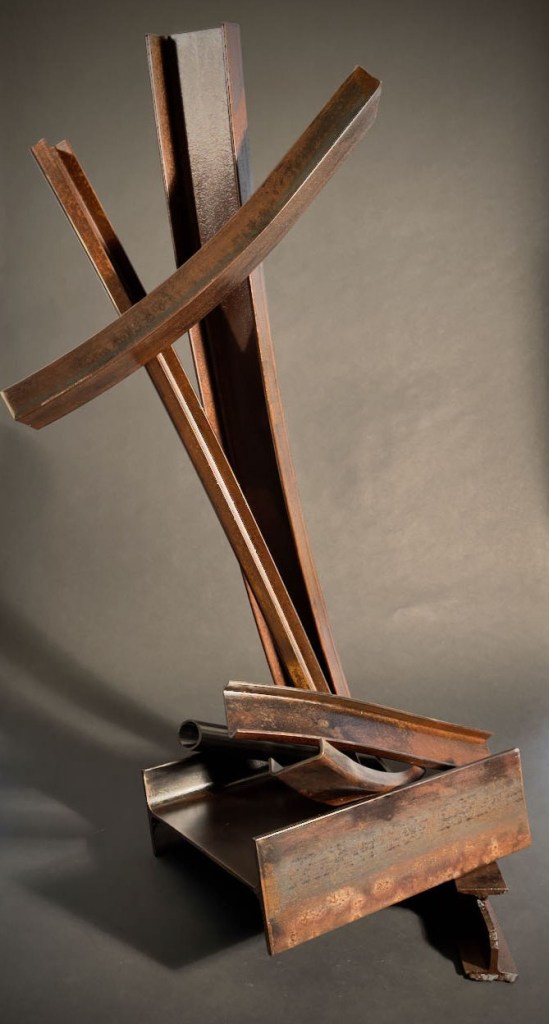
To explore more of Gregory’s sculptural practice, visit his official website, follow him on Instagram and discover his featured profile on Biafarin, where his works continue to invite viewers into a space of balance, impermanence, and spiritual inquiry.
 Review Me
Leave a comment