
Hi Lale, thank you for being with us. Let’s begin by tracing the roots of your artistic path.
Your background is rich with storytelling—from the stage to the studio. How did your experiences as an actress, director, and educator influence your evolution as a visual artist?
My background in theatre taught me the power of narrative, presence, and emotional truth. Whether on stage or on canvas, I aim to connect—to move people, to make them feel seen.
Directing gave me an appreciation for composition, rhythm, and visual balance, which naturally transitioned into my paintings. I started teaching at a university when I was quite young, often teaching my peers. That experience taught me to stay curious and adaptable.
These layers of experience are reflected in my work, as I explore emotion and transformation through color and form.
Your artistic roots in theatre and teaching emphasize emotion, transformation, and curiosity. Beyond these, your global life journey has also played a role. How have those moves across countries shaped your exploration of light, resilience, and human connection?
Light, in my art, is often about choice. Choosing to bring light into dark places—within ourselves and for others— an act of connection and hope.
Living in various cultures has profoundly shaped me. From the streets of Ankara to the landscapes of the English countryside, I learned that connection can exist beyond language. It’s this essence of shared humanity that shaped my visual language.
My mother was American and my father is Turkish so I grew up in a multi-cultural household and they both taught me the importance of living in the world, not in a single country. My father taught me the importance of perspective and optimism. My mother instilled in me the power of love. During her battle with cancer, she continued to shine her light through unimaginable pain. Even though she didn’t win her battle, she lived with such grace that it continues to guide me. My goal—to live with Love and Light—comes directly from her legacy.
And then there’s my son. Adopting him as the first single woman to do so in Turkey required a 5-year legal battle where I helped change two laws. But I saw something in him, even as a baby—a light, a resilience I couldn’t explain. I had to shine my light for him because he was already shining his for the world.
My family taught me more about resilience and light than any experience I’ve ever had.
From your parents’ legacy to your son’s resilience, light is indeed a guiding force in your journey. This essence radiates in your Shine Your Light series. It’s rooted in the beautiful idea that we all have the ability to illuminate someone else’s darkness. It feels like a visual symphony of empathy—an invitation to pause, reflect, and radiate kindness. Was there a specific moment or personal revelation that sparked this series into being?
Thank you for calling it a “visual symphony of empathy.” That really touched me, as empathy is the foundation of all my work. I first learned about empathy as a teenager, working at a suicide prevention crisis center. That experience sparked a lifelong exploration—eventually leading me to develop a proprietary Empathy Training program I now use in consulting and coaching.
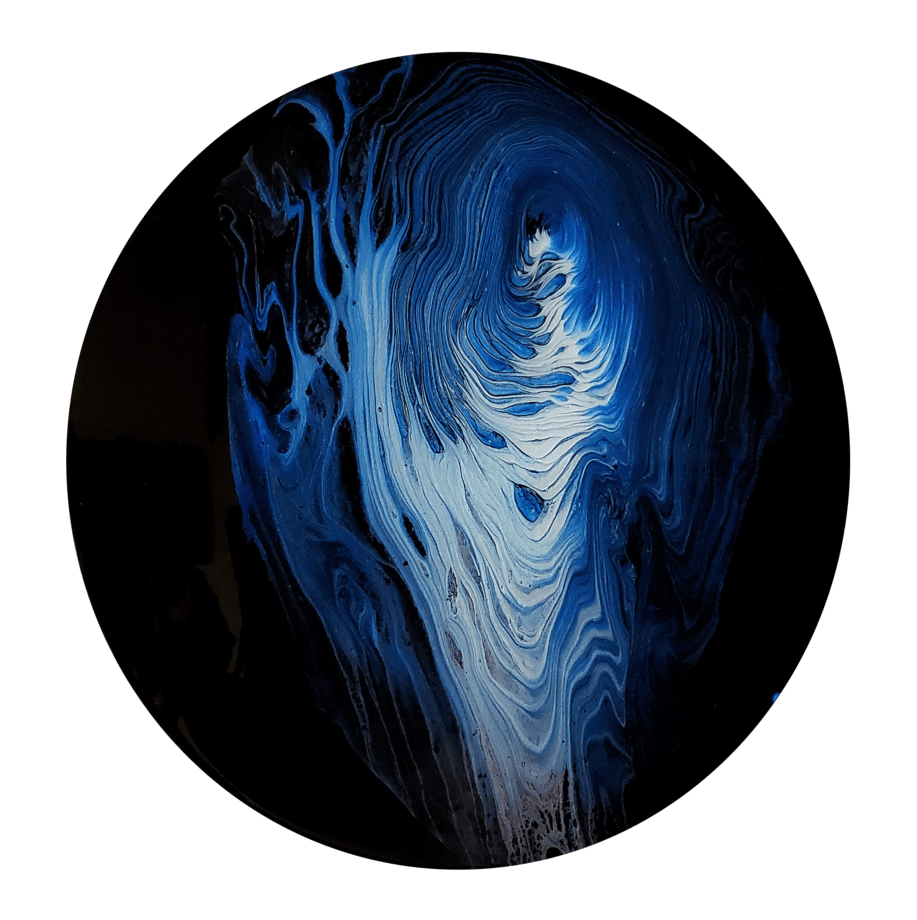
Into the Light was the painting that ignited this series. Perhaps not the norm, but I rarely paint when I’m down because even the process of setting up my paints and materials immediately takes me out of the gloom. But, this one was different. The darkness of the painting mirrored where I was emotionally. And then it happened—I had barely used any white, but it kept seeping through, pushing into the darkness. We all, sometimes, have to just push through to the light. That moment became a metaphor—and the start of Shine Your Light series.
That moment with Into the Light beautifully captures how empathy and resilience fuel your art. Within the series, Be the Sun in Someone’s Darkness feels especially central. What was your intention behind this work and its role in the collection?
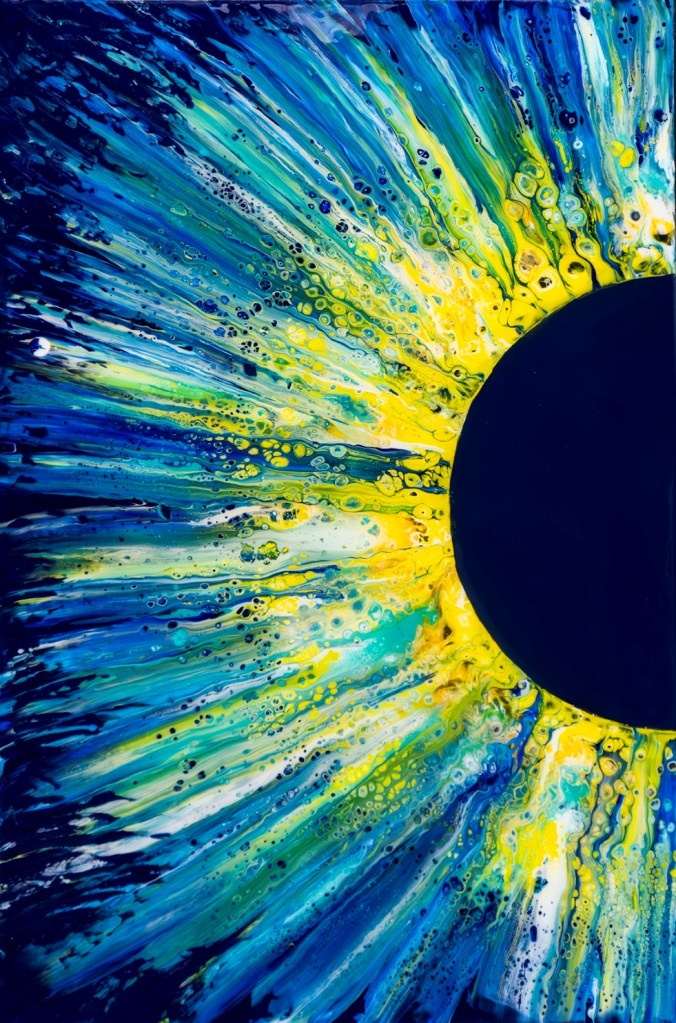
This piece was created as both an invitation and a mirror. I wanted viewers to see themselves not just as observers, but as participants in increasing light in our world.

The central darkness represents both our pain and the shared weight we all carry. The yellows and oranges speak to the healing power of kindness.
It became one of the most recognized pieces in the series and was honored with the Award of Excellence from the Gainesville Fine Arts Association. Even more surreal was seeing it showcased on a Times Square billboard as part of HMVC’s Exhibition. That was a great moment.
With Be the Sun in Someone’s Darkness earning such powerful recognition, the series’ visual language stands out even more. Your technique combines fluid, radiating bursts of color with centralized darkness, creating tension and hope in the same frame. What guided your decision to work with this specific aesthetic and structure throughout the series?
It started organically. I was drawn to fluid art for its unpredictability—it mimics life. Now, I use it as my initial starting point, but then I use other techniques that help shape the colors into form.
That central darkness wasn’t planned at first; it was instinctual, and once I saw how it anchored the emotion and the colors, I embraced it. It became symbolic: the darkness we all hold, and the light that can emerge when we choose it.
Each piece carries this interplay of shadow and color, fear and hope. It feels honest.

Your embrace of both shadow and color gives the series its emotional honesty. In works like Metamorphosis, Connected Radiance, and Illuminate the Night,—seem to echo both cosmic and human energies. Do you see light in your work more as a symbol, a force, or something else entirely?

Light, for me, is an energy—one that connects us to each other, to the cosmos, to ourselves.
It’s both internal and infinite. That’s why the pieces sometimes feel like cells or galaxies.
It’s that overlap I’m drawn to: the micro and the macro, the personal and the universal.
Light is the force that pushes us forward, that reminds us we’re not alone.
Your vision of light as both cosmic and intimate beautifully captures its duality. As someone who explores both artistry and empathy, how do you personally navigate the emotional space between creating from personal experience and opening that work to others for connection and healing?
It’s vulnerable, but it’s where the magic happens. I don’t believe in art as performance—I believe in it as authenticity. In theatre and as a faculty member at a conservatory, I taught “method acting”. You may not have gone through the situation that your character is facing, but I guarantee you that you have experienced the same emotion. Just like in empathy, the situation never matters, only the emotion. It is the same in the arts. Your audience will always know if you are being authentic, genuine; you cannot “act” your way out of that. You cannot cover that with technique.
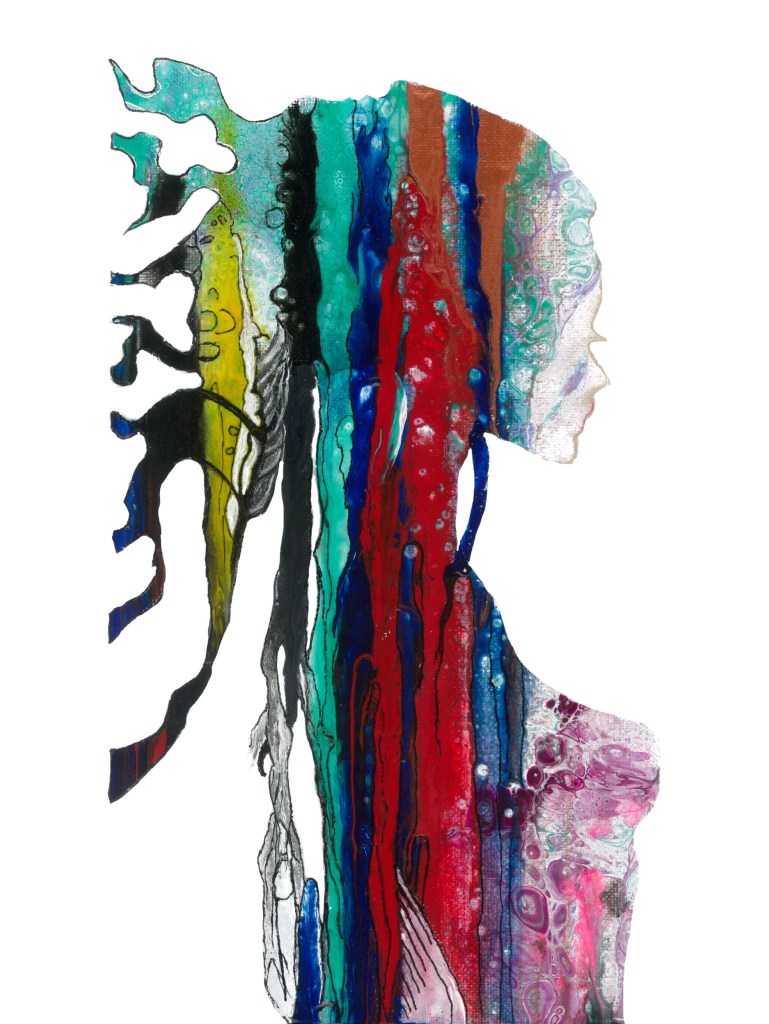
Finding and sharing your authentic self is so important, and the ideas of how we all have different layers and the importance of allowing all your colors to shine can be seen in my paintings, Layers and Radiance Released.
When I paint from personal experience—grief, hope, transformation—I hope others find their own story reflected in the work.
Your reflections on grief, hope, and transformation highlight the role of emotion in your work. A striking motif that carries those themes is the central darkness within your canvases. How do you see its symbolism in relation to the light that radiates outward?
The black center represents the void—the pain, the unknown, the parts of ourselves we keep hidden. Aside from that, I am also inspired by our universe, whether that’s the depths of our oceans or galaxies far away. I have also been fascinated by black holes, so naturally, it would show up in my work.
Surrounding it with color is a choice. It’s me saying: even this can be held with grace. Even our darkest moments can give rise to beauty. The contrast invites conversation between shadow and light, and it’s that dialogue I want to explore.
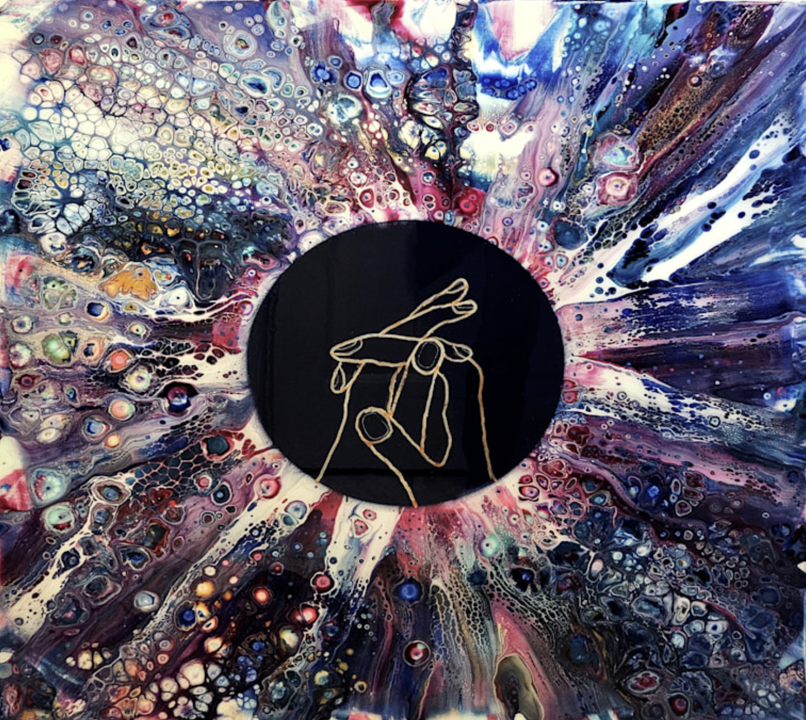
Framing darkness with grace and color gives your work its striking balance. Some pieces, such as Stronger Together and Echoes of the Heart, also introduce symbolic or figurative imagery within your abstract style. How do these elements deepen the emotional resonance of your visual language?
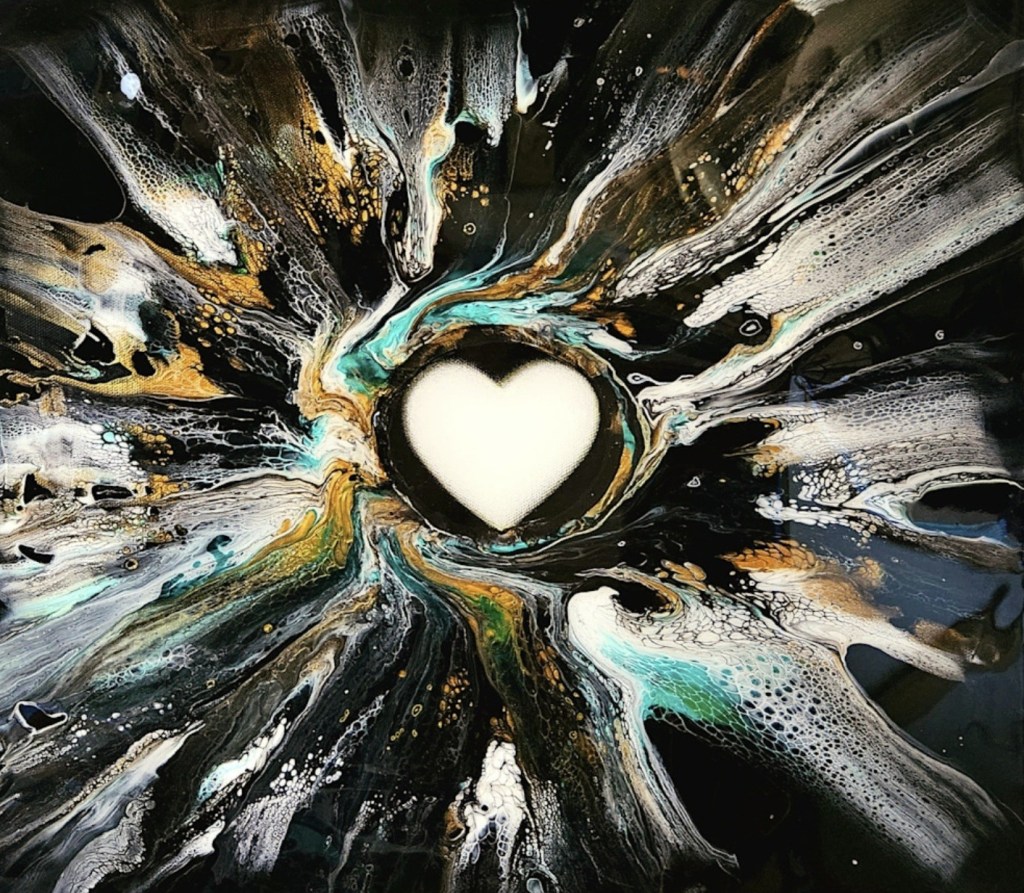
Those pieces mark a shift—an opening. As I grew, I found myself adding subtle figures, suggestions of connection or memory. They don’t take over the canvas, but they whisper something. They humanize the abstraction, creating a bridge for viewers to step more personally into the piece.

It’s like giving form to feeling. My painting Holding Hands is also a good example of this.
Adding quiet forms like those in Holding Hands shows how your abstractions evolve with feeling. Let’s step into your studio—can you take us inside your creating process? What does a typical session look or feel like when you were working on a piece in this series—from idea to completion?
Setting up my paints is part of the process, and I have two different methods. If I’m not feeling my best, I will take my time setting up my paints to get into the right energy, then I can start painting. If I’m already in a good place, know exactly what I want to paint, the colors, the techniques, then I’ll set up the day before or at least hours before painting so that all is ready when I’m in front of the canvas.
Then I work in layers— background first, followed by drying time, and then additional paint or pen and ink work. This pen & ink work takes the longest, as this is where I create all the details. And then I add art resin on top of many of my paintings as it seals the painting and helps the colors show off their vibrancy.
With my Shine Your Light series, I typically start by adding the dark core—then intuitively let color radiate outward. In my art, you will see a lot of what looks like lacing, that is created through my pen and ink work.
The process is a mix of trust and intention, letting emotion guide technique until the piece feels like it has its own voice.

Your process blends intuition with detail, letting each piece find its own voice. In a world often overwhelmed by division and noise, your work quietly but powerfully reminds us of compassion. What kinds of responses or stories have viewers shared with you about how these works have impacted them?
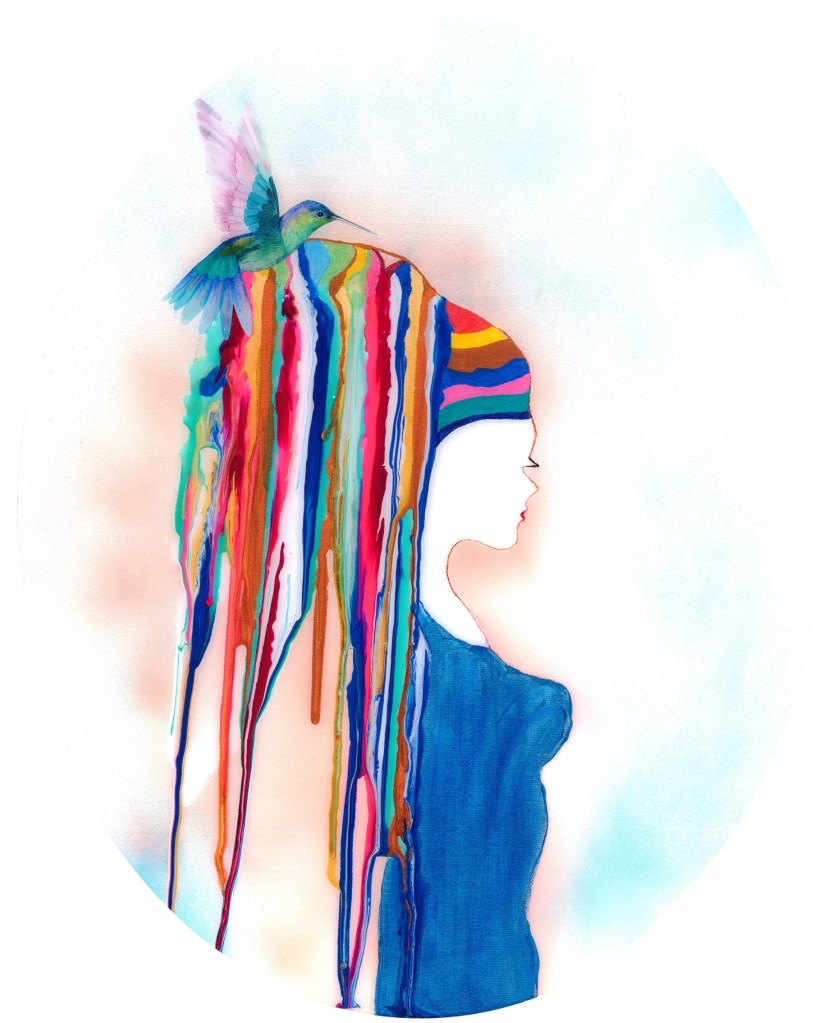
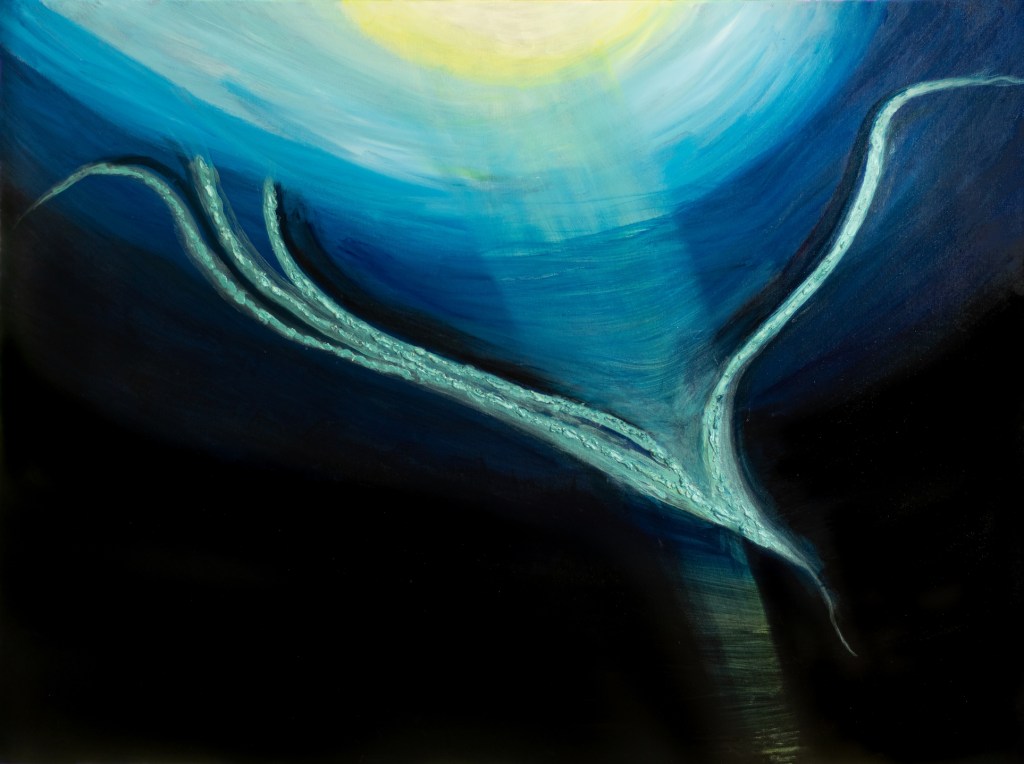
So many beautiful moments. One woman stood silently in front of Illuminate the Night, then turned to me with tears and said, “This is what hope looks like.” Others have shared how my work helped them through loss, as it was with someone who said, Reflection of the Blue Heron, gave her hope for the first time since her divorce after 23 years of marriage.
Those stories are why I create—they’re proof that art can be a bridge for healing and connection.
Hearing viewers describe your paintings as hope itself underscores the connective power of your art. In that sense, Do you consider your art a form of advocacy or emotional service—as much as it is a creative practice? What responsibilities, if any, do you feel as an artist creating during such transformative times?
I see my art as emotional service—an act of empathy in action. Artists are often witnesses, mirrors, and light-bearers. I feel a responsibility to create with intention—to offer something that helps people feel, reflect, and hopefully heal.
Especially during these divided and often violent times, I feel even more of a responsibility to choose hope. Light.
Your view of art as empathy in action highlights both responsibility and hope. Within the Shine Your Light series, is there a painting that feels especially personal or marks a turning point in your journey?
Be the Sun in Someone’s Darkness is deeply personal. It’s the soul of the series.
But Into the Light was the spark. That painting changed my relationship to my own pain and helped me understand the kind of work I was meant to create. It told me: “Choose Light, you’re ready.”
From spark to soul, your series has mapped a profound journey. What comes next—how do you see your creative path evolving? Are there new emotional terrains or visual languages you feel drawn to explore in future series?
I helped co-create a collaborative painting in my Shine Your Light series, where I invited others to co-create with me using shapes, color, and words. I began with an abstract sunflower piece—and invited others to add a personal symbol or phrase reflecting how they shine their light for others. The responses were beautiful and deeply moving. I’d love to explore more collaborative painting projects where everyone can share their light on canvas like I do.
I’m also working on a travel-inspired series called Art Across Borders. It’s been over 14 years since I allowed myself even a short vacation. As a single mother and then navigating two decades of health challenges, travel felt risky, even impossible. The last time I traveled abroad, I landed in two hospitals in two different countries. That experience created a fear I couldn’t shake. But I never stopped dreaming.
This summer, I finally said yes—to healing, reconnection, and joy. I’m visiting Portugal, Croatia, Turkey, and Spain—not to escape, but to reclaim my courage.
With the mindset of “If not now, when?” I created the Arts Across Borders package to help others reconnect with their light too.
Finally, I completed my master’s degree in 2023 (yes, at the age of 60!), exploring the nexus of arts, business, and health. And as I continue to explore Arts in Health, I see even greater potential for blending empathy and art as healing modalities.
Your story of reclaiming courage and expanding your vision is inspiring. For anyone going through a dark or uncertain chapter, what message or intention do you hope they take away when they stand before one of your paintings in Shine Your Light series?
I hope they feel seen. I hope they realize they’re not alone. And I hope they understand that even in darkness, there’s beauty—and that their light matters.
Your hope that each viewer feels their light matters beautifully summarizes your series. As we wrap up, we would like to know how have platforms like Biafarin, Gallerium, and Exhibizone supported your journey in sharing your message of light and resilience with a wider audience?
These platforms have been wonderful bridges. They’ve given my work visibility across borders, and, most importantly, helped share a message of resilience and hope on a larger scale. I’m grateful for their role in amplifying artists’ voices.
Thank you for your time, Lale. Lastly, is there anything you would like to add?
Only this: Art is more than paint for me—it’s courage, it’s reflection, it’s connection.
I hope my journey—from theatre to healing, from grief to color—reminds others that it’s never too late to begin again.
We each carry light. The world needs us to share it.
To experience more of Lale Greger’s radiant paintings and her Shine Your Light series, visit her website, follow her on Instagram, or explore her Biafarin artist profile. Each work is a testament to empathy, resilience, and the power of light—inviting us to pause, reflect, and find beauty even in life’s darkest moments.


 Review Me
Leave a comment