Thanks for joining us, John. Your paintings have a kinetic, emotional gravity, like storms of memory or mood swirling across the canvas. They pulse with rhythm, color, and raw spirit. We’re excited to delve into the layered world of your work, your process, and what drives it all.
Let’s start at the roots. You mentioned growing up in Southern California and now living in the mountains of Western Massachusetts. How have these very different landscapes — sunny coasts and forested peaks — shaped your artistic lens?

The first painting I remember as a child growing up in Southern California was of a mountain landscape — a river with a covered bridge, and the mountains were dotted with charred tree skeletons, their peaks glowing orange. It was a bit bizarre, but even as a child, I felt drawn to New England. This painting was part of the LA County elementary art show. I remember being asked why the trees were black and the mountain tops orange. The fires in Southern California this fall brought that painting back to my mind. Since then, I’ve created several works that express my sorrow for those losses. Now, living in Western Massachusetts, I still have an affection for covered bridges, and in my paintings, the mountains may still be orange.
Wow, it’s fascinating how that early painting held so much meaning, and how it echoed into your later work. What were those formative childhood years—and your time studying at the University of North Texas—like for you? Were there any specific mentors, moments, or artistic movements that cracked something open in you?
I had some excellent teachers and made lasting connections with several talented fellow students. I still stay in touch with a few of them and consider them mentors. My relationship with painting has been a bit off and on, and I’ve often needed some encouragement. Now, I’m grateful to be fully focused on painting.
In your own words, you once described painting as “an extension of your mind and soul.” That’s beautifully said. Could you walk us through what that looks like in your practice? Do you begin with a feeling, a memory, or a visual impulse?
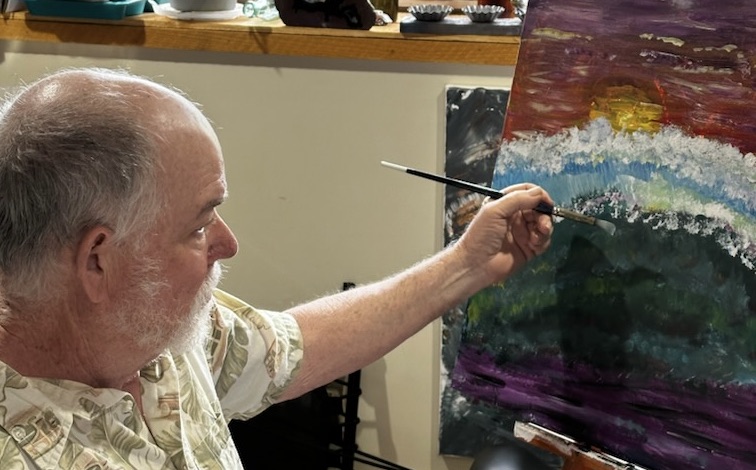
When I begin painting, I immerse myself in the process, trying to make the paint an extension of my hands (I paint with both my right and left hands). Sometimes, in my mind, I encourage my artistic side as if I were a spectator, watching the canvas change, while tuning out all my surroundings. When I’m finished, it’s as though everything stops, and I return to myself—or to one self.
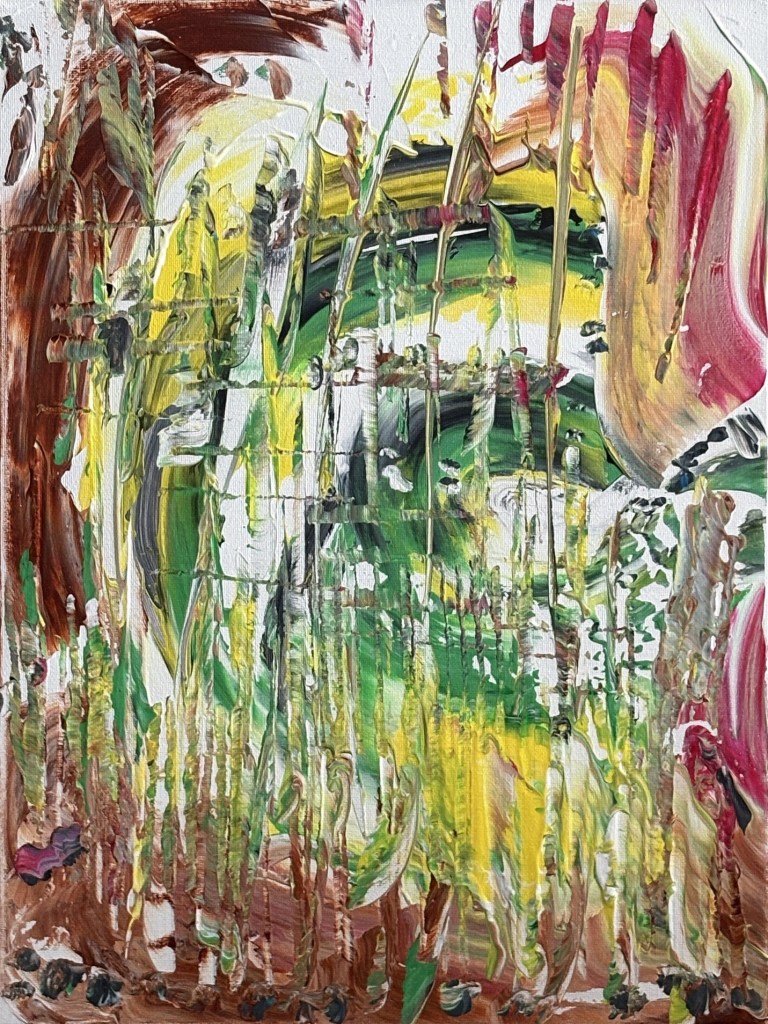
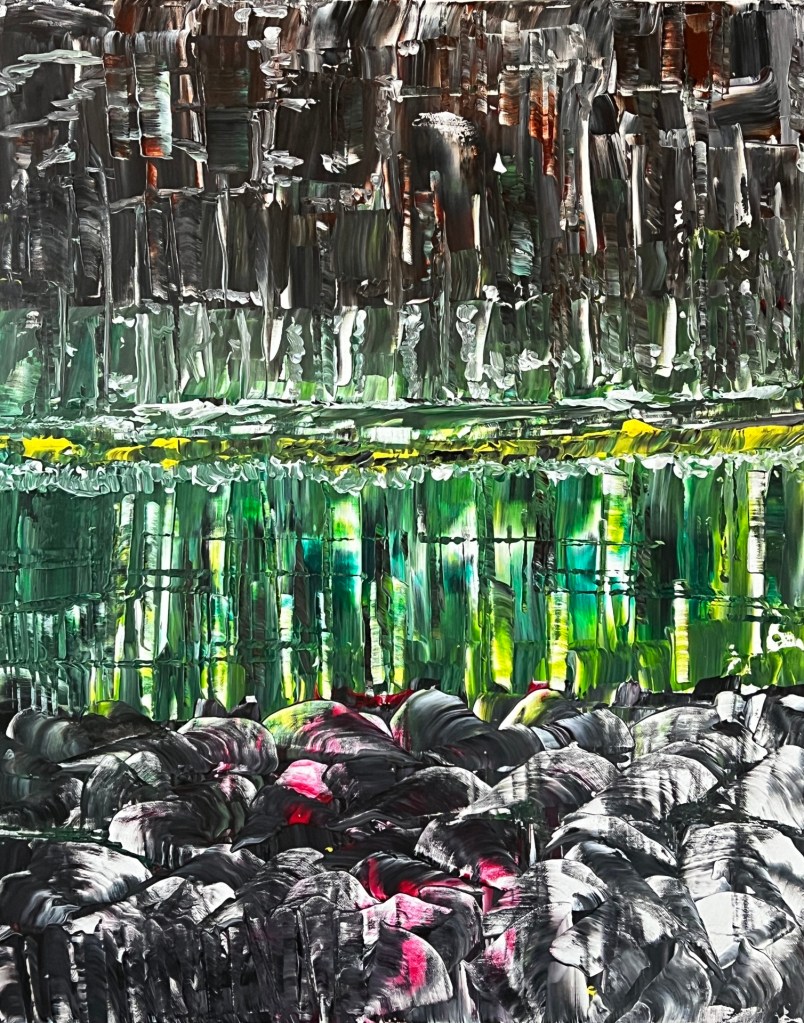
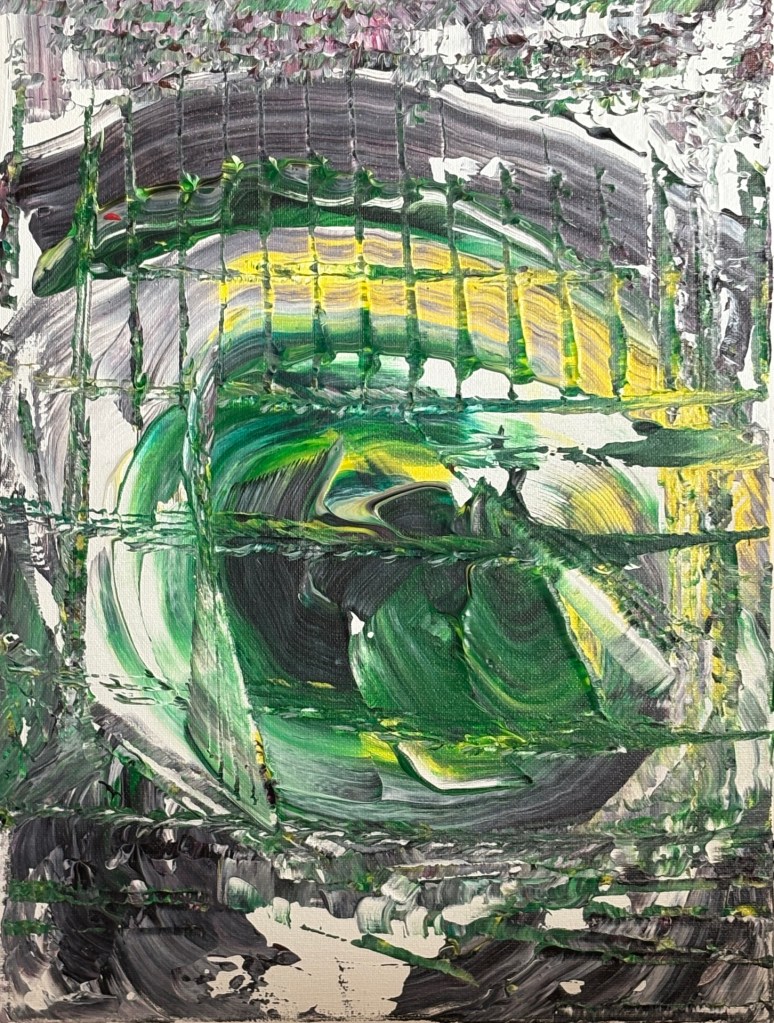
Let’s dive into Amusement Park. This piece is a sensory overload in the best way—vibrant yellows, reds, and greens seem to drip, clash, and rise like distorted carnival lights or overgrown nature. What was going through your mind as you made this? Is this chaos playful, or is there something deeper at work?
I originally planned the painting to be a yellow and green spiral. As it developed, it reminded me of an image of a long-abandoned amusement park. I felt the happiness of the days when the park was open, and then added red and orange to convey the fleeting memories as the park began to crumble. The lines, like bars, represent how those memories can never be relived again.
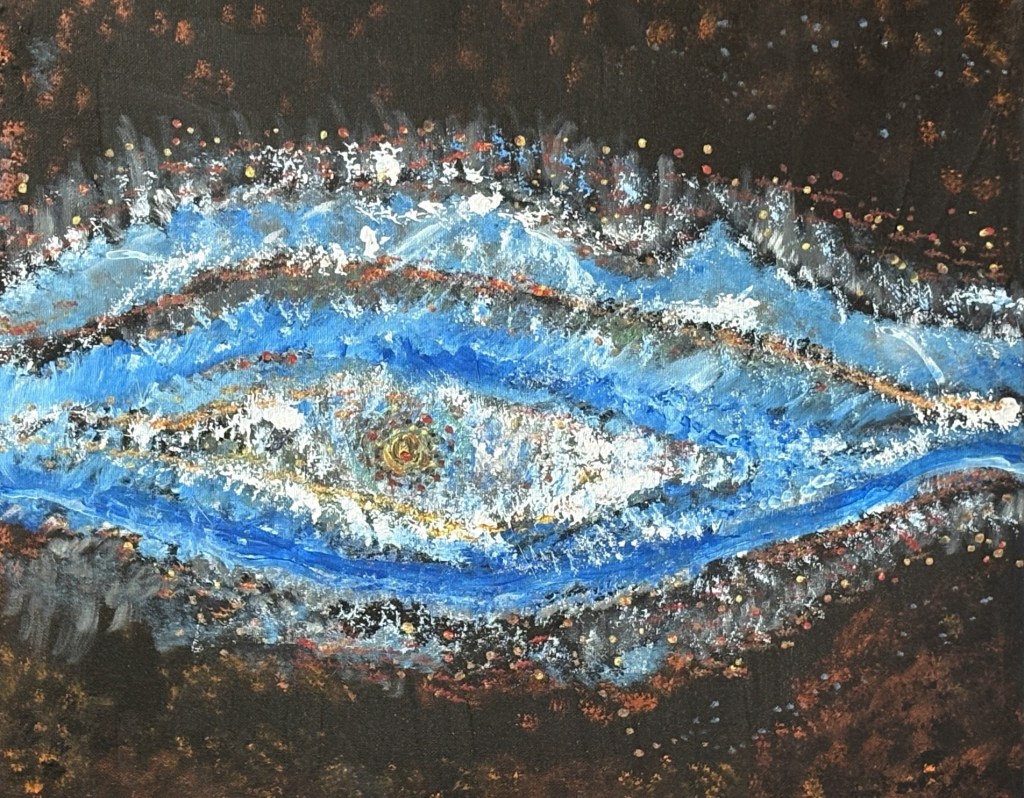
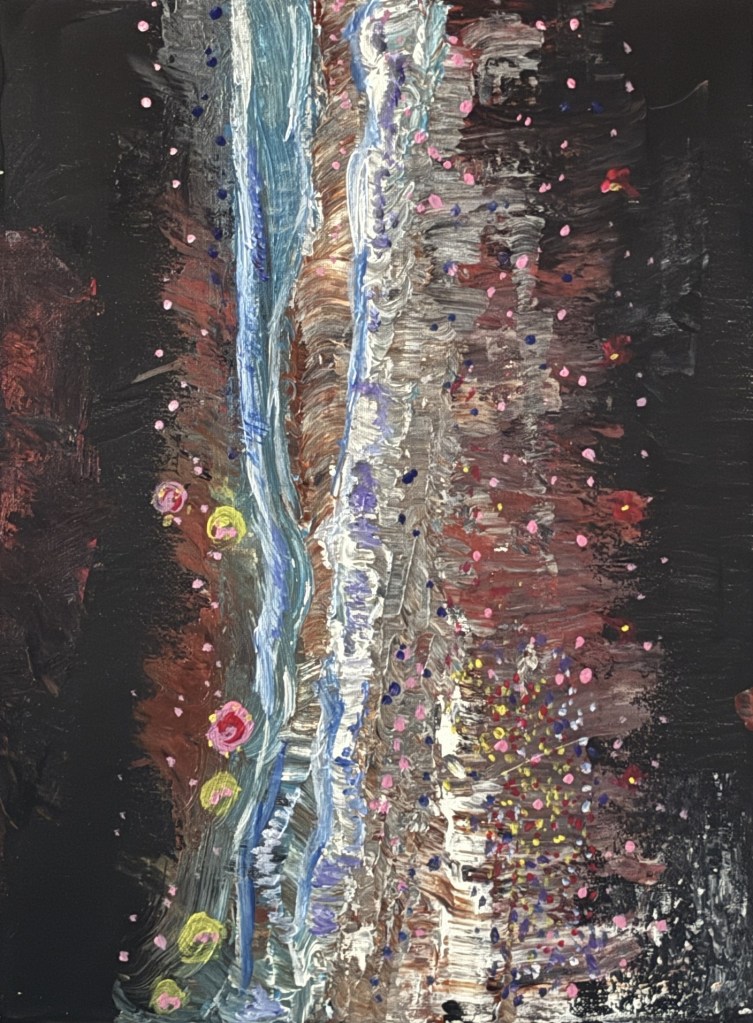
Night Sky has a different energy entirely. It feels darker, more tempestuous, with swirls of red and black, like embers burning behind clouds. How do you approach mood in your work? Do you find the palette first, or does the emotion lead the way?
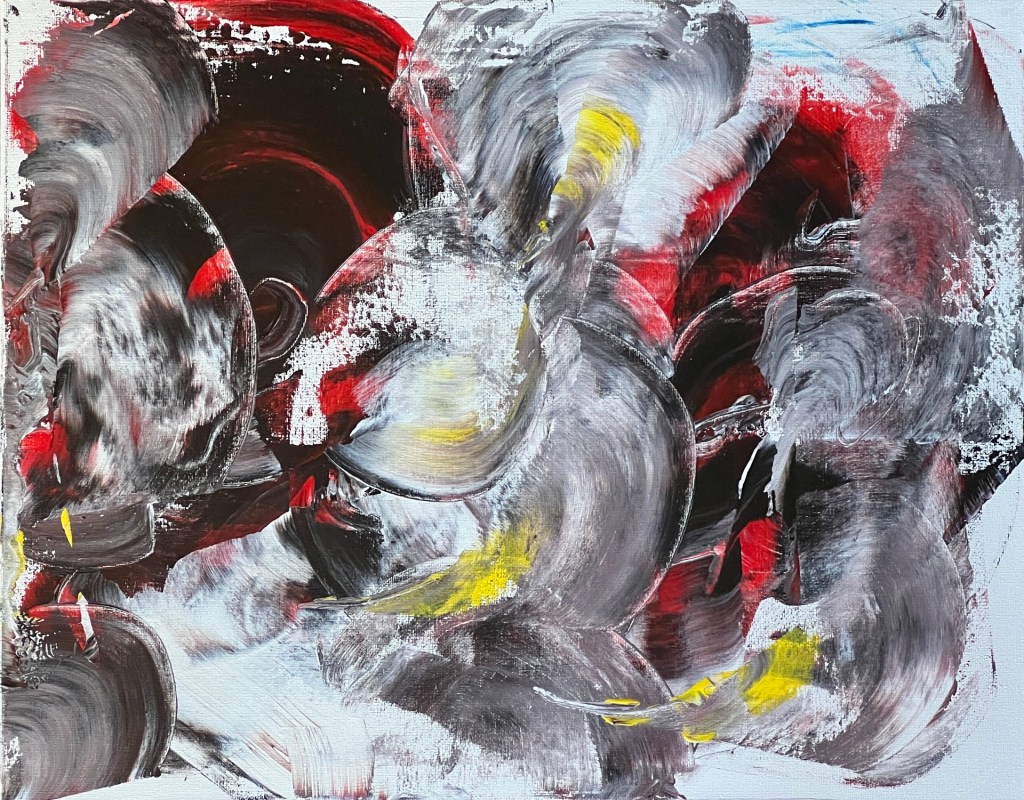
It’s a bit of both. I do often find my palette first. For Night Sky, I knew where the shapes were going, but I let the painting evolve as it developed. The colors, shapes, and sharp lines were intuitive choices. I felt it was a good composition, so I paused and stopped. Even though I originally planned to add more, looking back, I’m pleased with the choices I made.
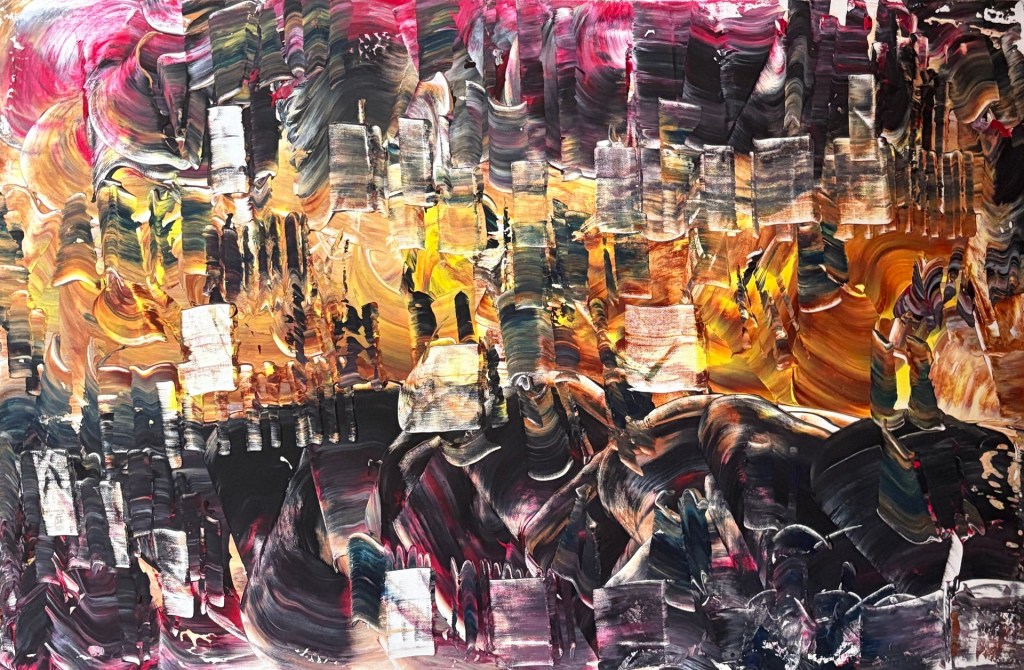
Then there’s Underground, which feels like a layered excavation. The earthy browns and black veils suggest sediment, ruins, or memory buried beneath surface noise. Was this piece inspired by anything literal—a place, a story—or did it emerge more subconsciously?
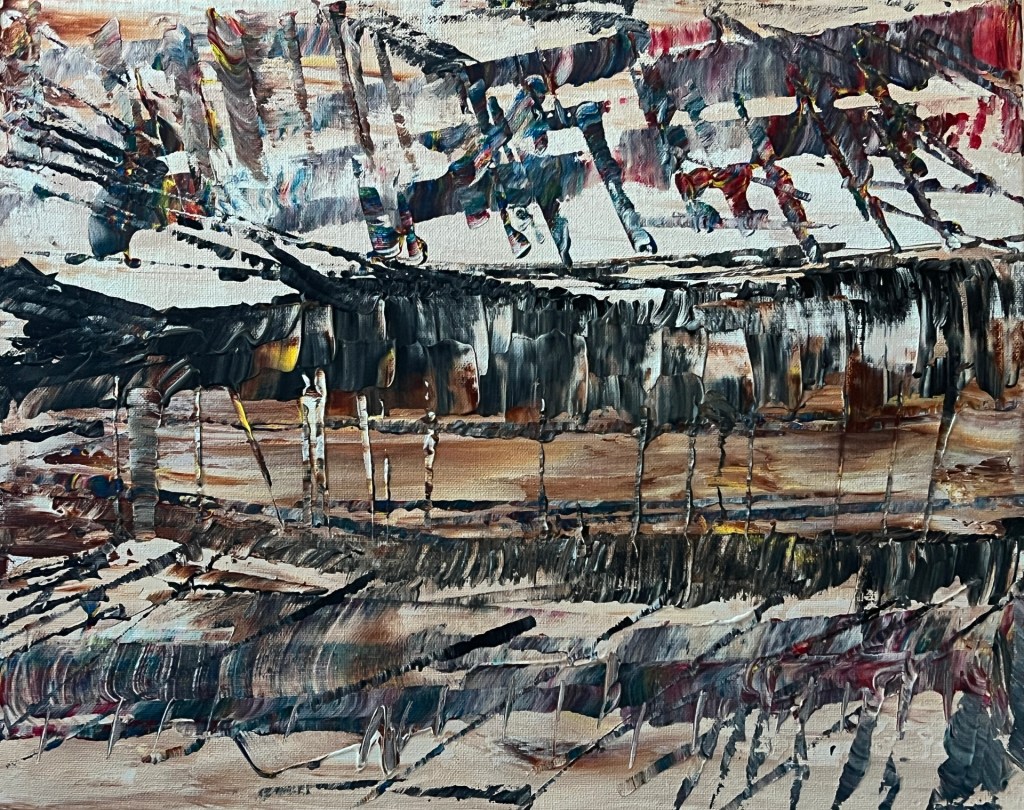
Yes, Underground was meant to convey the idea that “peace is all around us.” Even when there is chaos above and below us, we can still find peace. The peacefulness in the painting blocks out the noise and turmoil. I also loved the visuals, how the lines draw the eye to the center with both soft and bold strokes. I hope viewers may struggle to see the chaos above and below, but I encourage them to allow their eyes to move and find it.
And finally, Why So Blue—it feels like a cosmic wave, emotional but not melancholy. The sweeping cool blues and hints of red almost sing. What role does music or motion play in your work? Do you paint to sound or silence?
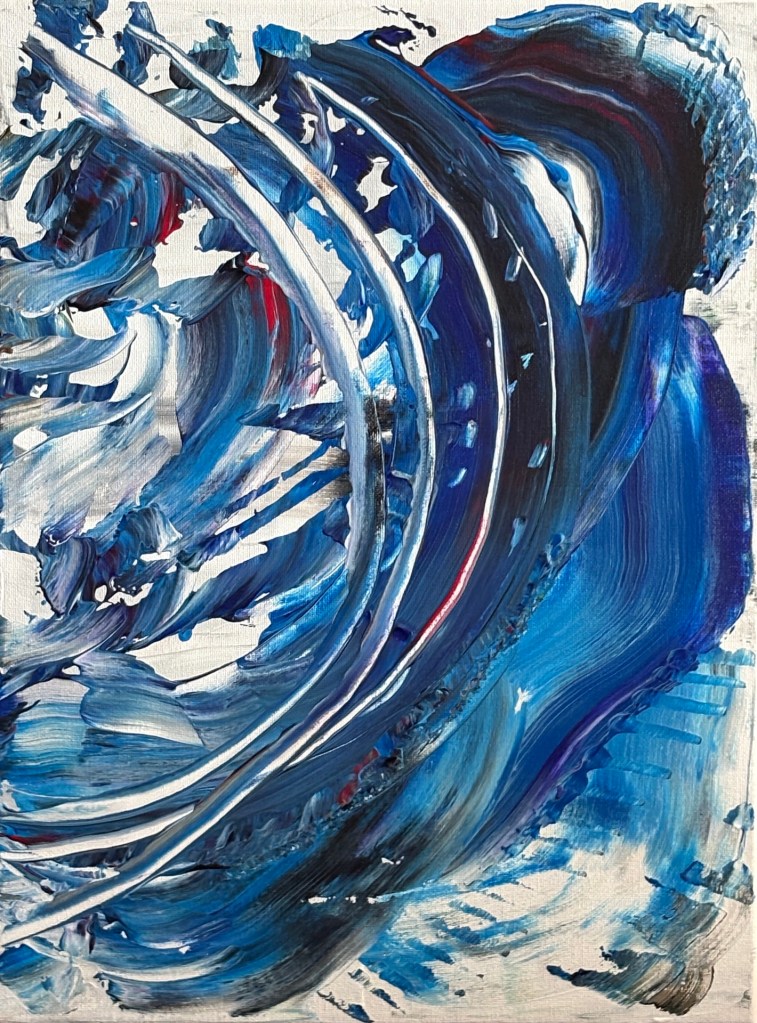
“Cosmic Wave” was the idea behind the piece. I wanted to represent perpetual motion. The splashes of red help amplify that emotion. I hope the painting gives the viewer a sense of calm, even as it depicts an explosion—a blue explosion, of course.
Across these pieces, we see a tension between control and chaos, between force and flow. Is that something you consciously seek, or do your works evolve intuitively, almost like they have a will of their own?
Yes, I do seek a balance. I control the painting only to a certain point. I add bits of detail, contrasting colors here and there, wispy brush or knife strokes. But why would I try to rein in a painting? The evolution of the work is often more powerful if I let it find its own way.
Looking into your painting, abstract and surreal influences clearly run through your work. Are there particular artists—past or present—whose energy or philosophy you connect with?
I’m deeply influenced by Claude Monet. I love how he treated water, colors, and landscapes. When I’m working, I often think, What if Monet were an abstract artist? What would his work look like? Greats like Willem de Kooning and Pablo Picasso have also had a profound impact on me, both in how I approach art and how I think about the art world.
You mentioned feeling privileged to make art. How has that feeling changed over time? Has your relationship to the canvas deepened, shifted, or surprised you?
I’ve had an on-again, off-again relationship with painting. I’ve explored a variety of subjects but always kept the same style. For a time, I was conscious that my art didn’t align with the “correct” style, so I tried shifting it. I experimented with a more modern approach, which I liked. A few years ago, I returned to my earlier style, but made it more radical and free-form. I hope my current work is pleasing—and I think it is.
It’s inspiring how you’ve allowed your style to evolve while staying true to your artistic voice. Through those shifts and returns, what’s one thing about your creative process that people might not expect—a ritual, a material you always return to, or something you’ve had to unlearn along the way?
Unlearning has been important for me. I’m fairly competent at drawing, but I no longer lay down any sketches or drawings before painting. I may refer to a photo I’ve taken, but mostly I look at nature—how water flows and reflects, the shapes of shadows, clouds, and tree branches. I also draw from dreams or thoughts about what I want to paint.
Many artists struggle with when to stop. How do you know when a painting of yours is finished, when it’s said what it needs to say?
Stopping is incredibly important. As I mentioned earlier, there’s a part of me that is the artist and another that is the spectator. Near completion, the spectator takes over and decides when the painting is done. There are times when I want to step away, let the work sit for a while, and then come back to determine if it’s complete or if it needs more changes.
That balance between the artist and the spectator within you is such an insightful way to think about completion. Once that dialogue is settled and the work is out in the world, what do you hope viewers walk away with after experiencing your paintings?
I hope viewers enjoy my work. It means a lot to me. If they find it thought-provoking, that’s great. If they take time to look and find any kind of meaning, that’s all I can ask. And if it’s not their style, that’s okay too.
Before we wrap up, we’d love to hear about your experience with digital platforms—how has sharing your work through Instagram or connecting with audiences via Biafarin impacted your visibility? In your view, how are these platforms shaping the journey for abstract artists today?
I’m not a seasoned Instagram user, though I do have an account. I use Facebook and am open to using other online platforms. I see the future of art in online spaces, which is exciting. The internet’s ability to bring spectacular art to such a wide audience is something I truly enjoy.
And finally—what advice would you give to younger artists trying to find their voice in abstraction? Especially those who might feel lost in the noise?
First, be true to yourself. This is a learned truth. Another truth is that blue is red, and red is yellow, and so on. Understand the importance of maintaining high quality in your work. A mistake done right is not a mistake.
Abstract art isn’t just a rebellious statement—it is the rebellious statement. But understand that it’s also quality art. Know when to stop. Abstract art can turn to mud if overworked, but if you scrape off the mud, you might…
To explore more of John Flippin’s expressive abstractions, follow his creative journey on Instagram or visit his artist profile on Biafarin. Each piece reflects his pursuit of balance between structure and spontaneity—boldly painted with energy, emotion, and a deep curiosity for the unknown.
 Review Me
Leave a comment