Hi Raven, and thank you so much for participating in this interview. It’s a pleasure to explore your artistic world and learn about your journey as an artist.
Let’s start by hearing a bit about your background. Was there a pivotal moment when you decided to follow your path as a visual artist?
The pivotal moment when I decided to become a visual artist occurred unexpectedly while studying fashion design. I had been searching for my passion for years, believing that inspiration should find you working. During a course, I learned about a summer program at Otis Art College and enrolled in 2D Design and Color Theory classes.
The instructor, a professional fine art painter, assigned painting homework. I’ll never forget the emotional explosion I experienced creating my first painting. The feeling was comparable only to when I first looked into my baby’s face and realized I was a mother. I fell in love with painting instantly.
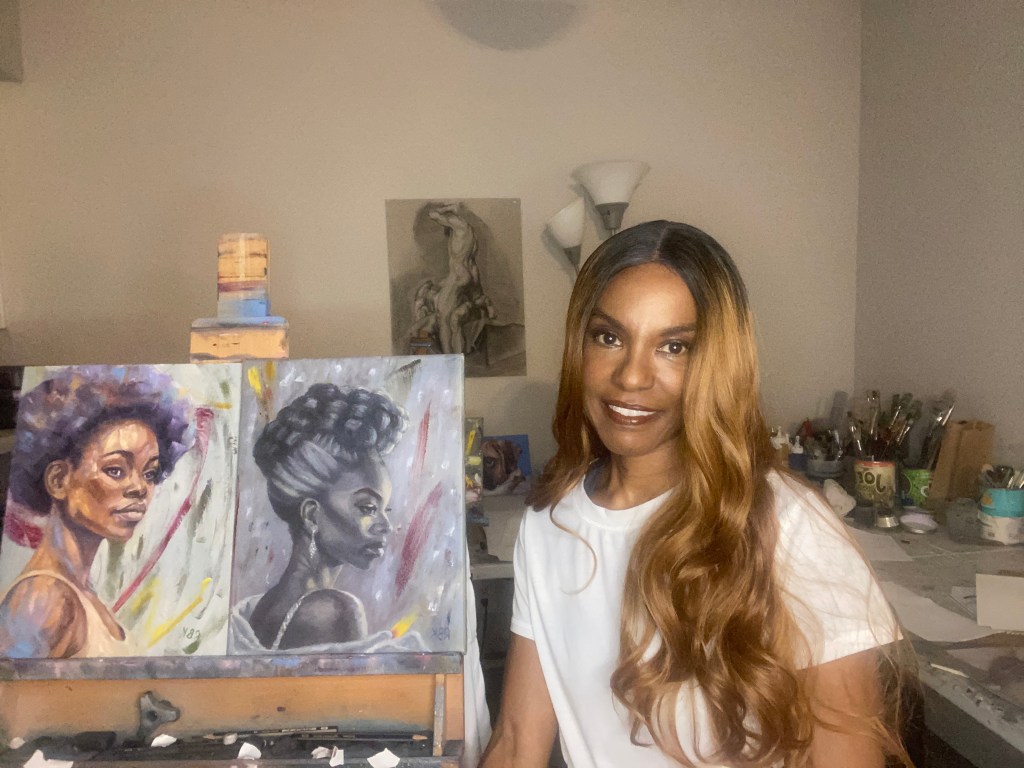
In that moment, I knew I had found my calling. I abandoned all other plans, deciding then and there that painting was what I wanted to do from that point forward, forever.
Was there ever a moment of doubt when you questioned your art career entirely? If so, how did you overcome it?
No, I never doubted my art career, but I have taken detours. I didn’t grow up in an art environment or even know that becoming an artist was possible in the modern age. So, I went to university without a clear direction, just picking something.
After graduation, I felt uncertain about my next steps. I wanted to focus solely on painting but struggled to figure out how to make it work financially. I drifted for a while, watching my younger classmates pursue their bachelor’s degrees.
Eventually, I discovered online education and dove in with gusto. Through the large volume of courses I took, working diligently on assignments daily, I essentially earned the equivalent of a bachelor’s degree in fine art drawing and painting. Simultaneously, I began learning about entrepreneurship to create a business around my art.
As I gained knowledge and skills, my confidence in my chosen path grew. While I’m still on my journey, I no longer feel lost or doubtful about my artistic career.
In your bio, you mentioned about the discovery of your connection to Junius George Groves, a fascinating piece of your family history. How did this revelation shape your art, and what role does his legacy play in your creative journey?
Discovering my connection to Junius George Groves helped many pieces fall into place for me. I’ve always been drawn to entrepreneurship and the late 19th and early 20th centuries. Even as an English major at UCLA, I preferred the literature of that era over any other.
I’ve often been told I have an aristocratic demeanor, which seemed strange given my upbringing. I began researching the “Black aristocrats,” a little-known group from that time period. This cohort of elites, including figures like Blanche Bruce, Josephine Willson, and Mary Church Terrell, shaped the landscape of modern America.
Junius George Groves, known as the “Potato King of the World,” exemplified this group’s spirit. Born into slavery in 1859, he became one of the wealthiest African Americans of his time through his agricultural innovations and business acumen. By 1902, he was producing more potatoes per acre than anyone else in the world.
Learning about the Black aristocracy’s values, lifestyle, and impact on society inspired me and my Aristocrats series. This knowledge gave me the confidence to create works depicting this influential yet often overlooked group in American history. Learning that I was actually connected to one of these aristocrats also increased my confidence in myself!

Fascinating! You are a classically trained artist, how have your studies under Francis Vallejo and institutions like Watts Atelier shaped your technique and artistic philosophy?
Studying at El Camino College laid my classical foundation, which I later deepened through New Masters Academy (NMA), Watts Atelier, and mentorship with Francis Vallejo. I believe strongly in learning the craft of art, and these experiences reinforced my commitment to technical excellence and artistic lineage.
NMA’s blend of Old Master principles with modern education gave me confidence in my skills, while Watts Atelier sharpened my portrait abilities through its rigorous, empowering approach. Working with Francis helped fill in gaps from not attending a traditional art school—his mentorship has been invaluable. Altogether, this training has shaped me into the artist I am today.
What are your influences? Are there any contemporary or historical artists you admire deeply, and if you could meet one, who would it be, and what would you ask them?
I draw inspiration from a diverse range of artists. Elizabeth Colomba, Kehinde Wiley, and Alex Gardner are among my top influences. I also appreciate the work of Etan Annan, London Ladd, Jason Anderson, and Basil Gogos. Also, the Impressionists have had a profound impact on my artistic passion. Their innovative approach to capturing light and atmosphere continues to inspire me.
If I could meet one artist in person, it would be either Caravaggio or Van Gogh. Both were true originals and troublemakers in their own right, pushing the boundaries of what was acceptable in their time. Their boldness and creative genius are qualities I admire and aspire to emulate in my own work.
Art often draws on both internal and external influences. How do you seek inspiration for your works? Is it more intuitive, or do specific cultural, historical, or personal moments guide your creative process?
I’m fortunate that I don’t really have to “seek” inspiration. In 11 years, I’ve never experienced artist’s block. Instead, I tend to have far more ideas than time to execute them. My process is very intuitive:
Sometimes I’ll feel a certain way and want to figure out how to create that feeling on canvas. Other times, I’ll read something that gives me an amazing visual in my mind, then search for external references that closely match what I envisioned.
Occasionally, I’ll see someone wearing something interesting and feel inspired to paint it. I’m more inspired by people than places, which is probably why I’m a portrait artist rather than a landscape painter. Humans are endlessly fascinating to me; their random actions and expressions often spark ideas for my art.
Take us through your process of making your artworks. How do you move from an idea to a finished piece? Where does an artwork begin for you?
I typically work in series—one idea often blossoms into a whole collection. For example, a casual conversation about dogs once led me to paint a Boxer puppy just for fun, which then inspired a series of portraits featuring upper-class Black women walking their Boxers through urban streets.
My process begins with gathering photo references that reflect the idea forming in my mind. I organize them carefully, then begin composing a sketch by blending different elements. Once the composition feels right, I create a quick value study to test the overall balance and mood. If it works, I move on to a detailed drawing on paper, where I can still make refinements before committing to the final piece.
When the drawing is ready, I either transfer it to canvas or recreate it by hand, depending on the scale. This structured, thoughtful approach allows me to fully develop my vision before I ever pick up a brush—ensuring each painting starts from a place of clarity and intention.

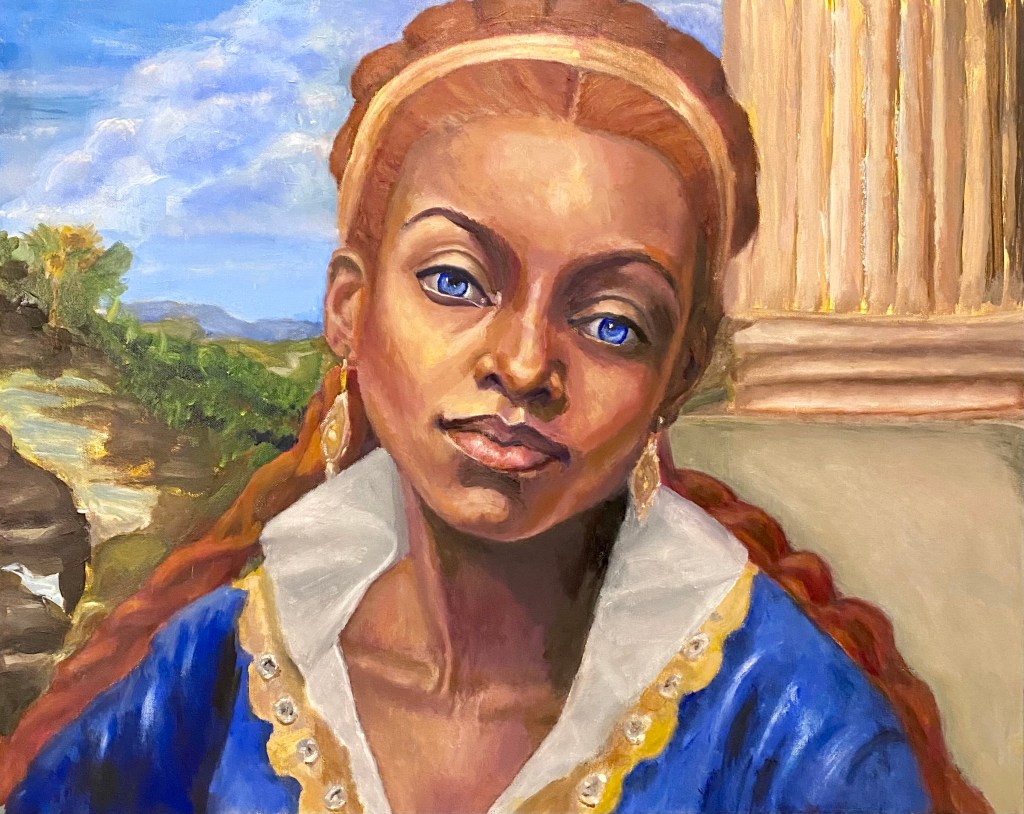
How do you choose your subjects? Do your subjects, like the veils and floral motifs seen in “Veil of Gaia”, “Spring Veil” and “Garden Veil,” hold specific meanings or symbolism for you?
My Veil series was inspired by a visit to the Museum of Fine Arts Houston, where I encountered a painting depicting the Veil of Veronica. This religious relic sparked my interest in exploring veils in different contexts. My Islamic upbringing, though I’m now more spiritual than religious, still influences my perspective. While the West often views the hijab as oppressive, many Muslim women take pride in their modesty, seeing it as beautiful and feminine.
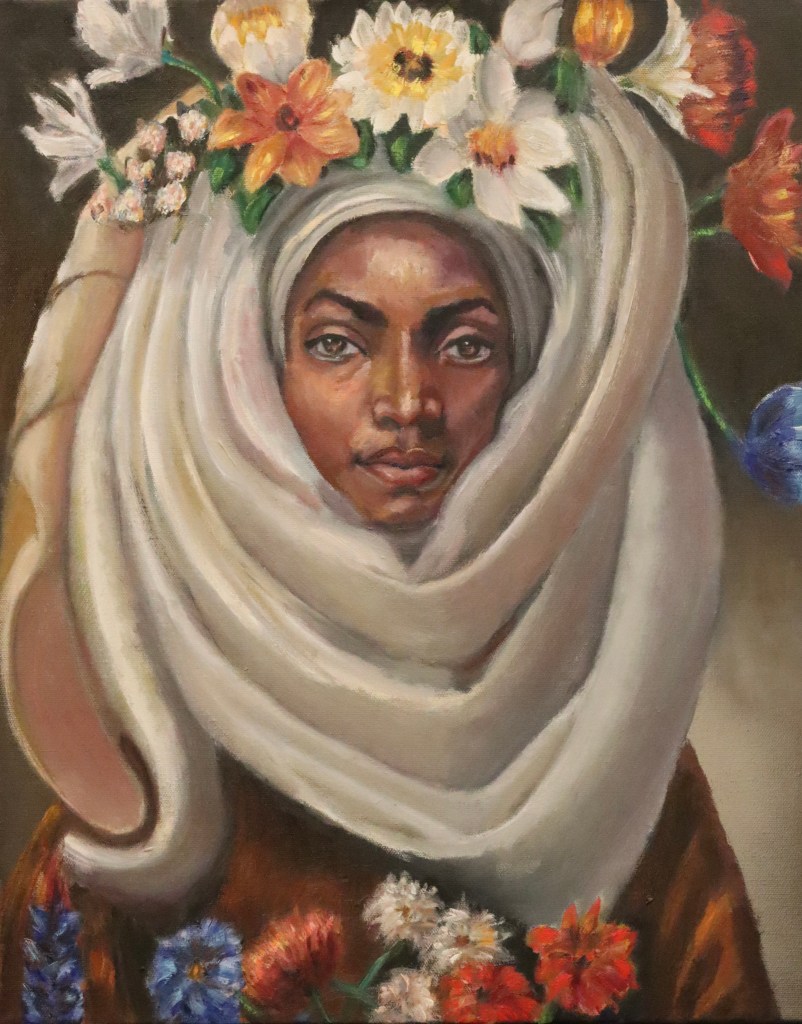
This led me to reflect on how Black women were historically robbed of their femininity during slavery. My work aims to reclaim elements stolen from my people: femininity, prosperity, and prominence in artwork. The Veil series uses veils and flowers to convey beauty, femininity, and choice.
I’m often drawn to portraying soft women in luxurious or fantastical settings. My art creates the world I’d prefer to inhabit, focusing on upper-class or imaginary backgrounds. It’s my way of making Black women the main characters, countering their historical absence or distortion in art. This series, like much of my work, is inspired by various sources – from personal experiences and cultural heritage to art history and social commentary. It’s a celebration of femininity and a reclamation of identity, all while exploring the complex symbolism of the veil.
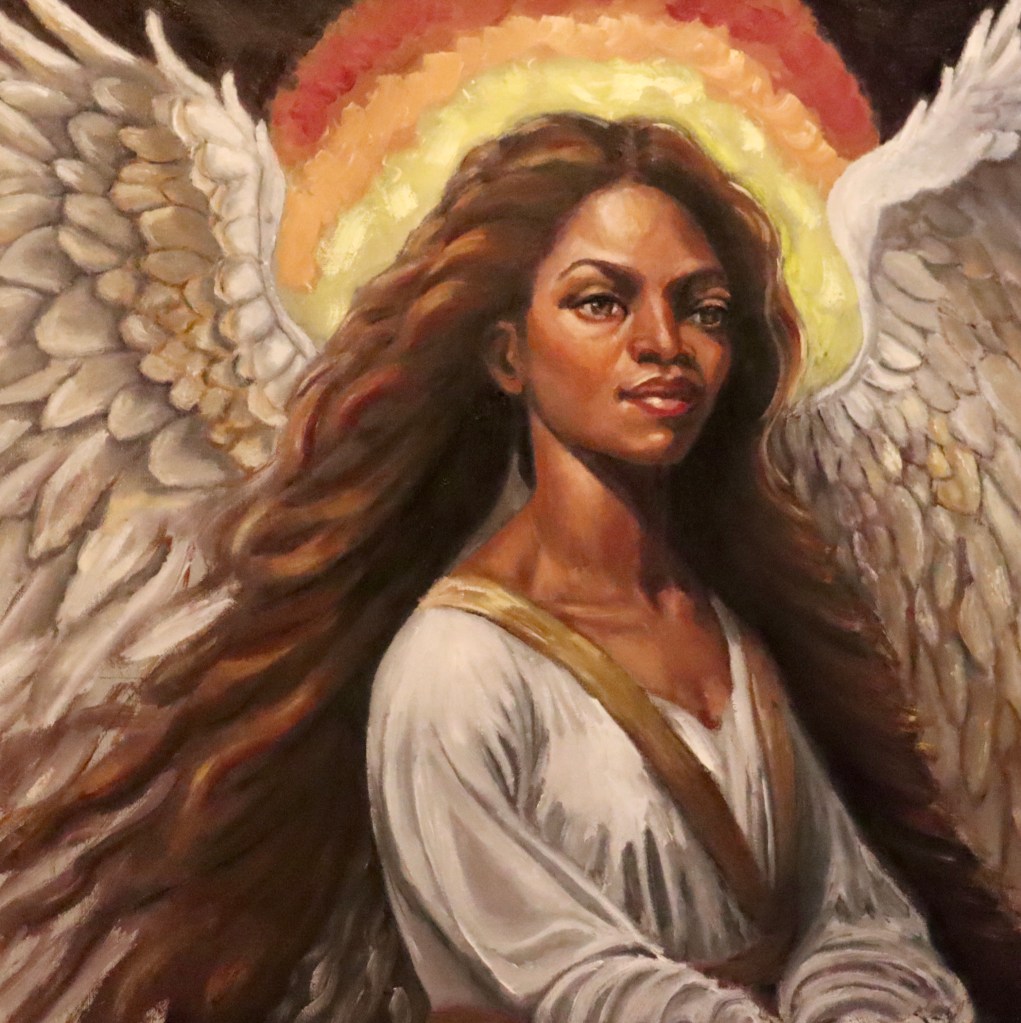
The way you combine fantasy with historical research is captivating. For example, in pieces like “L’Ange des Enfants” and “Lady Jane in Her Garden,” how do you balance the imaginative aspects with historical grounding?

Thank you for this question. I don’t necessarily strike a strict balance between fantasy and history in my work. Fantasy tends to be more inspiring to me, with historical references serving as a jumping-off point.
My goal is not to rewrite history, but rather to correct the injustices of the past through art. I aim to create a glimpse of what could have been if my ancestors had been treated with humanity and dignity. It’s the depiction of a parallel universe that exists vividly in my imagination. This approach allows me to explore themes of empowerment, dignity, and beauty while acknowledging our complex historical legacy. My art serves as a bridge between the past and a more equitable, imagined future.

The themes of “Protect the Crown” and “What Would Beyoncé Do” feel deeply connected to personal identity and cultural expression. Do you see a dialogue between these two works, or do they explore distinct facets of empowerment?
Yes, that’s a very astute observation. While both pieces are connected to personal identity and cultural expression, they represent different approaches to addressing racial issues.

“Protect the Crown” plays defense, inspired by legal rulings that allow discrimination against Black people wearing natural hairstyles. This issue has gained significant attention recently, with over 20 states now banning hair discrimination through CROWN Act legislation. The CROWN Act prohibits discrimination based on natural hair textures and styles commonly associated with race, including locs, cornrows, twists, braids, and Afros.
On the other hand, “What Would Beyoncé Do” plays offense. It serves as a reminder that with the right attitude and mindset, anything is possible. The painting encourages viewers to focus on what can be achieved rather than perceived limitations, using Beyoncé’s success as inspiration.
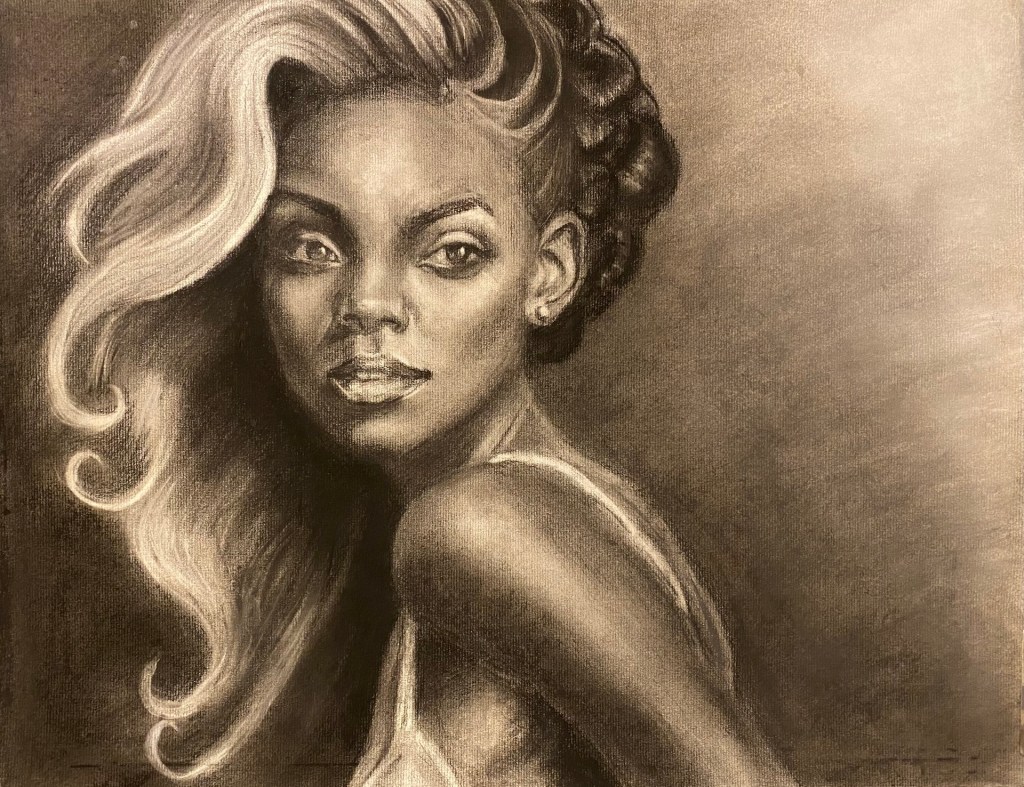
Both pieces reflect the ongoing struggle for racial equality and cultural acceptance. “Protect the Crown” highlights the need for legal protection against discrimination, while “What Would Beyoncé Do” celebrates Black achievement and empowerment. Together, they offer a nuanced perspective on the complexities of Black identity and expression in contemporary society.
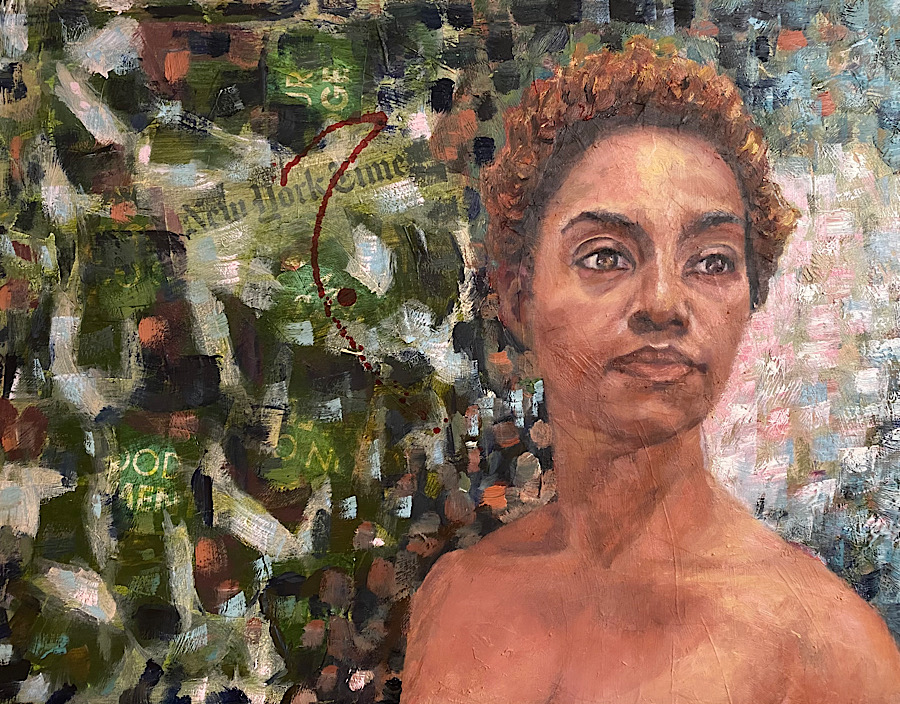
Your self-portrait “Selfie Reflection” offers a modern, intimate glimpse into identity and self-expression. What inspired you to create this work, and how does it reflect your view of self-portraiture in today’s world?
I created the Selfie series at the end of 2024, a time that always prompts reflection for me. It was a year of significant personal and artistic growth, but also one that made me acutely aware of the passage of time. As my final series of the year, I wanted to turn my focus inward. The series honors the courage I displayed throughout the year by putting myself and my art out into the world more boldly than ever before.
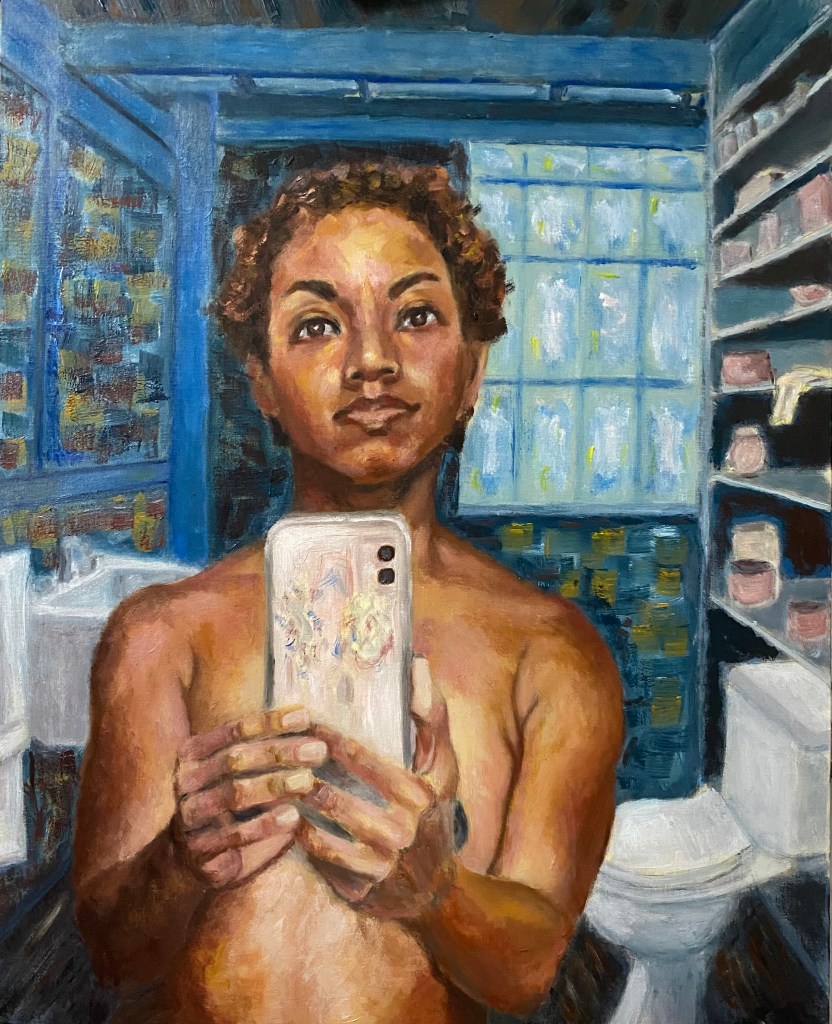
Selfie Reflection, in particular, embodies a gentle defiance. It acknowledges the vulnerability that comes with sharing my art publicly, while simultaneously affirming my refusal to back down or quit. This piece captures the complex emotions of an artist facing both personal triumphs and the inevitable challenges of time.
Your works depict a universe where unity, love, and empowerment thrive. What role do you think art plays in shaping how society views concepts like beauty, confidence, and cultural heritage?
Art, in all its forms – painting, sculpture, dance, film, music, and more – is vital to any civilized society. Primarily, art reflects the consciousness of the artist within the context of their society, but it also shapes societal views.
Artists are rarely conformists. We are unique individuals called to a challenging vocation, often thinking differently from the majority. Art is a way of “speaking up” in a disarming manner, seeking to persuade rather than lecture. Painting, in particular, is quietly persuasive in its silence. Using only color, form, composition, and subject matter, it can affect the viewer’s mood in ways they often can’t explain.

Art also documents the zeitgeist of a particular moment in history because artists always exist within a specific context. In my work, I purposely create beauty in defiance of those in the art world who believe that “too pretty” equates to banal or provincial. As a Black woman in a society that still sometimes equates the beautiful and elegant Michelle Obama with masculinity or animals, beauty and femininity become acts of defiance.
Without engaging in arguments, I present an alternative view through my art that can potentially influence people positively. My work challenges prevailing narratives and offers a new perspective on beauty, femininity, and Black identity in contemporary society.
Raven, thank you for this insightful conversation and for sharing the fascinating stories behind your remarkable works. To wrap things up, we’d love to hear your thoughts on how platforms such as Biafarin, Exhibizone, and Gallerium—designed to enhance exposure and connect artists with a global audience—have contributed to your artistic journey.
Biafarin has given me the opportunity to hone and share my artistic vision. Their support and encouragement has been instrumental to my progress. I would recommend them to any artist who is looking for a quality arts organization to partner with.

To explore more of Raven Kushner’s visionary world, visit her official website, follow her evolving journey on Instagram, or explore her profile on Biafarin, each offering a unique glimpse into a universe that is at once imagined and deeply felt.
 Review Me
Leave a comment