
Hi Donelli! Thank you so much for participating in this interview. It’s a pleasure to delve into your artistic world and learn about your journey as an artist.
Let’s begin with your incredible journey—from a career in physics at IBM Research to becoming a full-time painter. Can you share what that transition looked like for you, and what ultimately led you to follow art full-time?
I have always been interested in art. I wanted to go to an art college like Pratt Institute or the Rhode Island School of Design after high school (where I was the valedictorian of my class), but my family didn’t think I could earn a living doing this and could not afford to support me. I ended up going to Lehigh University for a BS in Engineering Physics (graduated with highest honors – summa cum laude), then a master’s degree, and finally a PHD in physics (all on academic scholarship). I then took a job at IBM Research in Yorktown Heights, NY for the next 28 years where I founded and ran a group working on the physics of electron and hole transport in semiconductors and insulators including their degradation mechanisms. I was made a fellow of the American Physical Society in 1988 for this work at about the same time my interest in art re-emerged.
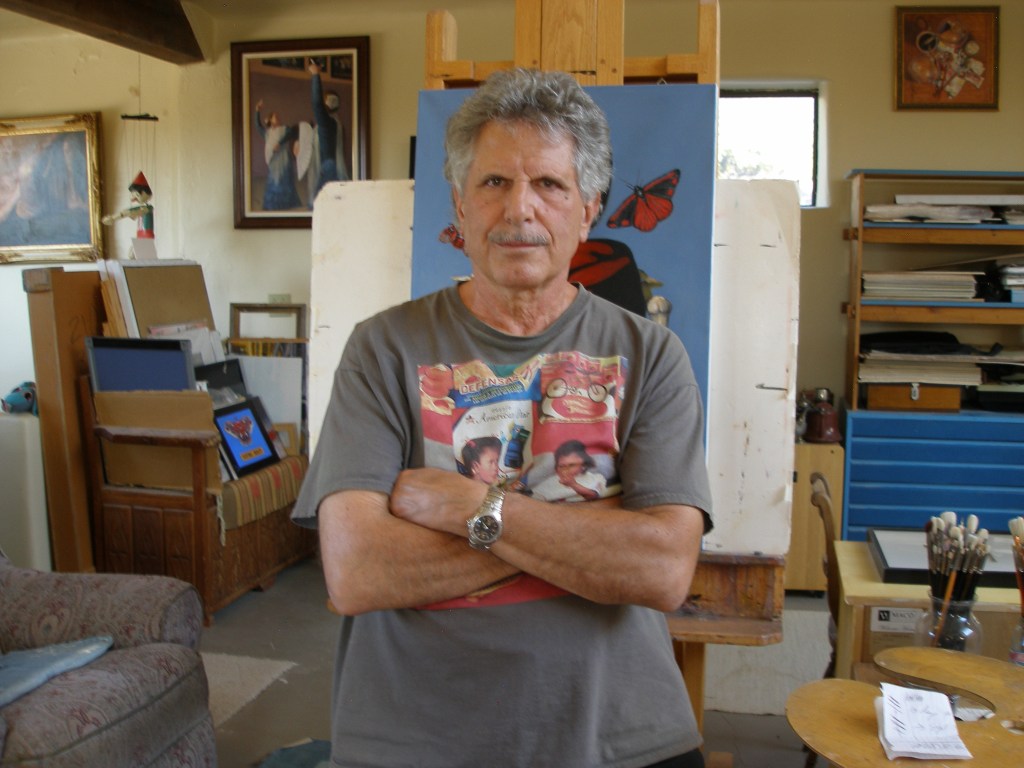
During the last 12 years at IBM, I studied painting and drawing at night and on weekends under Cesare Borgia (now deceased) at the Reilly League of Artists in White Plains, NY. Borgia was one of the original students of Frank Reilly who taught at the Art Students League in NYC and died suddenly in the late 1960s. In 2001, I took early retirement at 55 years old to move to Santa Fe, NM to become a full-time artist. I left IBM in 2001 for a variety of reasons, but the main one was to pursue an art career which I couldn’t do in the past. Also, I felt that my scientific work was concluded at IBM when we had scaled the silicon dioxide layer of the devices we worked on to atomic dimensions and couldn’t scale it further.
You studied classical painting and drawing under Cesare Borgia for 12 years. How did this rigorous training shape your foundation as an artist, and in what ways does the Reilly technique still influence your work today?
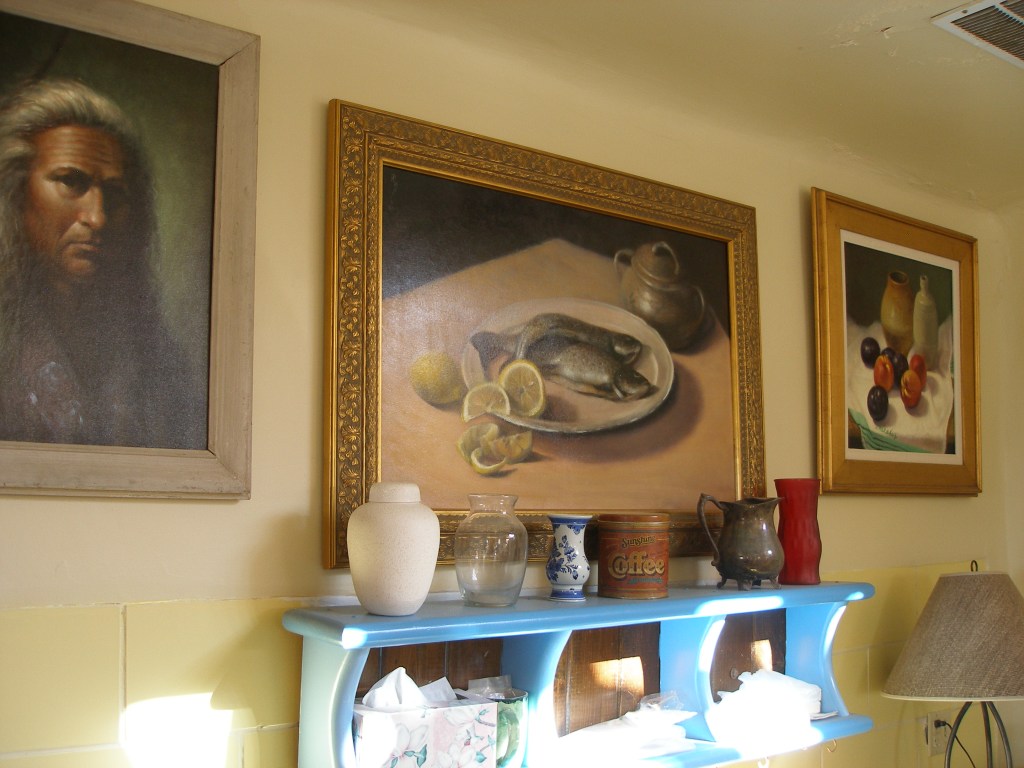
The Reilly technique is based on a gesture approach where the whole is considered more important than the parts. It taught me to work on the entire painting or figure drawing rather than doing it piece-meal like some art teachers suggest and other artist’s practice. It taught me to see shapes and values and not the subject matter which led to working in any genre. I greatly expanded my painting knowledge by watching Helen Van Wyk on PBS during the 1990s who had a similar approach and sometimes even Bob Ross. I picked up other techniques, tools, and tricks along the way from a large variety of other artists both living and dead.
Many of your paintings feature your wife, Diane, as a model. Can you share what it’s like collaborating with someone so close to you? How does your relationship shape and inspire your creative process?
My wife Diane, who is also an artist (mostly fiber art) heavily influenced my work. She also studied under Borgia in the 1990s. Initially, I had no money to pay for models, so she became my fallback person for modeling in early work which was more classical in nature. In current work, I now have been hiring local models for satirical compositions to get more variety in my imagery. Diane helped me with ideas for paintings and we co-wrote the drawing manual “Figure Drawing from Life: Tools, Techniques, and Tricks” which we published in 2012 and can still be found world-wide in internet stores.
Your artistic statement mentions merging classical techniques with contemporary themes. How do you strike that balance between tradition and modernity in your paintings?
Although I dabbled in satire in the early 1990s with my painting “Mannequins” (based on jealousy), I originally started out as a classical realist relying heavily on chiaroscuro compositions for both still life and figurative works.
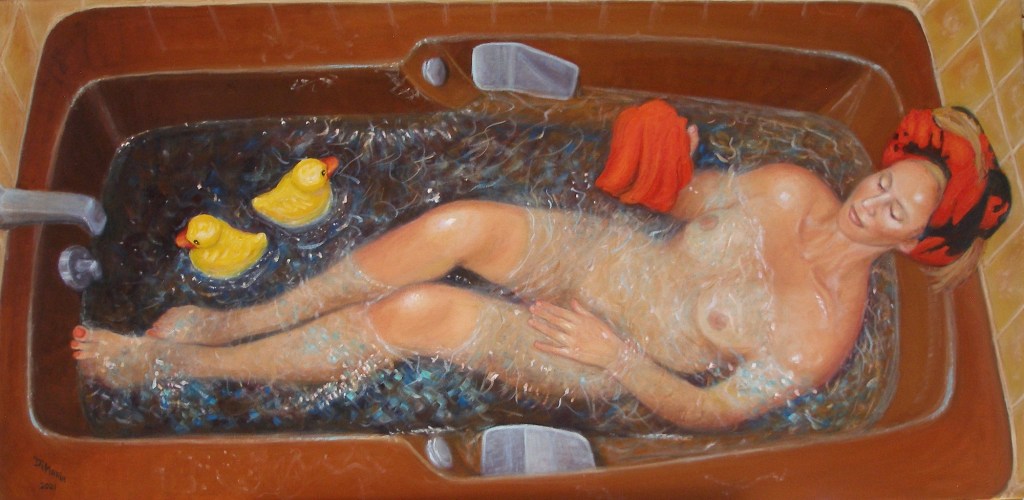
After a while, I got bored with this old standard technique and started adding more color and subject matter to my backgrounds. This new direction seemed to coincide with my arrival in Santa Fe, NM in 2001. Gradually I became interested in social realism, inspired by the representational artists of the 1960s like Harvey Dinnerstein. After this painting stage which occurred from about 2004 through 2012, I started to try and combine more current modernistic themes in my work through satire as can be seen in some of my early “Rubber Duck” painting series where these objects were used in traditional still life compositions. This evolved into where I am today poking fun at old masters’ themes such as in Bath #5 – Nude with Rubber Ducks” (after Degas) or “Dances with Death #1-3” (after Munch). However today, I still employ the classical and impressionistic techniques that I learned from Cesare Borgia and other artists through my studies.
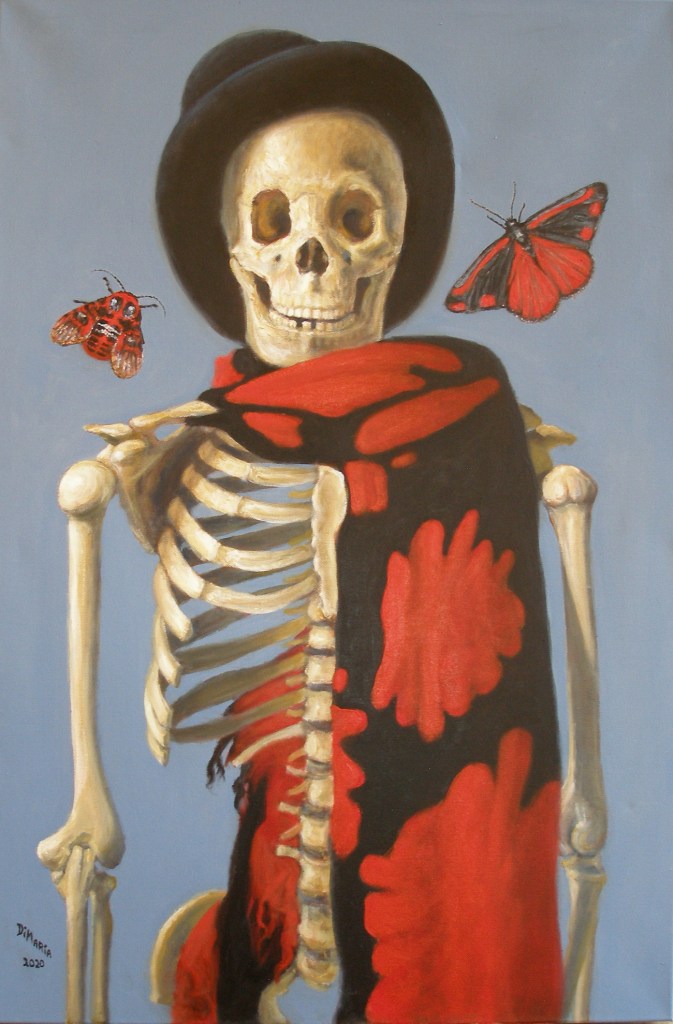
Several of your works reflect narrative scenes with humor, introspection, or symbolism—such as the skeleton figure in Dia de los Muertos, the playful juxtaposition in Dances with Death, the serene yet whimsical moment in Bath No. 5 – Nude with Rubber Ducks, and the quiet storytelling of Friends 3 – Bedtime Stories. What draws you to these kinds of themes and visual storytelling?
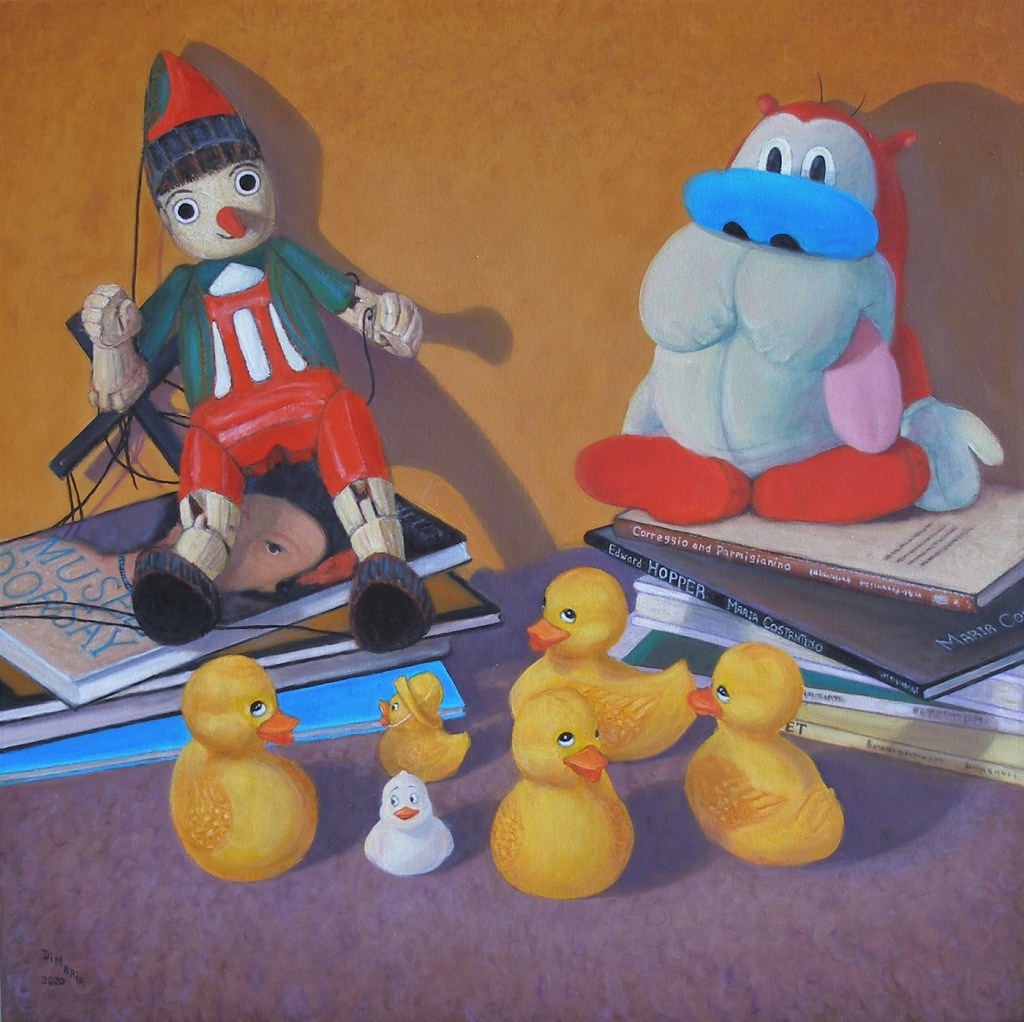
As stated before, I get bored easily and move between subject matter and different techniques. I am always drawn to find new subjects and topics to paint. This is not easy given the overwhelming amount of artwork present worldwide. My current direction is towards satire and in a sense rebellion against the typical themes that artists paint. For example, I started doing still life paintings with toys, rubber ducks, and tools in response to the overwhelming number of similar formats using fruit and flowers (including some of my own earlier works). Another example would be in the figurative genre where I have continually observed paintings of 20-something young female models dressed in bonnets and fluffy dresses particularly here in the West. I made sure that my models for paintings were over at least 45 years of age (however, not in life drawing) and not posed in outfits that would be commonly used. I also painted a lot of nudes because many galleries and other venues, in particularly the USA resist showing them.
From still lifes like Apple Annie, figurative works like Desert Rose, to more surreal or stylized pieces such as Paintball Wizard, your subjects vary widely. How do you choose your themes or compositions, and what role does spontaneity play in that selection?

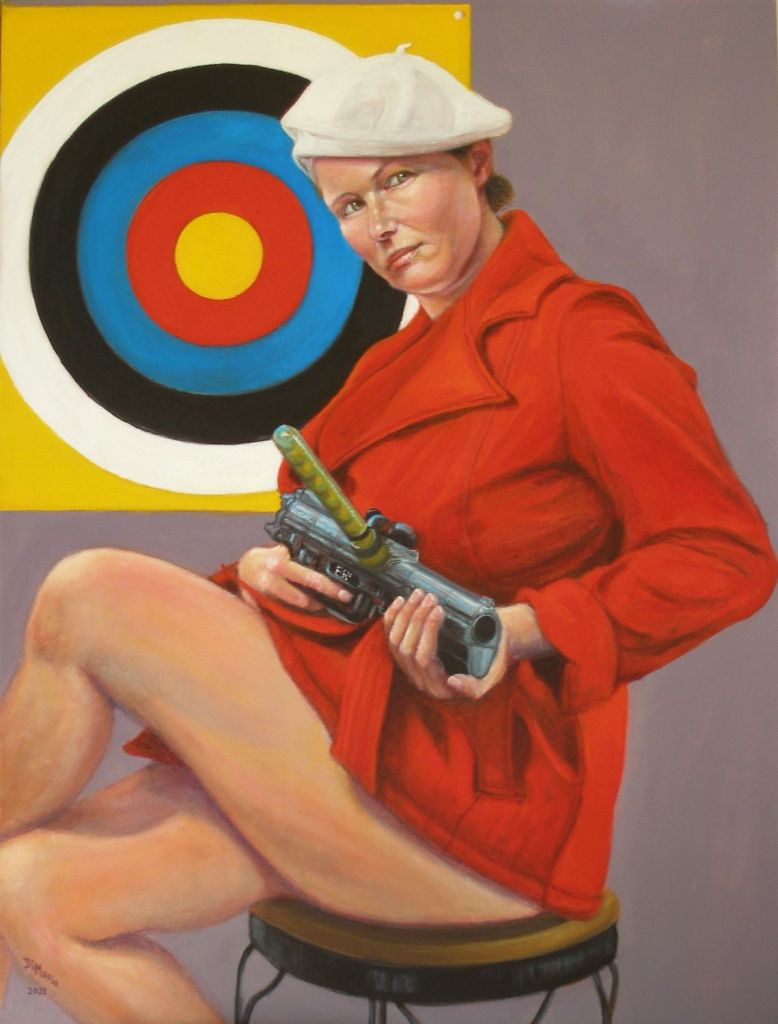
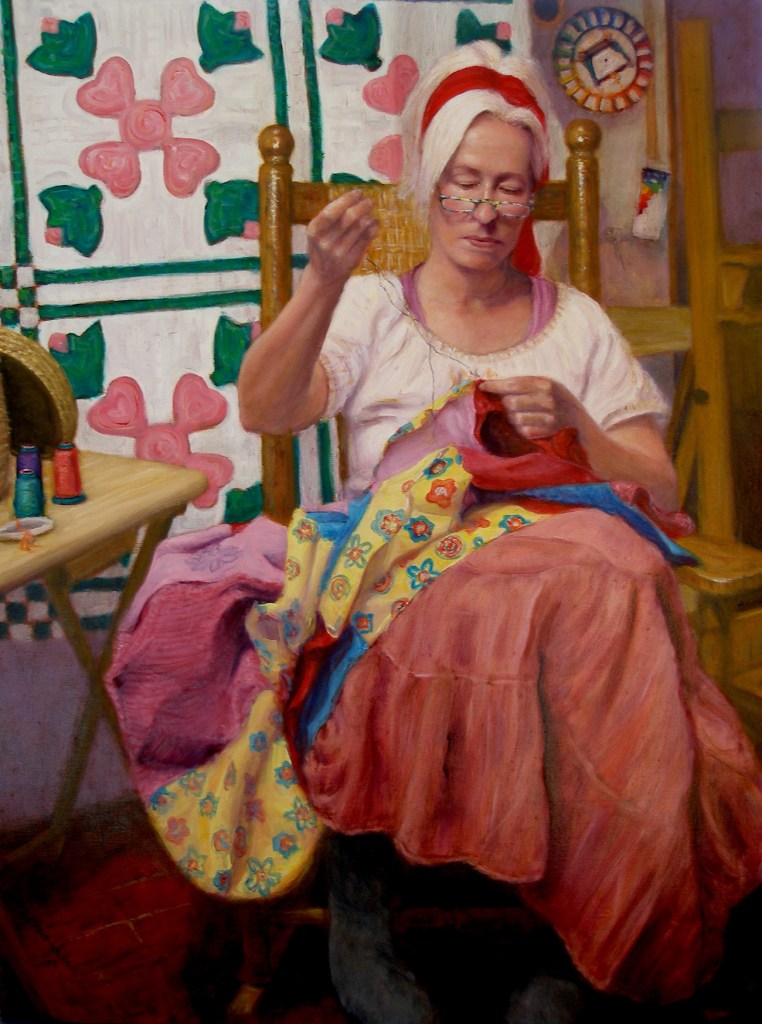
My subject matter takes time to think out. Sometimes there is spontaneity but usually not. My wife Diane helps a lot with what I choose to paint. “Apple Annie” and “Desert Rose” were older pieces from my social realism period. In the painting “Apple Annie”, the doll was made by Diane as a fiber artist and that is her in “Desert Rose” working on another fiber piece. The title of that painting is symbolic of her in the desert of Santa Fe, NM and the quilt in the background is from an old tradition pattern also known as “Desert Rose”. The Paintball Wizard series again is satire on the games young people play and gun violence in general. My “Pinup” series was a satire on the painting of nudes in our current society with a nod to the brilliant illustrators of the 1950s and 1960s like Gil Elvgren and Alberto Vargas.
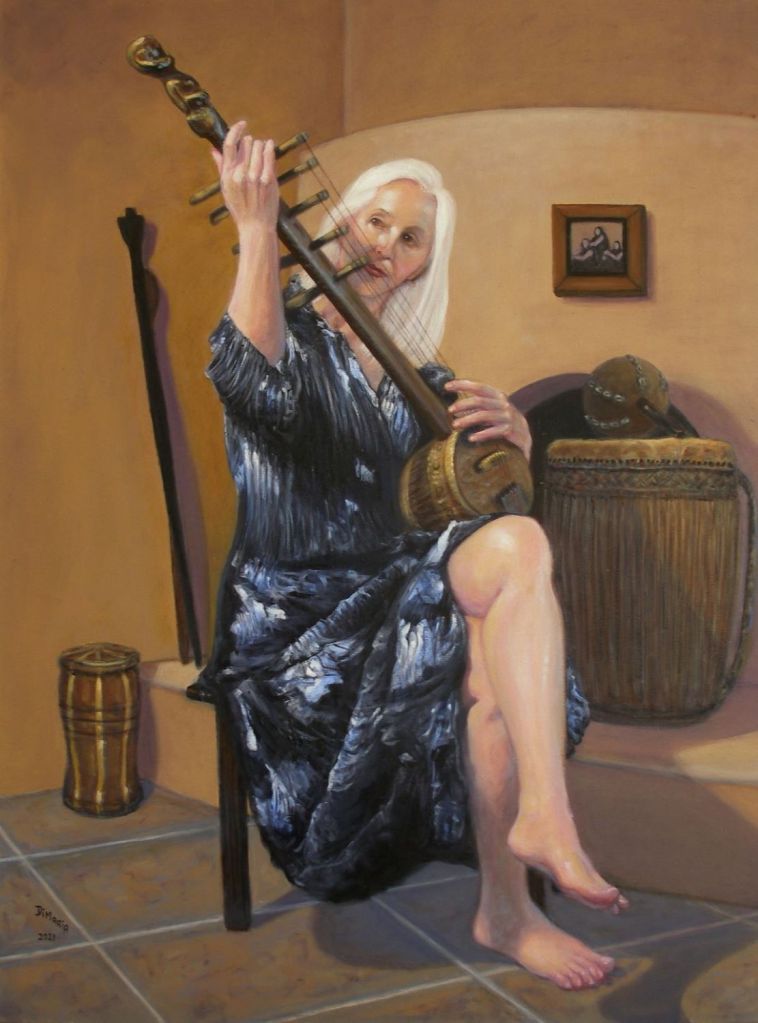
Your color choices and value patterns evoke both the Impressionist and Modernist traditions. In works like African Strings and Generations 3, your palettes carry emotional weight and strong compositional drama. Could you talk about your approach to color and composition, and how theory and instinct guide your decisions?
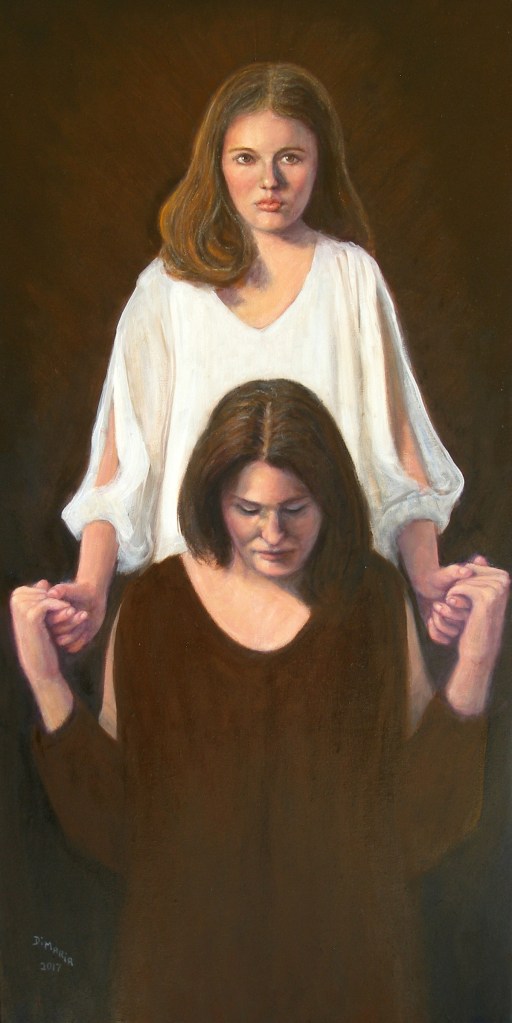
My use of color has evolved over the years. I originally used chiaroscuro compositions (just light and dark) with the focal point at the largest value contrast. Then I moved into more impressionistic compositions using complimentary colors (red/green, blue/orange, or yellow/purple) with the focal point still at high value contrast but with a bright color nearby such as in my older “Red Hat” series. I have also used a split complementary color scheme in some of my paintings of orange, purple, and green (particularly landscapes). Value contrast and hard edges were still important at the focal point regardless of the color patterns I use.
You’ve shown work in 14 museum exhibitions over the last 12 years—was there one that felt especially pivotal in your development or recognition as an artist?
I think the two shows in 2008 and 2010 at the Fort Wayne Museum of Art were pivotal during my social realism period. In these shows, “Desert Rose”, “Rejoice”, and “Three Graces” were displayed.

In addition to your work as a painter, you’ve spent over a decade teaching painting and drawing. What do you find most fulfilling about guiding others on their artistic path, and how has teaching influenced your own evolution as an artist?
Here again, I have moved away from standard teaching practices. I tried to get students to use the right side of their brain to see shapes and values and not the subject matter. I stressed working on the painting as a whole and not trying to complete each part separately. Through the figure drawing classes I taught using live models, I stressed a gesture approach with visual measuring rather than using actual physical measuring or a ‘sight size” approach. This teaching solidified my thoughts on painting and drawing which led to the two books I have written and published.
As someone who’s successfully bridged a scientific career with a deeply artistic one, what advice would you give to artists who are just starting out or looking to make a similar leap into the art world full-time?
This is a difficult question to answer. Nowadays, the problem of becoming a full-time artist is that there are not many opportunities to make a living at it. Illustration, which used to be bread-and-butter for many artists, is gone and replaced by digital technology. Unless you have a large collector base (which takes years to get) or someone with money backing you, my approach to working on an unrelated job until you have enough for full-time work as an artist might be best. Even art teaching jobs are becoming scarcer so you can’t rely on those either.
What do you hope viewers take away when they encounter your work—whether it’s a playful still life, a powerful figurative piece, or a quiet portrait?
Viewers would hopefully take away that my work is not like other representational paintings. They should think about the images and the message I am trying to convey. They should also appreciate the skill level I have achieved based on over 35 years of studying and creating art.
Donelli, thank you for this insightful conversation. To wrap up, could you tell us about your experience with platforms like Biafarin, Exhibizone, and Gallerium, and how they’ve supported your artistic journey and helped connect your work with a broader audience?
I do appreciate the fact that your organization has displayed my work to a larger audience. I think the two online shows I have had (Social Realism and Satirical Realism) drew a significant number of viewers that I would not have been able to get otherwise.
Lastly, is there anything else that you would like to add?
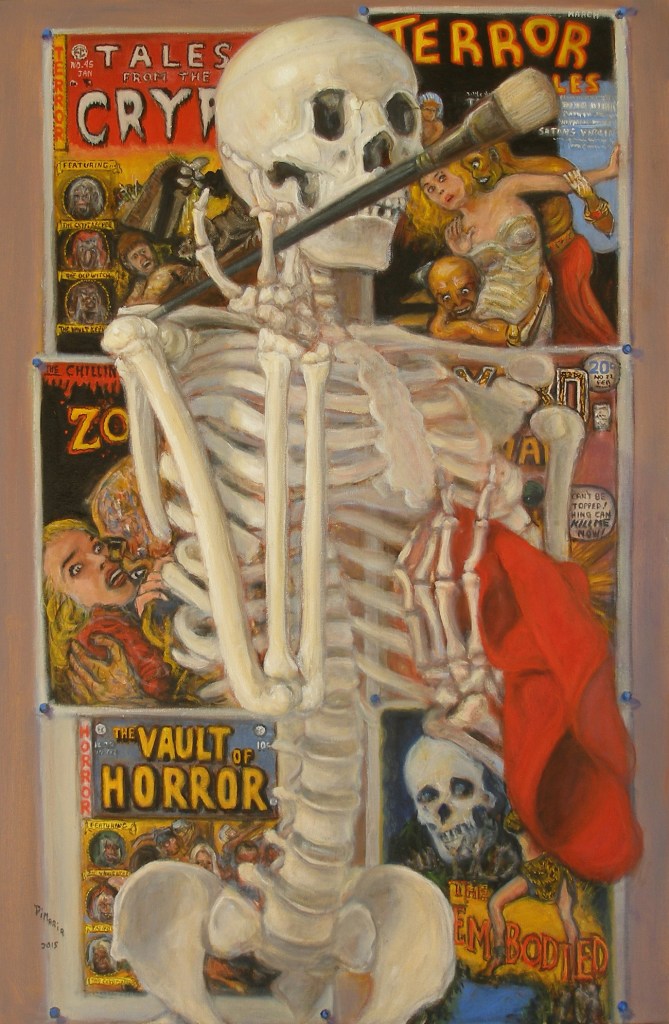
My final word to be honest is I am not fond of all art. Bad art that I am now observing from artists who do not seem to take the time to learn some of the basics doesn’t get my support. This is not a form of raw creativity, but just un-remarkable endeavors. For example, the banana taped to a wall with masking tape which sold for 6 million dollars and was eaten by the purchaser. This subject matter was not even new, and I would not classify it as performance art. Painting pieces to match someone’s furnishings is just another form of commercialism in my opinion. Repeating the same image over-and-over again to make money also does not work for me. Again, this was apparently done with the taped banana piece by many others. Artists who are technically trained should try to move away from their teacher’s work and style as soon as possible and find their own direction. Making money should not be the main objective, but I understand the need to do so to survive.
To experience more of Donelli DiMaria’s visionary and amazing world, visit his official website, or explore his profile on Biafarin, each offering a unique glimpse into his universe.
 Review Me
Leave a comment