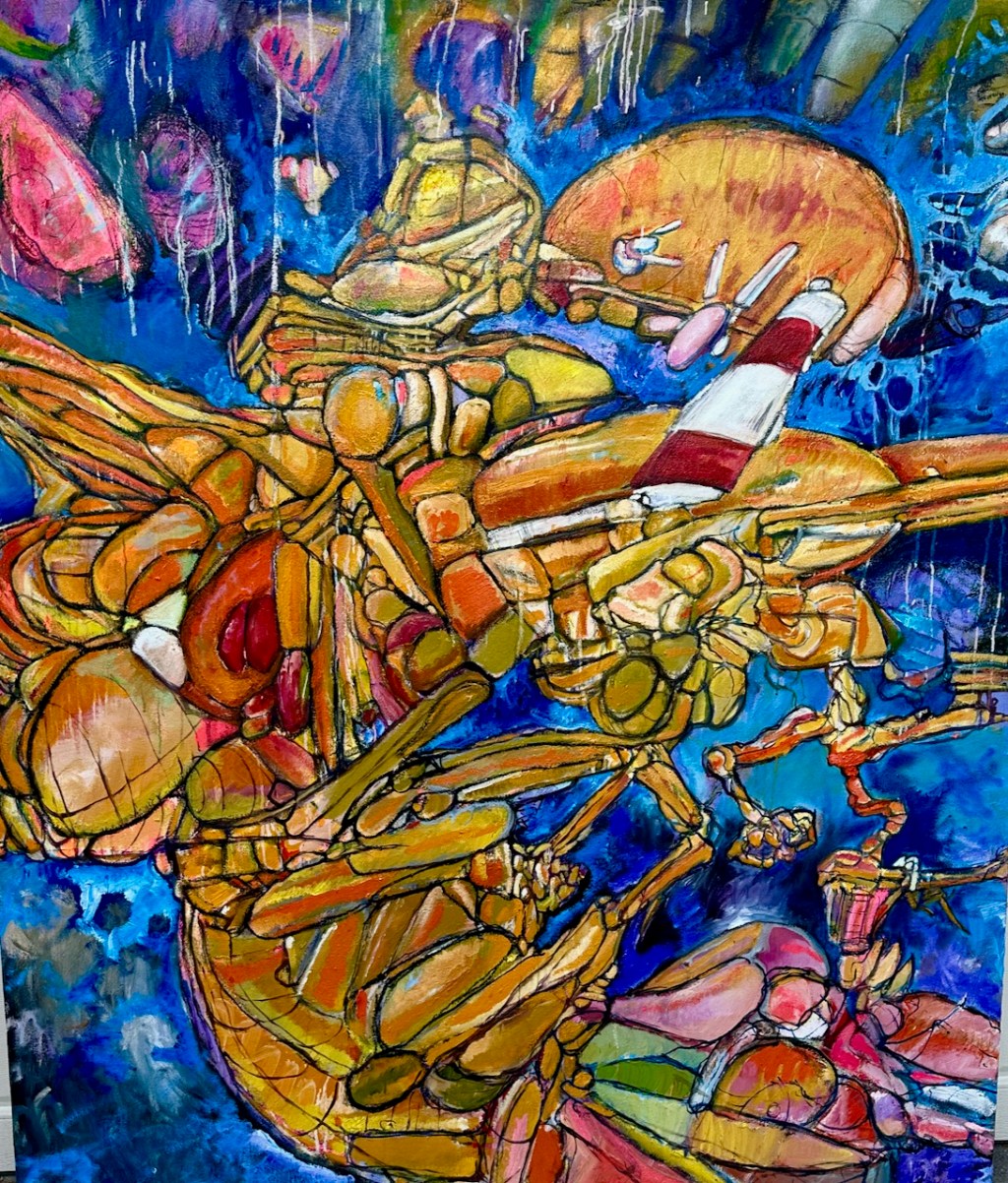
There is a world at play beneath the surface of Thomas McCue’s paintings—a world where color, form, and invention collide in breathtakingly strange and mesmerizing ways. Working with oil on canvas, McCue crafts dense, abstract compositions that pulse with the energy of life in transformation. In works like Broken Hornets, Efftrick, Blue Rider, and Blue Walker, we are not merely viewers—we are explorers, stepping into vivid realms where organisms appear mid-mutation, part machine, part creature, all alive with narrative potential.
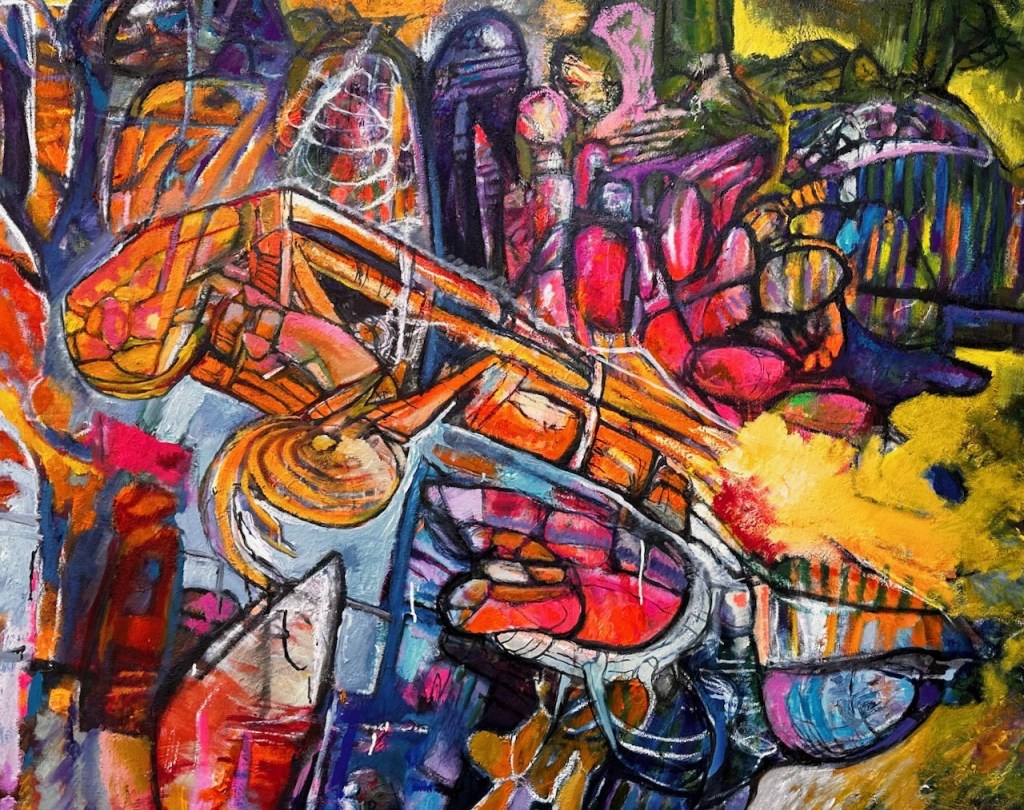
What’s immediately striking in McCue’s work is his ability to suggest entire ecosystems through abstract means. While his forms resist fixed definitions, they are unmistakably animated—buzzing with insectoid movement, twisting like roots, or unfolding like alien wings. In Broken Hornets, warm yellows, reds, and pinks form a tangled swarm of biological-mechanical entities, their shapes dancing across a brilliant blue background. The result is a friction between chaos and control, as if the forms are caught mid-flight in a storm of instinct and circuitry.
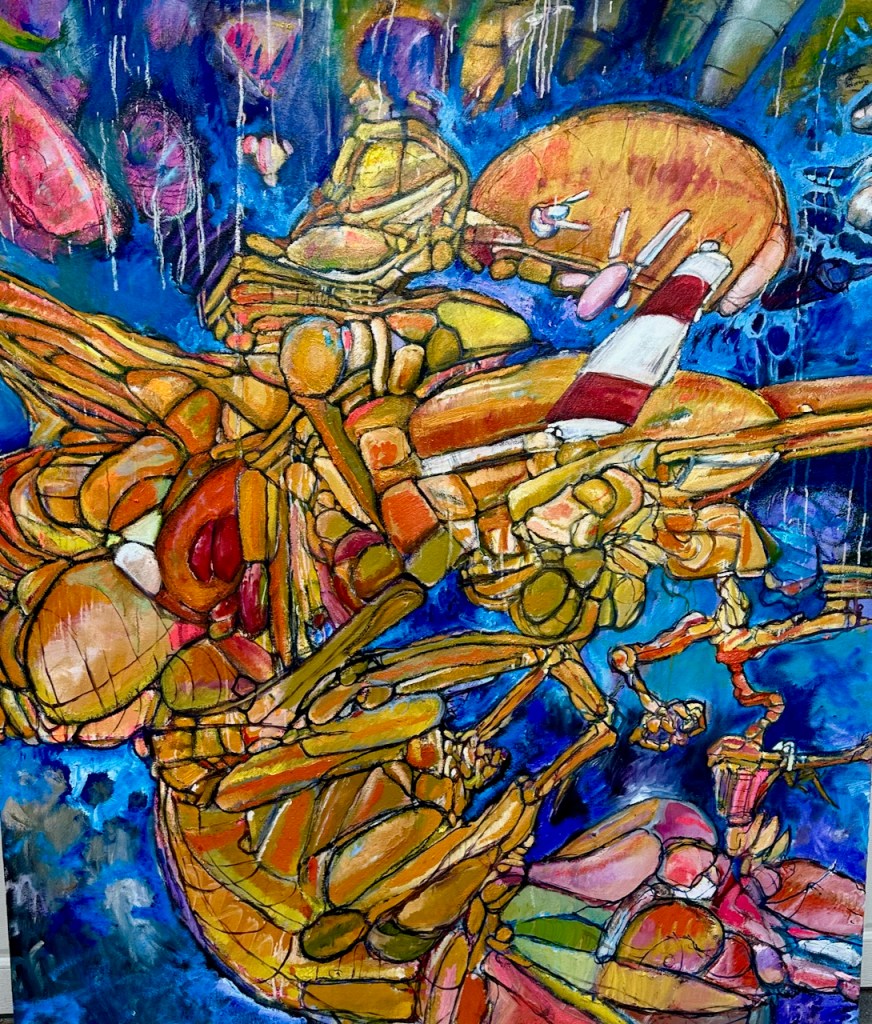
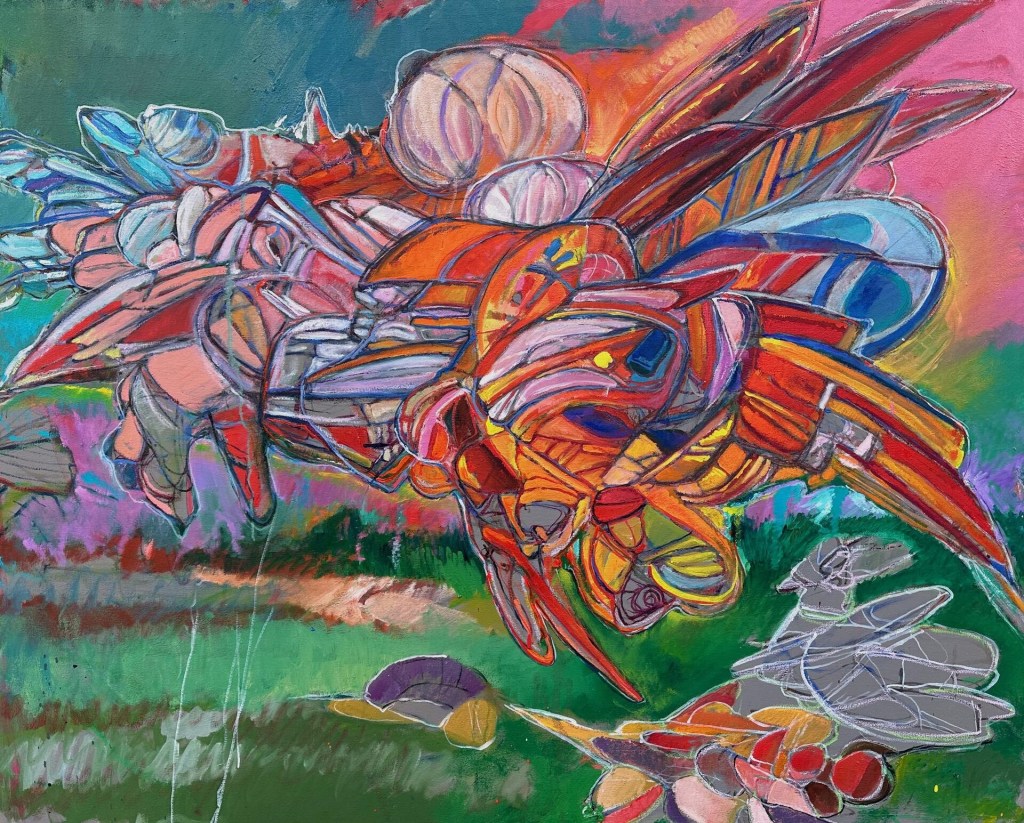
Efftrick expands this notion even further. The piece’s vibrant palette—spanning reds, blues, violets, and metallics—supports a foreground dominated by structures that suggest spacecraft, arthropods, and robotic limbs. McCue’s mastery lies in his refusal to separate the organic from the technological. His images seem to grow rather than be painted—sprouting limbs, textures, and layered membranes like cells under a microscope exposed to myth.
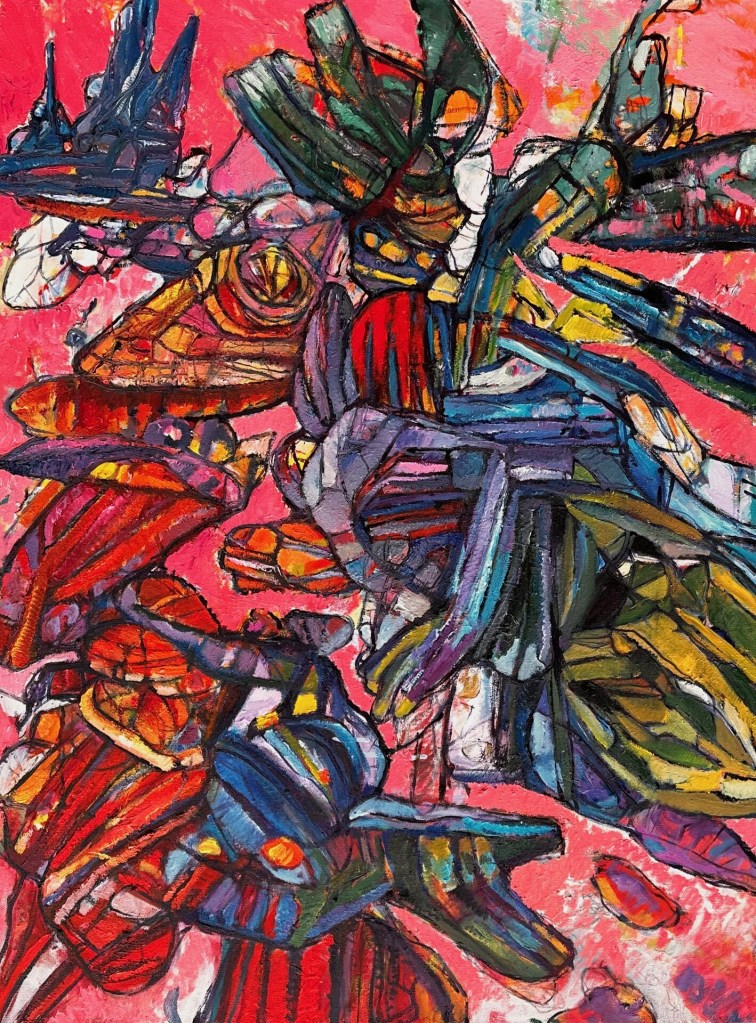
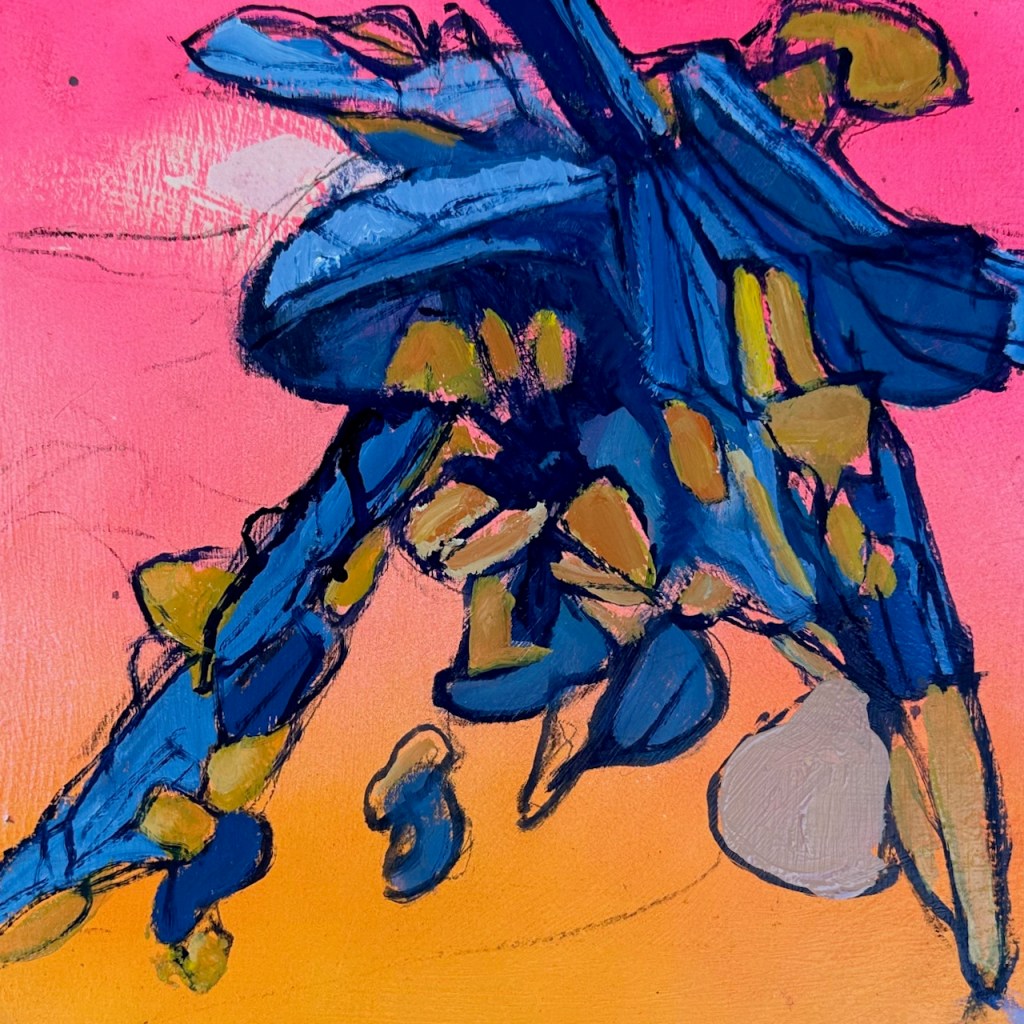
Blue Rider and Blue Walker, two entries in a conceptual series, lean further into this narrative-building through abstraction. With their cool chromatic harmonies of blue, green, and teal, these works evoke mounted figures or walking constructs made of bone and steel. The suggestion of movement is palpable—yet McCue never reveals the full form. Instead, he gives us fragments and hints, drawing the viewer into a liminal space between memory and dream, myth and machine.
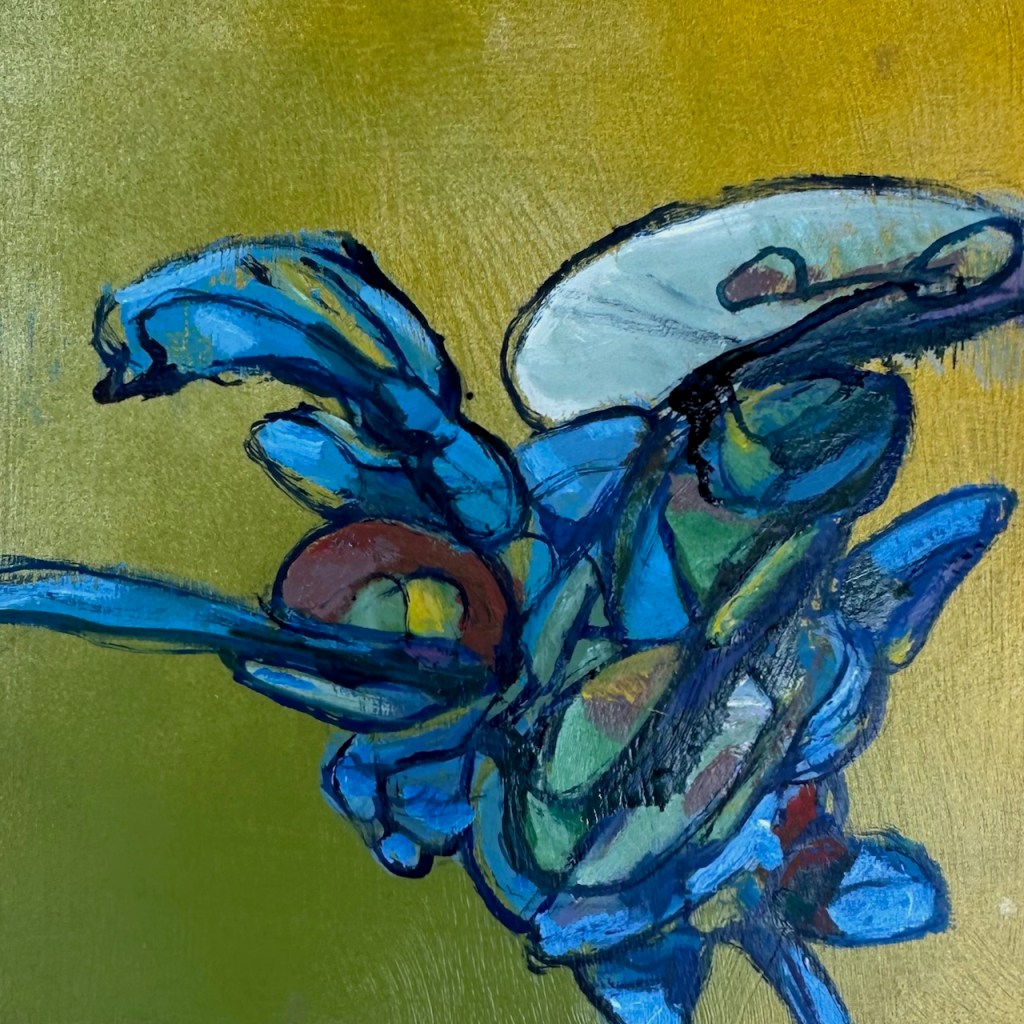
What unites these works—beyond their biomorphic structures—is McCue’s profound relationship with color. Far from being merely decorative, his palette functions as emotion and structure alike. Color bursts forth unexpectedly, sometimes harmonious, sometimes disruptive. Pinks slice through greens. Violets hum beside ochres. Each hue suggests tension or harmony, echoing the delicate balance between natural systems and synthetic inventions.

Equally essential to McCue’s impact is his attention to composition. His canvases are rarely static, they vibrate with interlocking parts, implying movement, interaction, even evolution. Viewers may find themselves imagining these pieces not as snapshots, but as stills from an unfolding cinematic world. Each form is imbued with intent, as if the painting is mid-thought processing, adapting, becoming.

Behind Thomas work lies a compelling personal story. Legally blind due to LHON, McCue approaches painting not with traditional sight but with vision in its truest, most expansive sense. His unique visual experience informs the texture and intensity of his pieces, where touch, memory, and sensation take precedence over fixed representation. It’s a testament to both resilience and imagination, where impairment becomes transformation rather than limitation.
Thomas McCue’s paintings are not puzzles to be solved, they are living mythologies, evolving through color and gesture. They defy easy interpretation, and that is precisely their power. Each canvas feels like a portal, opening into a reality where biology, fantasy, and narrative collapse into something thrillingly new.
To experience more of Thomas McCue’s visionary world, visit his official website, follow his evolving journey on Instagram, or explore his profile on Biafarin, each offering a unique glimpse into a universe that is at once imagined and deeply felt.
 Review Me
Leave a comment