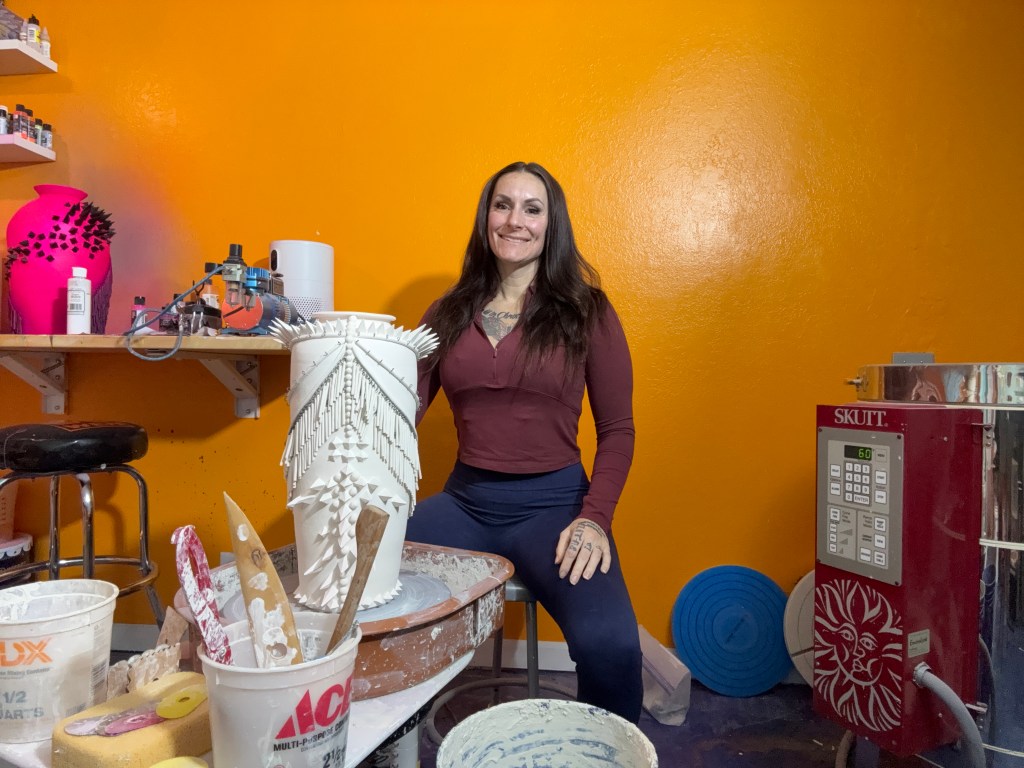
From the depths of personal trauma to the vibrant world of ceramic sculpture, Cori Schuman’s artistic journey is a story of transformation, healing, and radical self-expression. Her work radiates life, boldness, and resilience—each piece shaped not just by clay, but by courage.
It’s a pleasure to have you with us today for this interview, Cori. Your bold, intuitive ceramic sculptures are as emotionally powerful as they are visually striking. Let’s begin.It’s a pleasure to have you today for this interview, Cori. Let’s begin.
Your art is bursting with life and color, and we’re excited to dive into your creative journey. Can you tell us about your background and what inspired you to choose ceramics as your artistic path?
I’ve really always loved art. From a super young age, I was involved in drawing and vocal competitions, and later in dancing and painting too. But I also experienced a lot of significant trauma for the first part of my life which eventually took its toll on me and led my life in a pretty self-destructive direction for a while. When I found art again, it was like finding myself again. Due to restrictions at the Veteran’s Association (which was paying for my school), I was not allowed to major in 2-dimensional art like I wanted, so I decided on Art history. I figured if I couldn’t make art, at least I could learn about The Greats who did. But I was miserable.
Looking back, I think I’d probably have been more happy in accounting, lol. To be that close to art without getting to create it myself was torture. So, my advisor suggested I take a studio class for my sanity’s sake. There was nothing open except a ceramic-wheelwork class, so I took it, desperate to be in an actual studio. This was in January of 2022; I’d never touched clay before and had zero idea how to make anything 3D, so to say I was anxious is a gross understatement.
But as soon as I started, I fell in love with it. I found that working with clay was almost cathartic for me. I ended up convincing the VA to let me switch majors and get my Bachelor’s in 3-dimensional art, with the idea that I’d make functional work (plates, cups, etc.). However, when I started playing around making sculptures in 2023, I was hooked. It felt like home and I knew that’s where I was meant to be. I still make a little functional work here and there and I even still paint from time to time as well (and sing every chance I get, though mostly in the shower), but my heart is in sculpture. I love the entire process from start to finish.
Every artist faces challenges along the way. Have you experienced moments where you questioned your commitment to art, and how did you find your way through those doubts?
I don’t know if I questioned my commitment so much as my ability. As I mentioned, I’ve been an artist from a pretty young age and have always had that passion. But there were many times when I was convinced I’d need to pick something else for a career because I wasn’t good enough to “make it.” Looking back though, that was just a reflection of how I felt about myself; if I didn’t believe that I as a person was good enough, then how could I possibly produce art that was good enough? So for me, it was only when I started working on loving myself that I began to believe I was good enough as an artist and really embrace this as a career.
And there are still moments of doubt. I mean, I think that’s normal. I don’t know that anyone ever gets to a point where they’re 100% confident all the time. But I think the trick is just coming back to that place of self-love and of purpose. For me, I know this is a part of my purpose – I know it in my bones – so coming back to that in times of doubt is really important. Because the truth is, it’s not about me. The reason I share my story – through public speaking and my art – is to inspire other people and give them hope, and that’s a reason way bigger than me. So, any time I have doubts now, I just keep coming back to that purpose, to my mission to show others a way out of the darkness.
Your maximalist approach and bold, dynamic style really stand out. Are there personal experiences, memories, or elements from your family history that have influenced this vibrant artistic expression?
Absolutely. I have experienced so much in my life, from abuse and addiction to time in jail and attempted suicide. And it’s not so much those experiences themselves, but the journey back from it all, that’s made me who I am today. My art truly is my story: radical self-transformation, learning to love myself again, and hope.
I create my pieces intuitively, meaning I don’t plan them. I don’t make sketches and usually don’t have any idea what they’re going to look like before I start; I just create according to what feels right to me as I go along.
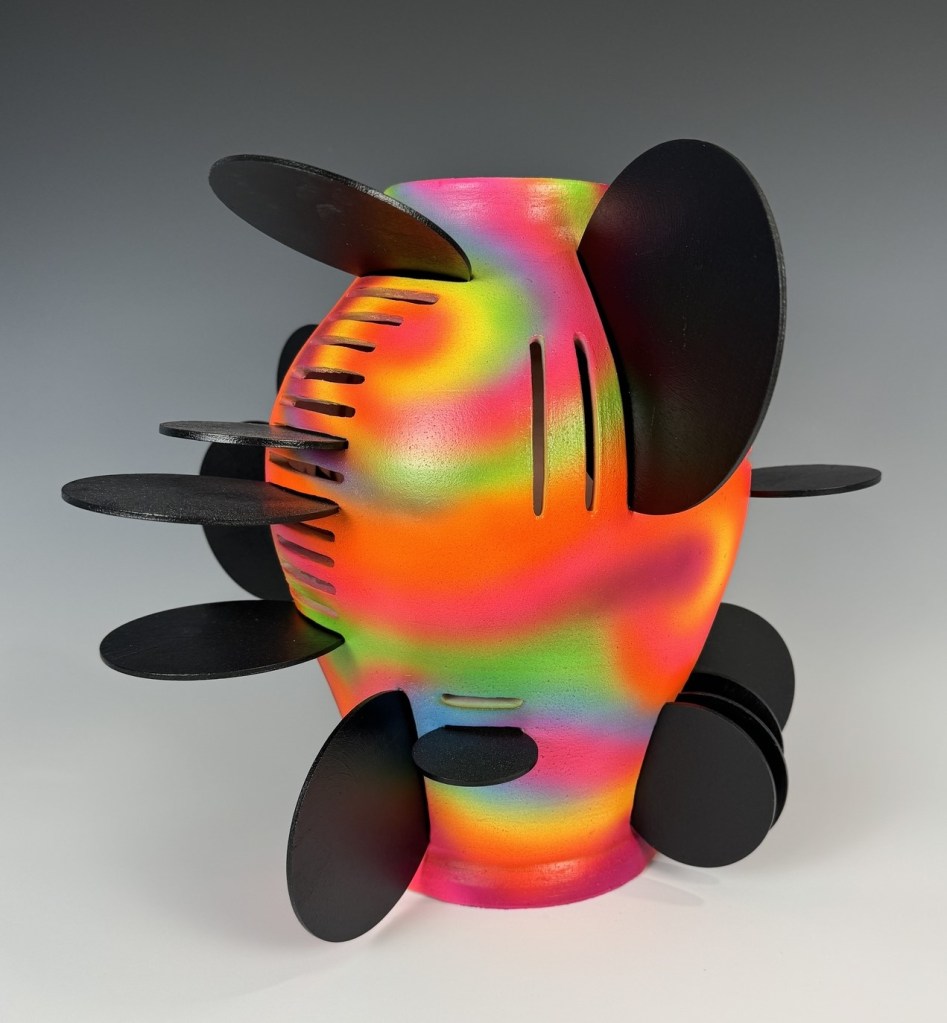
But what I began to notice is that there’s a theme to all of them, a thread that connects them all. There’s a parallel in the transformation of the clay I’m working with, to the transformation of my life, and I’m emitting that theme in my work…the war I fought in my past, the fight from darkness to light, from attempting to end my life, to being in a place now, of incredible gratitude that I was given another chance. Though my work is abstract, there’s a definitive theme of my story that seems to always come through. It’s a metamorphosis from being desperate and broken to being full of life and hope.
Having earned a BA in 3-dimensional art with a minor in art history from Whitworth University, how did your academic journey and mentors shape your artistic development and approach?
I consider myself lucky to have had the teachers I did. My first advisor in the Art History dept. was the one who saw how unhappy I was and suggested I take that first wheelwork class which ultimately changed the trajectory of my life. She was so supportive and encouraging and still is today, even though I decided to switch out of her department and have since graduated.
In the Art and Design department, my main ceramics teacher was incredible. He taught me anything I wanted to learn. I think he could tell that I’d found a spark for life that had previously been lost, and he fanned that flame so much… he’d let me experiment and never stopped me from trying things, even if he was pretty sure they wouldn’t work. He let me fail (sometimes really big), and then brainstormed with me, ways to do it differently. And he never boxed me into one way of doing things. He’d let me try things I’d seen or just make up some new technique if what he’d shown me wasn’t working for me. There was no ego involved, he just guided me and supported me in any way he could and then let me fly.
I think the most important lesson he taught me was to always keep trying new things and to never settle for any one idea or way of doing things. He told me to keep reinventing myself, keep pushing boundaries with my work, and most importantly, to keep failing because we learn the most when we fail. That was a different approach than I’d ever heard from a teacher before. Failure is something we tend to look at as a negative thing, but he taught me that failure isn’t just ok, it’s actually a really important part of the process. Since graduating I’ve failed pretty big, many times, and I gained so much value from each of those times.
I learned more than I ever thought possible at Whitworth, about my work, myself as an artist and as a person. I am forever grateful for my time there.
Inspiration often comes from a variety of sources. Which artists—whether contemporary or from art history—have had a lasting impact on your work? If you could sit down with any one of them, who would it be and what would you hope to learn from them?
The first artist I was ever inspired by was MC Escher. I was 12 years old when I saw his work for the first time and was completely blown away. Up to that point, I’d had zero training and had just been drawing the things I saw. I’d draw the posters hanging in my room, the pictures in frames around our house, or the pictures on the front of the hallmark cards people sent… I was homeschooled in my earlier years and I had no concept of what art could be, nor had I had any exposure to it other than the local competitions I was in. I just knew I enjoyed it and was pretty good at it.
When I was 12, I was sent to a public school where I saw Escher’s work for the first time and I remember thinking “Wait, you can do that with a PENCIL?” It was just such a shock to me. Seeing his work shifted something in my young brain, like a door to possibilities I didn’t know was even there had suddenly swung wide open… I will never forget that because it shifted the way I saw art as a whole.
If I could sit with any artist I think it would be him, simply because of his profound impact on me. I would love to just pick his brain a bit, learn how he worked out the perfect geometry in his work (especially before computers and such), and get a glimpse into his thought processes.
Inspiration can strike in many forms, from everyday moments to profound experiences. Where do you find the most inspiration for your work? Do personal experiences, cultural influences, or spontaneous ideas play a role?
Yes, definitely. As I mentioned, the pieces themselves I create intuitively, however, I work best when I feel inspired to be in my studio in the first place. I try to be mindful of that and never go into my studio with an obligatory energy or because I feel like I “have to.” I don’t produce good work that way, and frankly, it’s not any fun. I try to leave myself open to b inspired, and when I am, head to the studio and see what happens.
That feeling of “I’ve got to go create right now!” usually happens when I’m out in nature or during a really deep conversation with a friend. It also happens sometimes when I’m playing with my kids. Something about the childlike laughter and play creates a feeling of joy that inspires me to create. The act of creation itself also sparks more of that feeling, so sometimes I find that as I’m creating, the desire to create intensifies and I’ll find myself losing time, where an entire day will go by with me in the studio, forgetting to eat or drink or even use the bathroom, lol. Those days are my favorite. But inspiration can come out of nowhere too – sometimes I’m watching a movie or hear a random song and feel it, or sometimes it happens while I’m cooking or walking the dog. I’m learning that the more I open myself up to inspiration, the more moments come along that inspire me.
Your sculptures are fascinatingly complex. Could you walk us through your creative process? How does an idea evolve from a spark of inspiration to a fully realized piece?
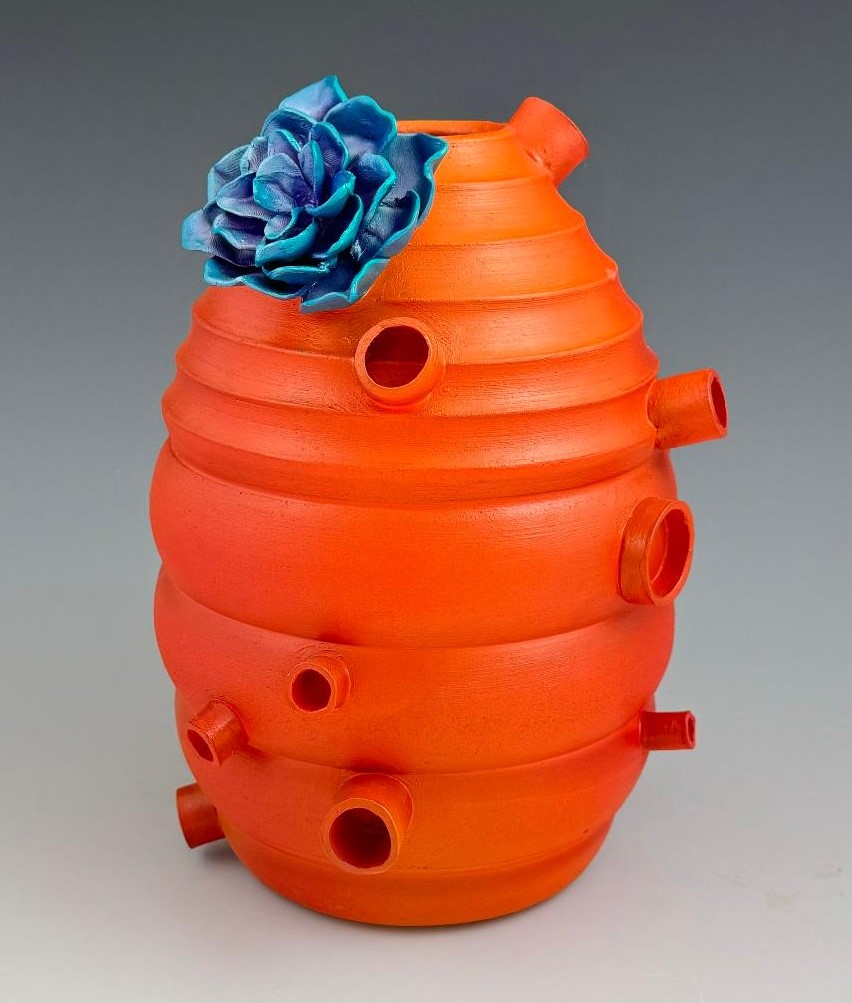
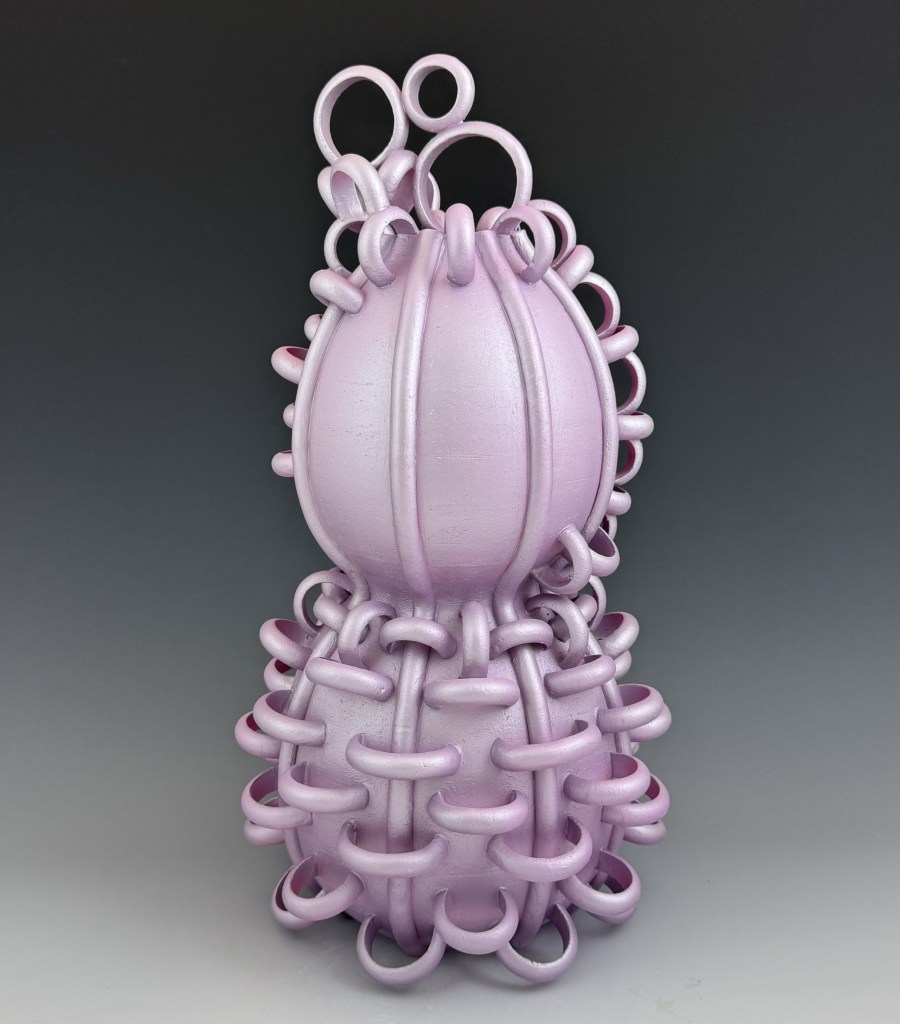
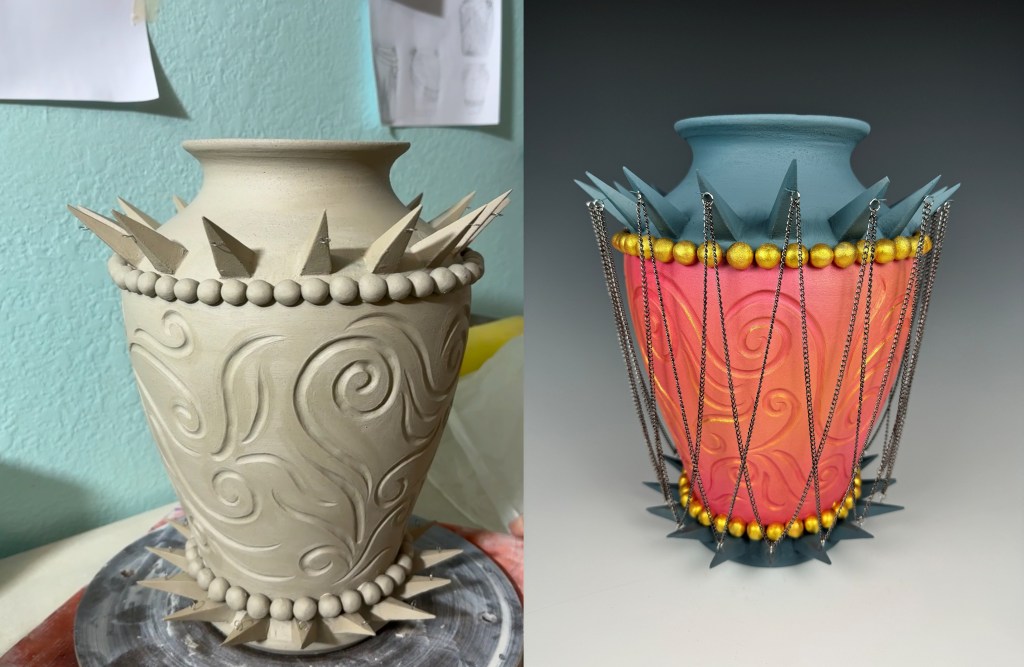
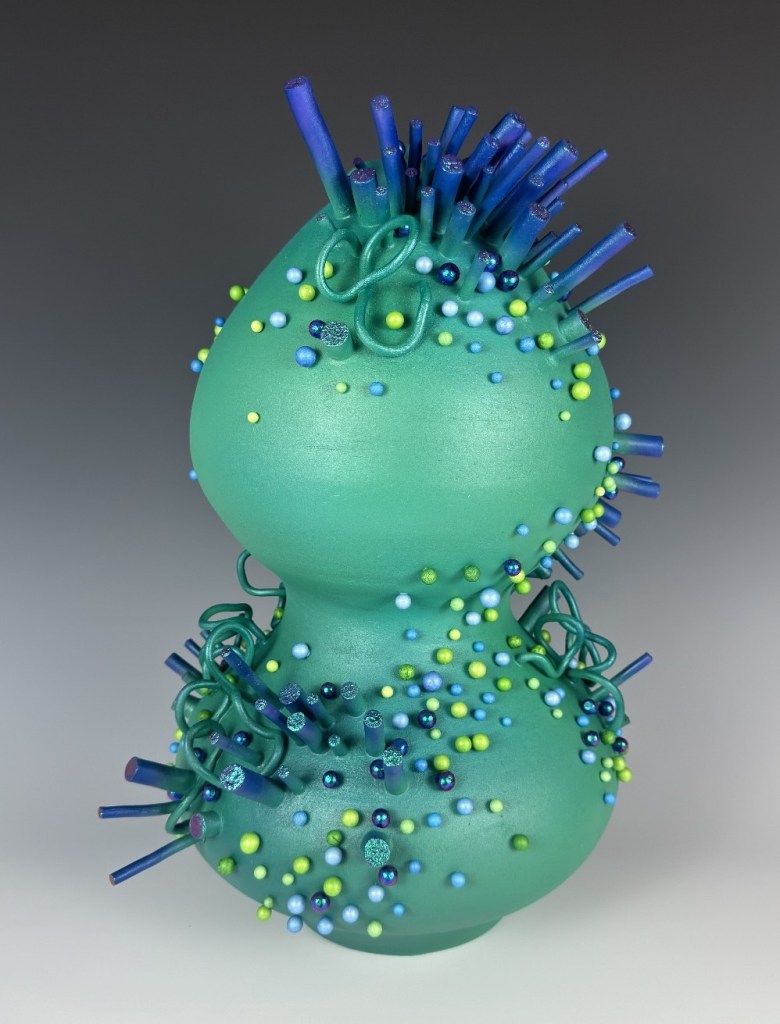
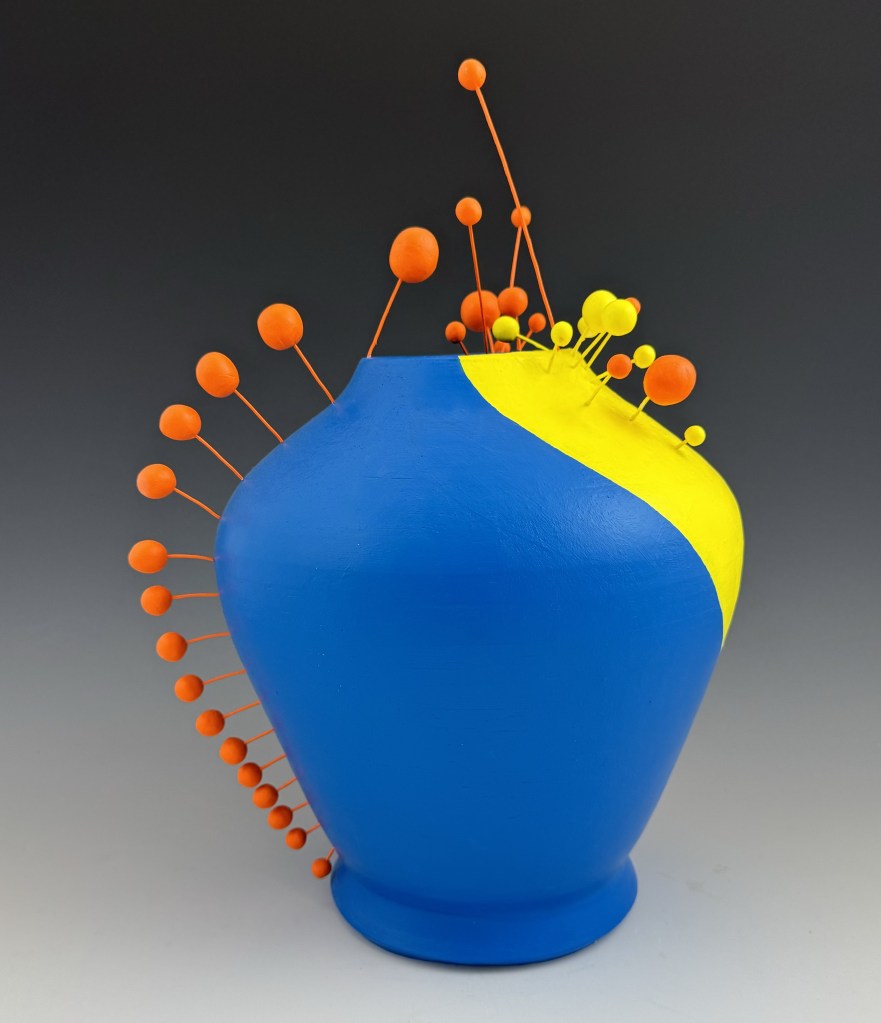
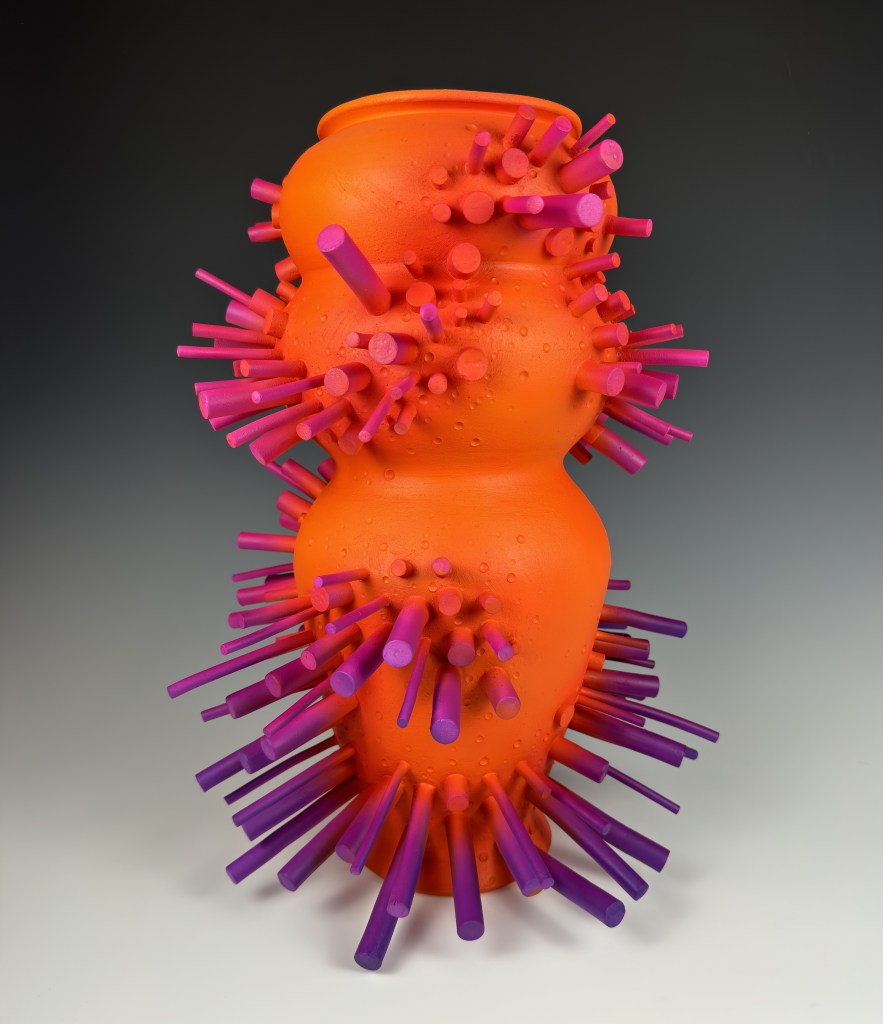
This is a great question, and one I’ve never been able to totally answer, lol. I don’t typically get specific ideas for a piece. I do sometimes have a main shape or form that I’d like to create and can start with that, but most of the time it’s just a feeling of inspiration to create. When I get that feeling, I do my best to get into my studio and sit down at the wheel. Then I just throw to throw, not necessarily to do anything specific. So I get inspired and sit down and throw, but then I may make a bowl or a candle holder or it could be a form for a sculpture. I just go with it. As I’m pulling the walls of the form up, I can usually tell if it will end up being a sculpture; I like the form or I get a feeling it has potential… if it’s too small, I might throw another to go on top and see what that looks like… once I’ve got the main form finished (and trimmed), I start adding ornamentation.
Again, this is all by feeling, so I might think “I want to add things that dangle on this one” but then once I start, decide I don’t like it and end up adding spokes. Or, I might add a few spokes and realize that’s not the direction I want to go, so I’ll add hooks that I can connect chains to. And then once I’ve found something that feels right, I just keep going with it, adding more and more until I hear the bell in my head go off that it’s done, like a cake coming out of the oven, lol. Then when it’s fired, I start the process all over again with color. I really do feel it out every step of the way, so the process varies greatly, depending on what my gut says to do at that time. I have done specific commissions for people where they said “I want to pay you to do this” so I sketched a plan and executed it, and they were happy with it, but I don’t like doing those. I feel very restricted trying to carry out an exact plan and I feel like it’s never my best work. My best work comes from when I go in totally blind and just flow with whatever feels good.
There’s a playful yet thought-provoking quality in how you merge historical art references, like Rococo, with contemporary abstraction. How do you maintain that balance between visual extravagance and the deeper ideas embedded in your work?
I was studying Art History when I learned of Rococo and all its glory, and I immediately fell in love with it. Like totally and completely. At that time, I’d never played with clay and considered myself to be a strictly 2D artist, and I immediately began to think of all these Rococo-inspired pieces I could paint during my free time. My workload during that time was intense, and I really never got around to it, but years later when I switched to 3D art as my major and found abstract sculpture, I think it just sort of came naturally.

That idea of extravagance, of just… more, It just happened. I’d add a couple of things and think “That’s not enough” and add some more, almost to the point of being gaudy, but not quite. I never vibed with minimalist work, something about it just feels incomplete to me. I think the reason I fell in love with Rococo is because that’s really a visual aid of my personality, lol. I’m totally and completely Extra, and so my work is too. I do think about the Rococo style a lot when I’m in my studio, and I think that energy gets channeled into my work, but I’ve always loved bold, neon colors more than pastels, so it just sort of naturally happens that I blend both the classic Rococo style with the contemporary abstraction.

The deeper ideas that come through, I don’t think there’s any limit to how that can happen. I believe a good artist can do that with any style of work. It’s a matter of intention; whatever an artist says about their work is right because they’re the ones who created it and they know the intention behind it, so whatever meaning they give that work, is true. This is why I feel it’s important to speak to the artist about their work because just looking at it from a distance won’t give you the full story.
Your piece titled “Self Portrait” feels like a personal statement. What was the inspiration behind it, and how does it reflect your own journey of self-expression through art?
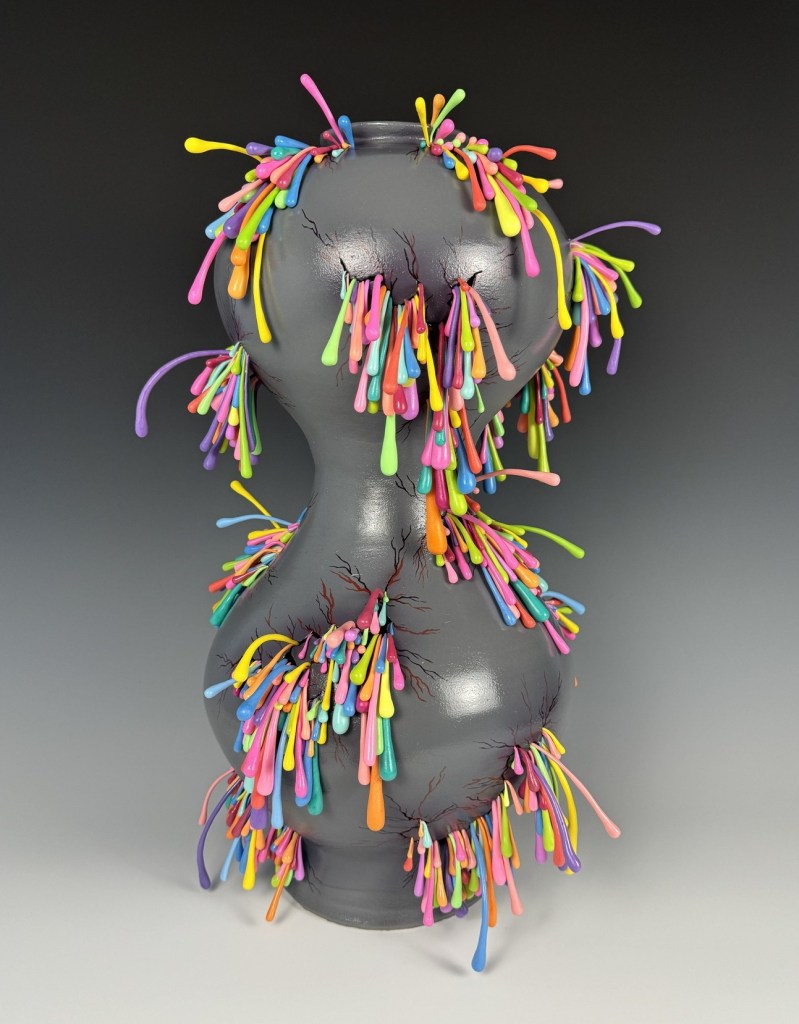
It definitely is. I don’t actually think I knew that’s what it was at first, a self-portrait I mean. I created it as I usually do, and then I couldn’t decide on the colors. I tried 3 or 4 different colors on it and hated it. I just kept bringing it back to white because I didn’t know where to go with it. It ended up sitting on a shelf, white and uninspired for about 6 months. Then one day I randomly had this thought “What about a neon color, but like…all of them??” and I got excited. I started painting, and it came to me to make the black parts too, and when I was done it was like this shock because I realized it embodied myself.

I joke that “even my dark parts shine” just like this piece because that’s what it’s like for me now. I went through so much trauma and craziness, and then embarked on this radical self-healing journey… somewhere along the way, I realized that regardless of my past, the things I’ve been through, and the things I’ve done, I am still lovable, still valuable, still worthy. The “darkness” will always be a part of my past – it’s a part of my story – but I love myself, totally and completely now, and that means loving the dark parts too. There’s so much more to me than just the colorful artist. So I think this piece is sort of an ode to myself, to my past, to my pain, and the realization that I’m bursting with life and color in spite of it all.
Your sculptures captivate with their joyful aesthetics, yet there’s an undercurrent of meaningful concepts beneath the surface. What do you believe is the role of art in shaping conversations around beauty, joy, peace, individuality, and cultural narratives?
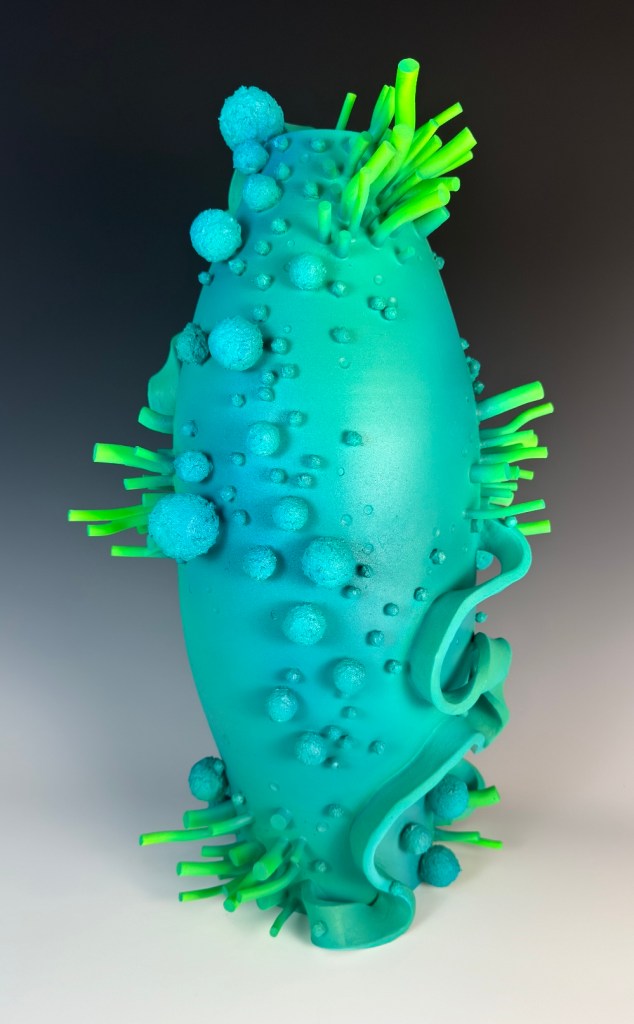
I think there needs to be an awareness in artists of the power we have in our creations. I do believe that art can be just fun. It doesn’t have to be heavy with meaning unless we want it to be, but it does have that power. Knowing that can shape the way we create and the intention that goes into the work. I have a piece titled Jetsam, which refers to trash that’s been thrown overboard from ships into the oceans. Whenever that piece is on display, many people ask me about it, which gives me a beautiful opening to talk about our responsibility to do better in terms of taking care of our oceans and the life that’s held within them.
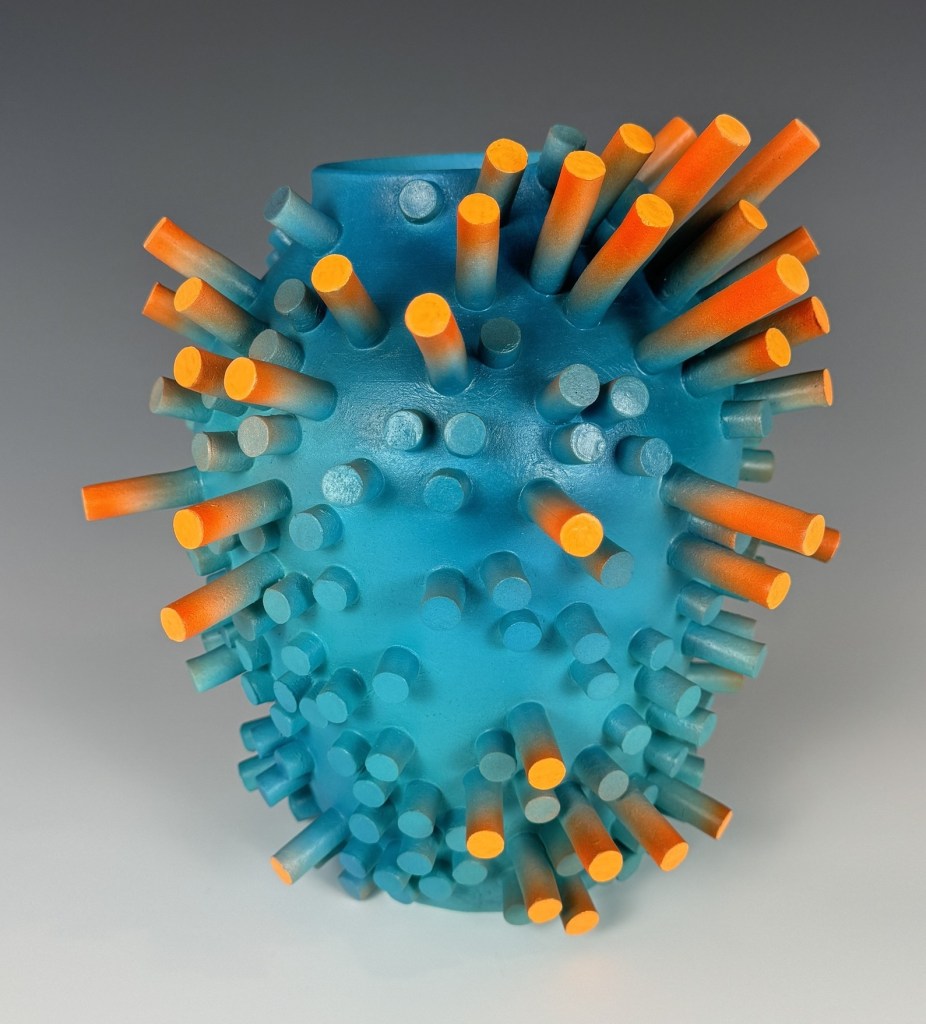
I have another titled Sunscreen which refers to the coral reefs, and again, this allows me to just start a conversation with people – to connect and talk about things that matter. These pieces are abstract, so someone wouldn’t know the deeper meaning just by looking at them. But I used the titles to draw people in and get them curious, which gives me an open door to talk about things that are important to me. This is just an example of how we can use our work to open conversations and spark awareness which can lead to change. As I said, I do think it’s ok for art to just be fun, or for it to be something personal for the artist, but I also think art can be incredibly powerful, and we, as artists, need to understand that, regardless of if we choose to wield that power or not.
Cori, thank you for sharing your time and insights with us. As we wrap up, we’d love to hear how platforms like Biafarin, Exhibizone, and Gallerium have influenced your career. What advice would you give to emerging artists who are looking to expand their artistic reach and connect with a broader audience?
Well, I only graduated with my BA in 3-dimensional art last year, so I’d still consider myself an emerging artist. That said, when I graduated, I didn’t know what to do to get my work out there and to be seen. It can feel somewhat impossible, and frustrating too, when you’re just starting out. Having platforms like these can be a great way to get your work out there, and to gain some confidence along the way. I’ve won a few contests through these platforms and had my work shown in a solo exhibition, as well as published in several magazines, and let me just tell you: being a brand new artist fresh out of college, holding a magazine with a two-page spread of my work, was pretty awesome. It gave me the confidence to submit my work to some local galleries, which led to me having my own show. These platforms have really given me opportunities to participate in fun competitions, to have my work shown on platforms I otherwise would not have known how to even apply for, and given me confidence in my work.
Thank you for having me. I appreciate so much, the opportunity to share a little of myself with you all.
To explore more of Cori Schuman’s bold, transformative ceramic sculptures, visit www.biafarin.com/artist?name=cori-schuman, TheTattooedPotter.com, and follow her creative journey on Instagram at @the_tattooedpotter.
 Review Me
Leave a comment