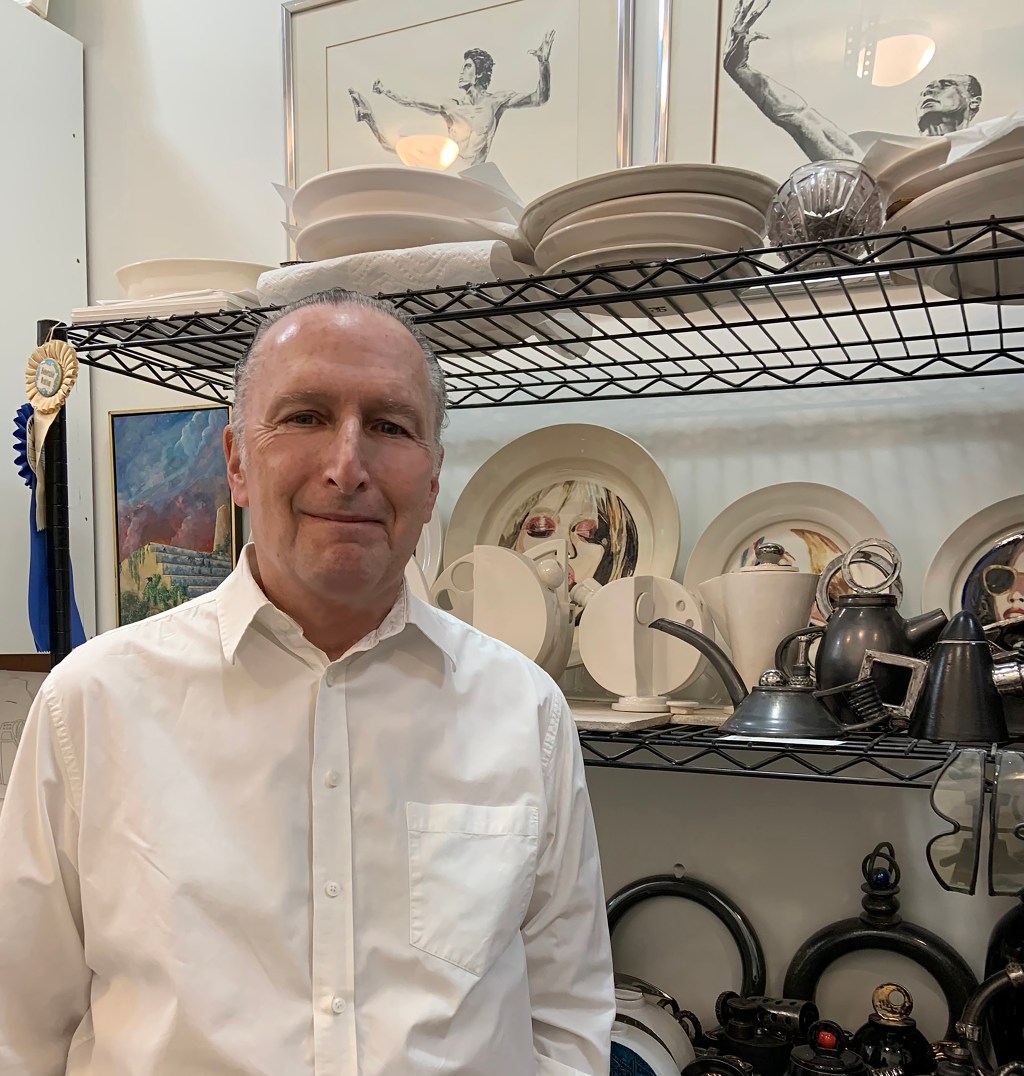
Hi Robert, it’s a pleasure to have you with us for this interview. Your journey from painting to ceramics is truly fascinating, and your works are rich with character and narrative.
Let’s start at the beginning—can you share a bit about your background and what led you from the world of painting to discovering your passion for pottery?
My mother was a sculptor. My father, a photographer. My youngest sister was an actress, part of the Warhol group. I didn’t have a chance. My oldest sister gave me a set of oils, brushes and a canvas and said, “Go. Leave me alone.”
My mother and I always did artistic projects together. And my father used to take me to different locations around New York, like the piers on the Hudson River, Central Park in the city and the beach in Rockaway, Queens in the winter to shoot photographs. My uncle was a Broadway producer, so beside always going to museums we had an active life going to Broadway plays.
When I did my Master’s Degree at Pratt Institute, two of my closest friends were potters. Amazing potters. Magical. They told me if I wanted to hang out with them, I had to learn how to throw. They said, “You painters with big beautifully lit studios, don’t live in the real world. Live in the dank, dark basement with us for a while.” So, I learned to throw.

WoW! Your artistic upbringing is nothing short of remarkable. You’ve also had had the incredible experience of being mentored by iconic artists like Ilya Bolotowsky and Ibram Lassaw, and even worked alongside legends such as Willem DeKoonig and Jasper Johns. What was it like being part of such an influential art circle, and how did those experiences shape your artistic outlook?
Bolotowsky was a force. Passion. Energy. Focus. And humor. I learned to always push the envelope from him. Lassaw had an intensity that was its own lesson. I did a lot of grunt work around the studios of DeKoonig, Ossorio, and Robert Dash but watching them work I realized they did so effortlessly what I still had to learn. We talked a lot about art, the Masters, art concepts, relevance of art in society, current trends and girls.
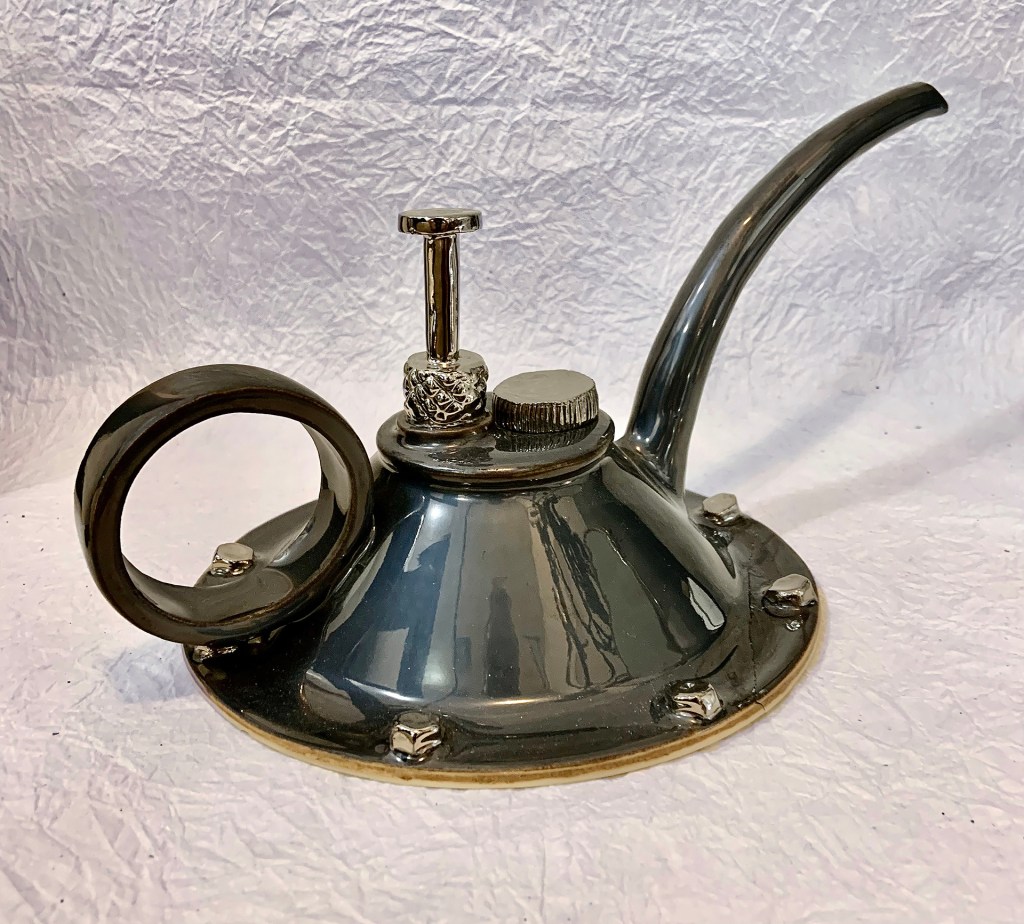
I understand that your first encounter with pottery happened while you were pursuing your Master’s in painting at Pratt Institute. What was it about that first experience with the wheel that captivated you, and did you ever imagine it would become such a central part of your creative life?
Two of my closest friends at Pratt were potters. Amazing potters. Magical. They told me if I wanted to hang out with them, I had to learn how to throw. They said, “You painters with big beautifully lit studios, don’t live in the real world. Live in the dank, dark basement with us for a while.” So, I learned to throw. Never did I think pottery would become more than a flirtation. Working in dimension was the turning point. Ceramics chose me.
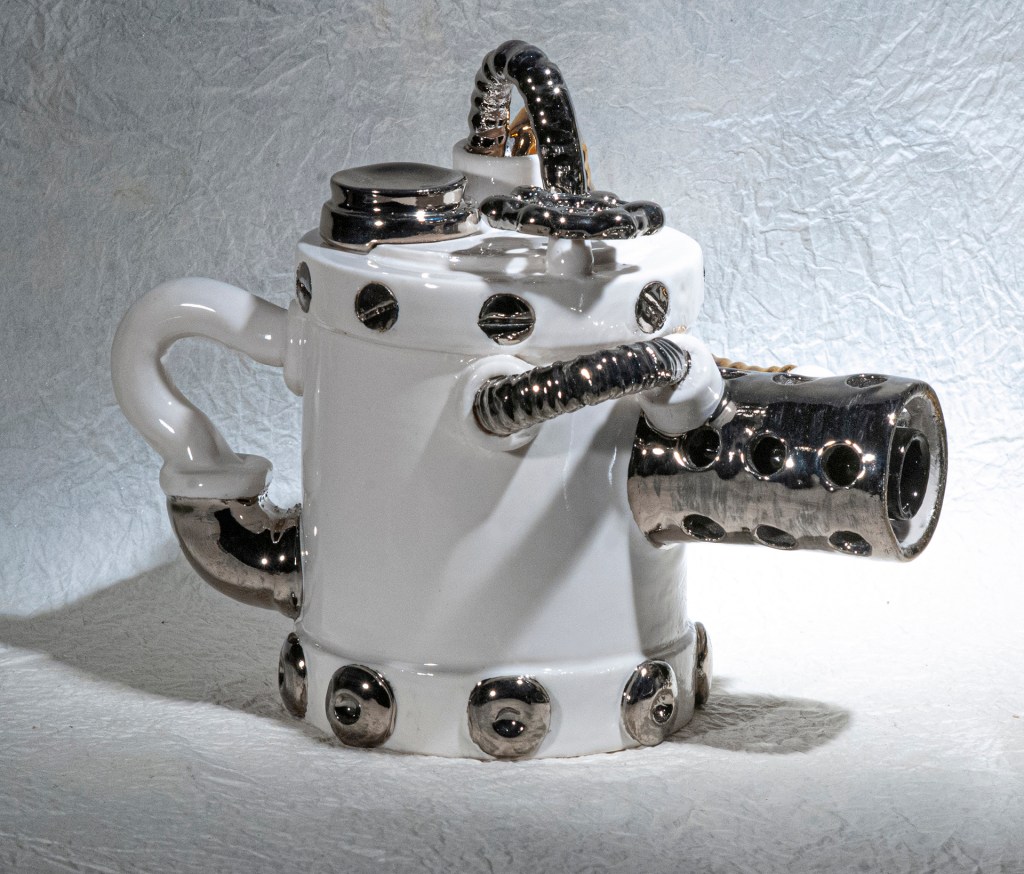
Over the years, your work has evolved from strictly wheel-thrown pottery to incorporating hand-building techniques, especially during the pandemic. How did this shift come about, and what new dimensions has it added to your art?
I never made a teapot in my life as a potter. I thought teapots were for hand-builders and I was strictly a wheel-throwing potter. During the pandemic, I was in my studio and like everyone else, I was antsy. A little claustrophobic. Stuck. I couldn’t work for weeks. I saw a Clarice Cliff teapot and was struck by the simplicity of the lines. And the complexity of technique. I decided to give it a whirl. I could certainly make a teapot. It was just clay. Nothing to be intimidated by. I created these forms and added gold, Mother-of-Pearl and silver lusters for accent in a third firing.
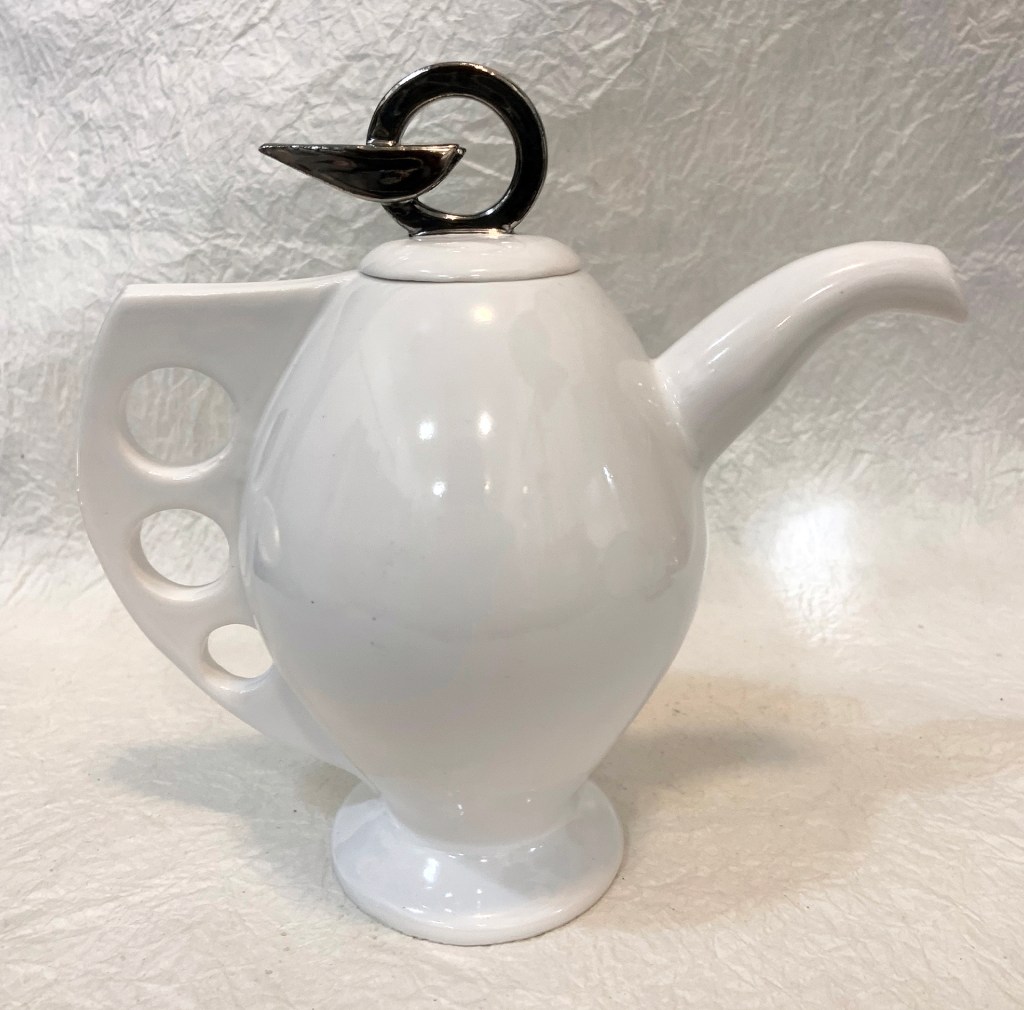
Your ceramic pieces often draw inspiration from real-world objects, reimagined through your unique lens. Can you walk us through how an ordinary object sparks your creativity and transforms into one of your signature works?
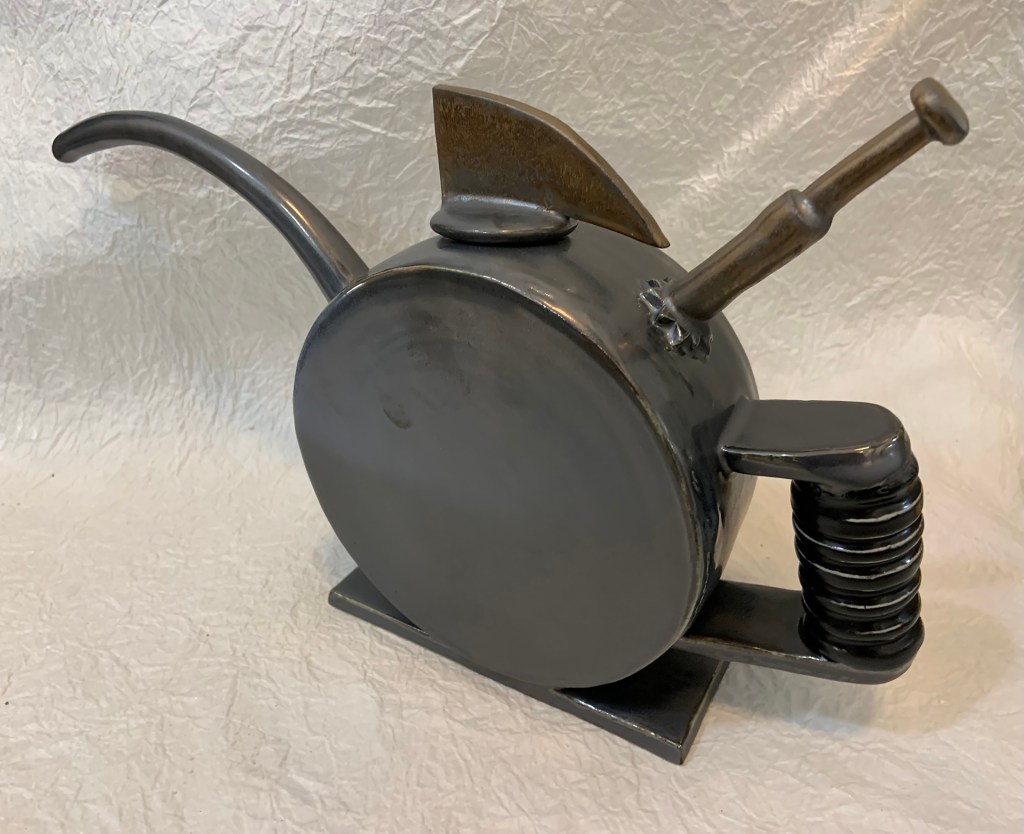
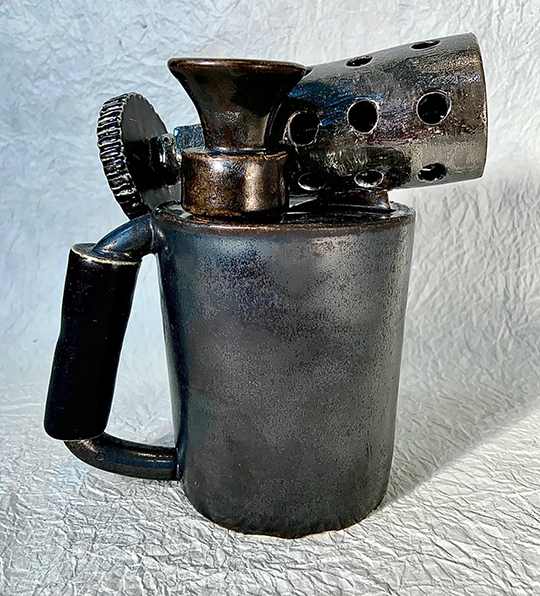
I like oil cans, blowtorches, coils, pipes, old gasoline cans, bridges, and big industrial machines. The nuts and bolts machinery that helps make things run. I look to re-form them or add them to other utilitarian objects. I think of my work as eclectic and eccentric. I believe pottery is the bond between the earth, art, and utility and serves as our emotional connection to our environment
Working primarily with porcelain, a material known for its elegance and challenges, what draws you to it? How do you navigate its demands while bringing your bold and intricate visions to life?

Porcelain teaches you how to work with it. And each different porcelain has its own specific lessons. So, the thrill is showing it off the most innovative and unusual ways. Porcelain takes glazes, underglazes and overglazes like no other clay body. The pure white of porcelain is a great canvas.
Surface decoration seems to play a pivotal role in some of your works like “Angel’s Wings” and “Deco Tower.” When you’re designing these details, do you approach them spontaneously, or is there a deliberate plan to align them with the form and concept? Additionally, we would like to know about the emotions or thoughts you hope to evoke in people when they encounter these carefully crafted pieces with surface decoration.
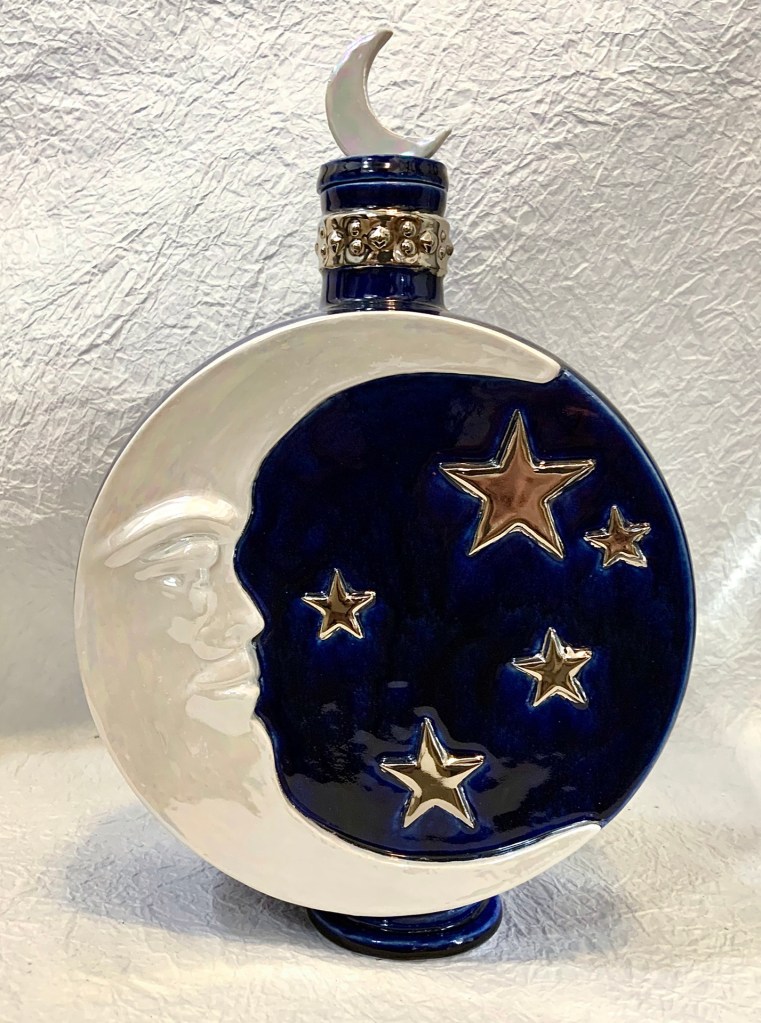
“Angel’s Wings” and “Deco Tower” are Canteens. Canteens are wheel-thrown and hand-built porcelain. They are fired to cone 5. Some are luster fired with gold, silver, Mother-of-Pearl and bronze lusters. They are a testament to living in Arizona. These pieces are planned and deliberate. I use different textures, cut my own linoleum or cut patterns.

Arizona has a real sense of the past. Frontier culture. Cowboy hats. Boots. Rodeos. Horses. Saddles. And yes, canteens. Old canteens are found in antique stores, thrift shops and auctions. They’re used as ornaments in restaurants, hotels and in homes. Canteens are a reminder of how precious water is in Arizona. What water means to survival and the environment.
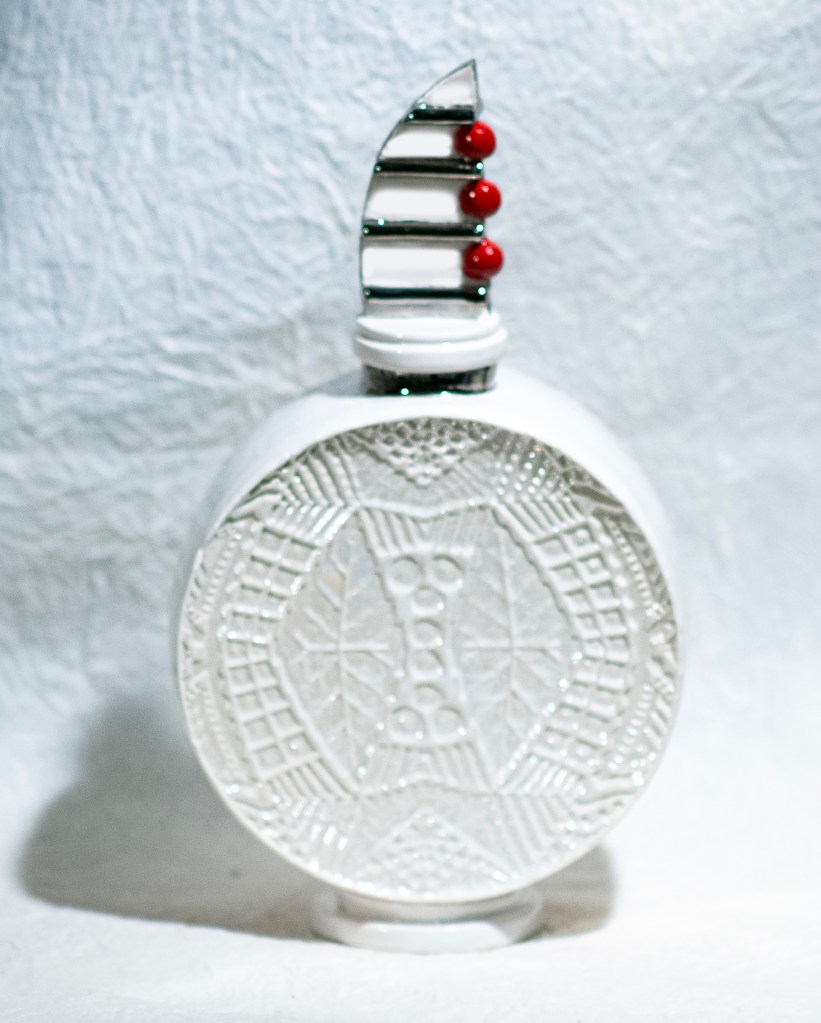
So, to acknowledge our culture, I’ve created my image of the modern canteen. They capture the essence of the state’s frontier and renegade heritage. You certainly won’t see them in a saddlebag, on the range or around a campfire. Welcome to the new west.
Let’s talk about some specific pieces. “Pipe Pot” has such an industrial yet whimsical feel—what was the inspiration behind this piece, and what message or feeling were you hoping to convey?
Every potter has a big hammer waiting for the kiln to open. But Pipe Pot was the most perfect piece that ever came out of the kiln for me. I’m still looking for imperfections.
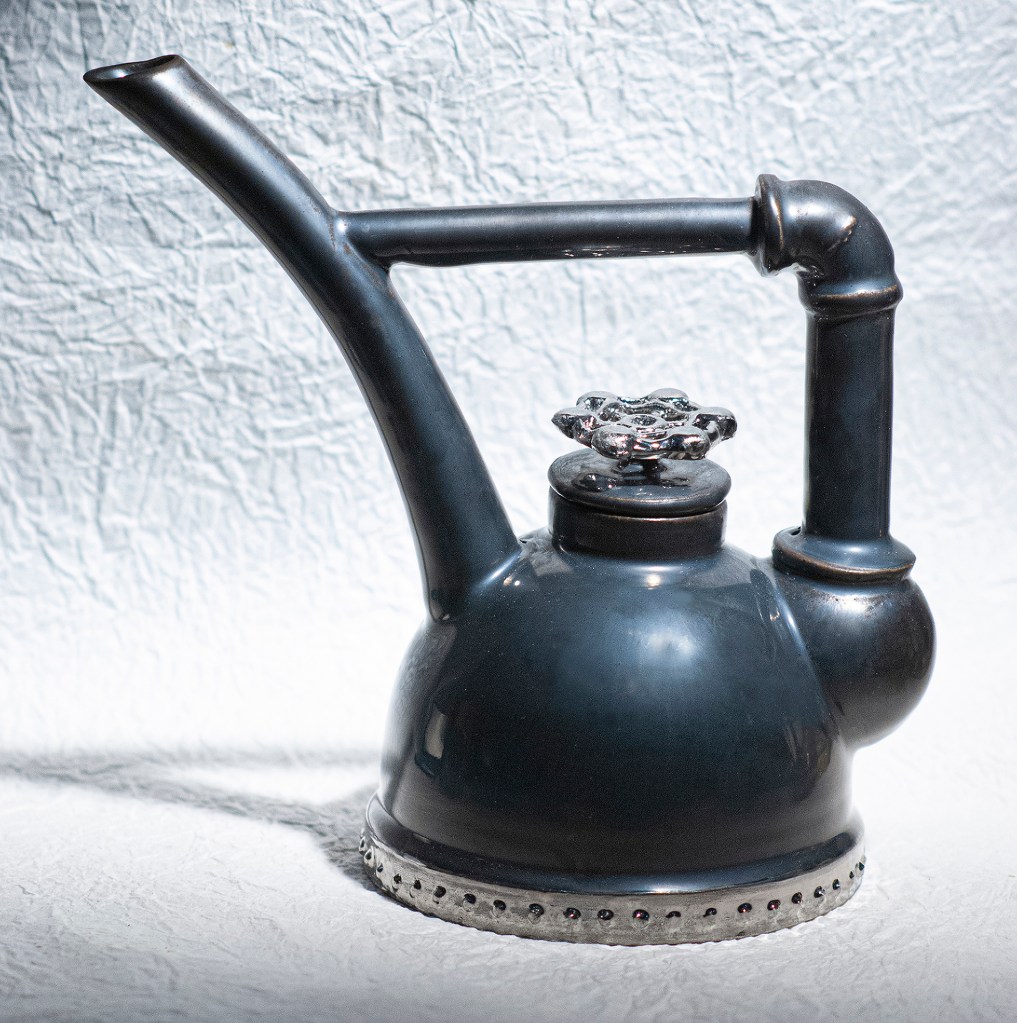
Culturally we have defined images of objects and where they fit in normal everyday use. Juxtapose a disorienting form and surface onto an everyday object and see the result.
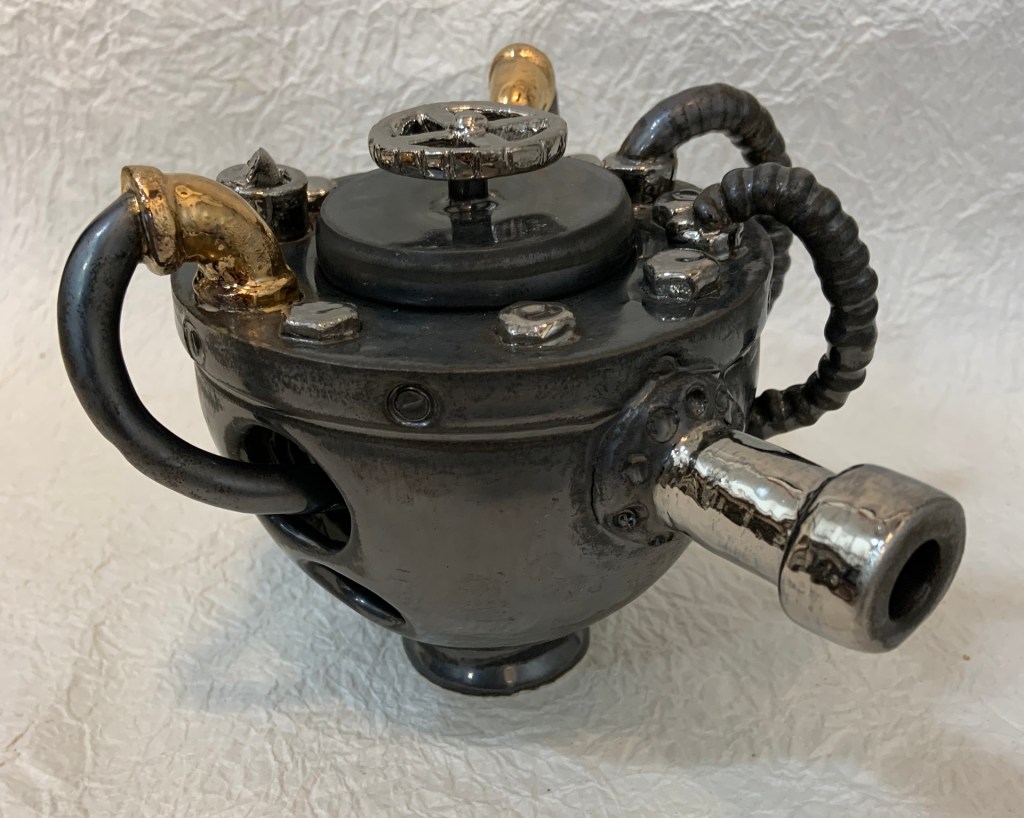
I consider my work eclectic and eccentric. Conceptual and technical. Pipe Pot joins industrial elements to form a functional aesthetic.
Another intriguing work is “Gold Flame.” The striking contrasts and bold design are captivating. Can you share the story or creative process behind this piece?
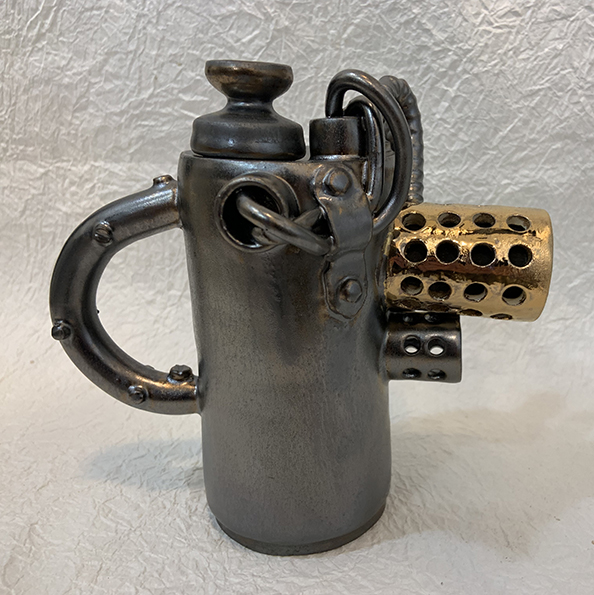
“Gold Flame” was second in a series of three pieces. I never make the same piece twice. Because I always want to try something different. But sometimes there is a form that intrigues me. And I need to look at it in a different light. For “Gold Flame” it was the glaze and the luster.
Many artists face moments of doubt or creative blocks. Have there been times when you questioned your artistic path, and how did you find your way back to inspiration?
Since the Pandemic, I have not been stuck. Or at an impasse. I have too many projects working. Too many ideas in my head. But should I ever be at an impasse for an idea in my pottery, I turn back to my life in advertising. You don’t have the leisure to be stuck.
Teaching and mentoring have also been significant parts of your journey. As an adjunct professor and a board member of the American Advertising Federation, how has sharing your knowledge with others enriched your own artistic practice?

I taught at the Art Institute of Phoenix. I taught art direction and copywriting. Strategic Planning and Presentation Techniques. I taught Graphic Design. I was lucky to have brilliant students. And as much as I taught them to think, they taught me to think and be deliberate. Teaching is one of the most profound things you can do. You cannot make a mistake.
In today’s digital age, online platforms offer new ways to connect with audiences. How web platforms like Biafarin, Exhibizone, and Gallerium fit into your artistic journey, and what role do they play in sharing your work with the world?

What’s interesting about Biafarin, Exhibizone, and Gallerium, is the variety of show themes giving artists the ability to choose the show that best suits their work. Their style. I do every show or category that fits my work. The benefit is the shows curators post the results on social media to a large audience. I also post to my smaller group. And direct my audience to the show’s site. It’s also wonderful to see the work of other artists who have also submitted their work. Having been an advertising Creative Director, I understand what a great media resource this is.
Thank you, Robert! As we wrap up, what advice would you offer to emerging artists who are trying to find their voice, especially those navigating the intersections of different creative disciplines like you have?
Stick to a strategy. A concept. Embrace it. Develop it. Experiment with it.
Make it uniquely yours
Finally, is there anything else you’d like to share about your artistic journey or vision for the future that we haven’t covered in this interview?
I’ve made a conscious decision to scale down my volume of work to increase the quality and complexity of new work. I focus on form, nuance and unusual elements. I’m always driven to find the “WOW” factor.
To explore more of Robert’s compelling and inspiring work, visit http://www.biafarin.com/artist?name=robert-snyder and follow his creative journey on @perpetuity_no1
 Review Me
Leave a comment